
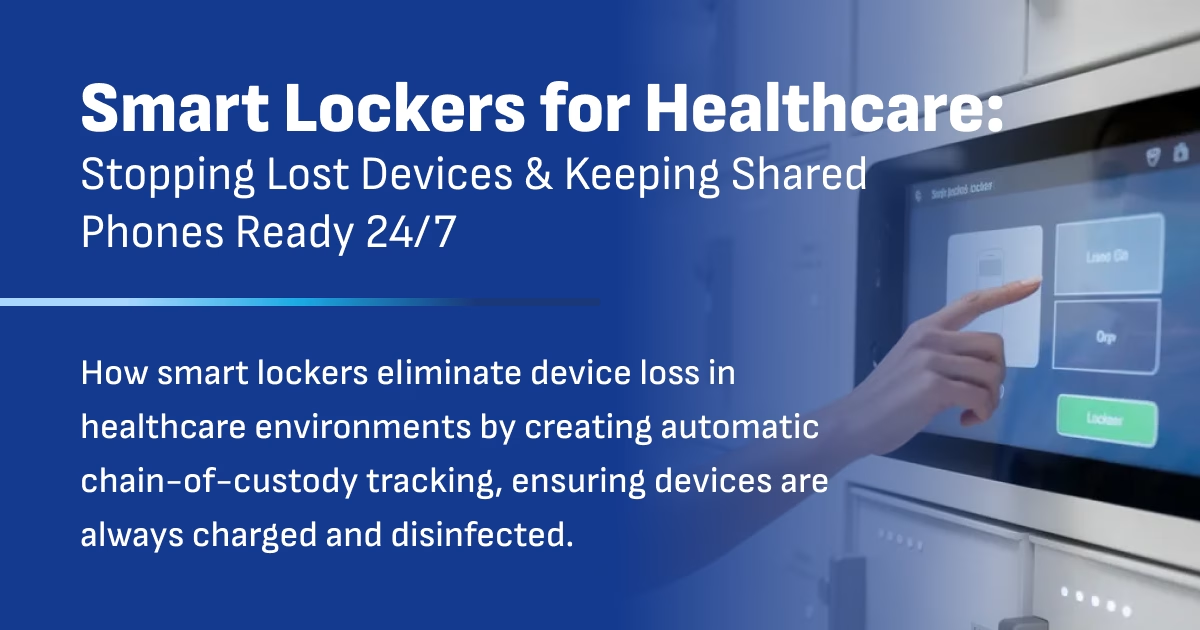
Smart Lockers for Healthcare prevent device loss by enabling automatic tracking, charging, and disinfection.
Hospitals in 2026 run on mobile devices. Nurses use shared work phones for bedside charting, medication administration, secure messaging, and real-time location tracking. Tablets support rounding, telehealth visits, and consent workflows. Barcode scanners verify specimens and medications. These devices are essential supplies for modern patient care—and they go missing constantly.
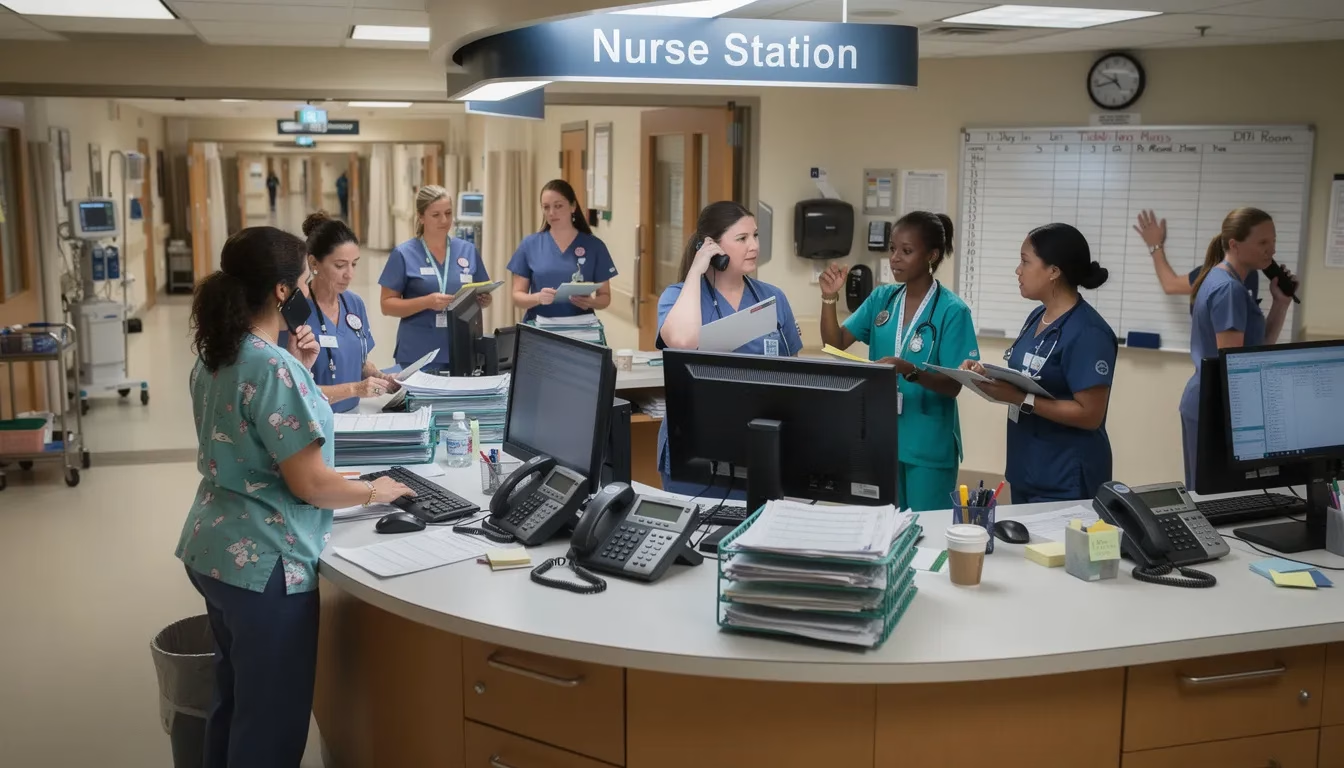
The core problem isn’t complicated: shared mobile devices disappear, come back uncharged, or return damaged without anyone knowing. Across 24/7 shifts with float staff, travel nurses, and agency workers, the lack of accountability creates chaos. To ensure security and compliance, access to shared devices should be limited to authorized personnel only. Charge nurses hoard “the good phones.” IT fields constant replacement requests. Healthcare workers waste valuable time hunting for equipment instead of focusing on patients.
This article explains how smart lockers eliminate device loss in healthcare environments by creating automatic chain-of-custody tracking, ensuring devices are always charged and disinfected, and removing the administrative burden from already stretched staff. Throughout, you’ll find suggestions for inserting workflow diagrams, UI screenshots, and floorplan images to help visualize concepts for your own facility.
Key Challenges with Shared Mobile Devices in Hospitals
When shared phones and tablets aren’t controlled through a reliable system, predictable problems emerge. Devices disappear. Batteries die. Damage goes unreported. And no one can figure out who had what, when.
Here are the specific challenges healthcare providers face with shared device management:
Lost or “borrowed” devices across units: An ED phone ends up in PACU after a patient transfer and never comes back. A med-surg tablet migrates to another floor during a busy night shift.
Devices not returned at shift end: Phones sit in personal bags, coat pockets, or random carts because there’s no enforcement mechanism for returns.
Phones returned but not plugged in: The 7:00 a.m. shift arrives to find a bank of dead devices because the night team dropped phones in drawers without connecting chargers.
No chain of custody: When a device goes missing or shows up damaged, there’s no way to trace who had it last.
Float and travel nurses without traceable processes: Temporary staff use devices with zero documentation, making accountability impossible.
Ignored sign-out sheets: Clipboards and paper logs work for about two weeks before staff stop using them entirely.
IT and biomed stuck managing chaos: Device replacement, inventory disputes, and endless tickets for lost equipment consume resources that should go elsewhere.
The 24/7 nature of healthcare operations makes manual control systems unsustainable. Handoffs happen at 7 a.m., 3 p.m., and 11 p.m.—plus weekends, holidays, and every hour in between. No paper-based process can survive that operational tempo.
How Smart Lockers Eliminate Device Loss and Power Problems
Smart locker systems serve as automated self-service hubs where healthcare professionals check out and return shared phones, tablets, and scanners. The locker silently enforces rules—requiring authentication, tracking custody, verifying charging connections—without adding work for managers or IT.
HonestWaves builds smart lockers specifically for hospitals, clinics, and health systems. These aren’t generic office mail lockers repurposed for clinical use. They’re designed around the realities of healthcare settings: infection control requirements, 24/7 access needs, and integration with existing badge systems. Features like UV-C disinfection and secure storage also play a crucial role in ensuring compliance with health and safety regulations.
The key benefits include:
Benefit | What It Means |
|---|---|
100% custody visibility | Every check-out and return is logged with user identity, timestamp, and locker bay |
No dead devices | Smart charge detection requires proper charging connection before completing returns |
UV-C disinfection | Integrated disinfection cycles run between uses to support infection control |
Zero admin overhead | No manual assignment lists, spreadsheets, or daily reconciliations required |
How the Smart Locker Workflow Looks in a Hospital Environment
The workflow for healthcare smart lockers maps directly to clinical operations. Here’s how it looks when a nurse uses the system during a typical shift.
3.1 Staff Check-Out
To access a device, staff authenticate using one of several secure options:
RFID badge
pin codes
qr codes
mobile app
Each method is designed for security and convenience, ensuring only authorized personnel can access devices.
Staff Check-Out
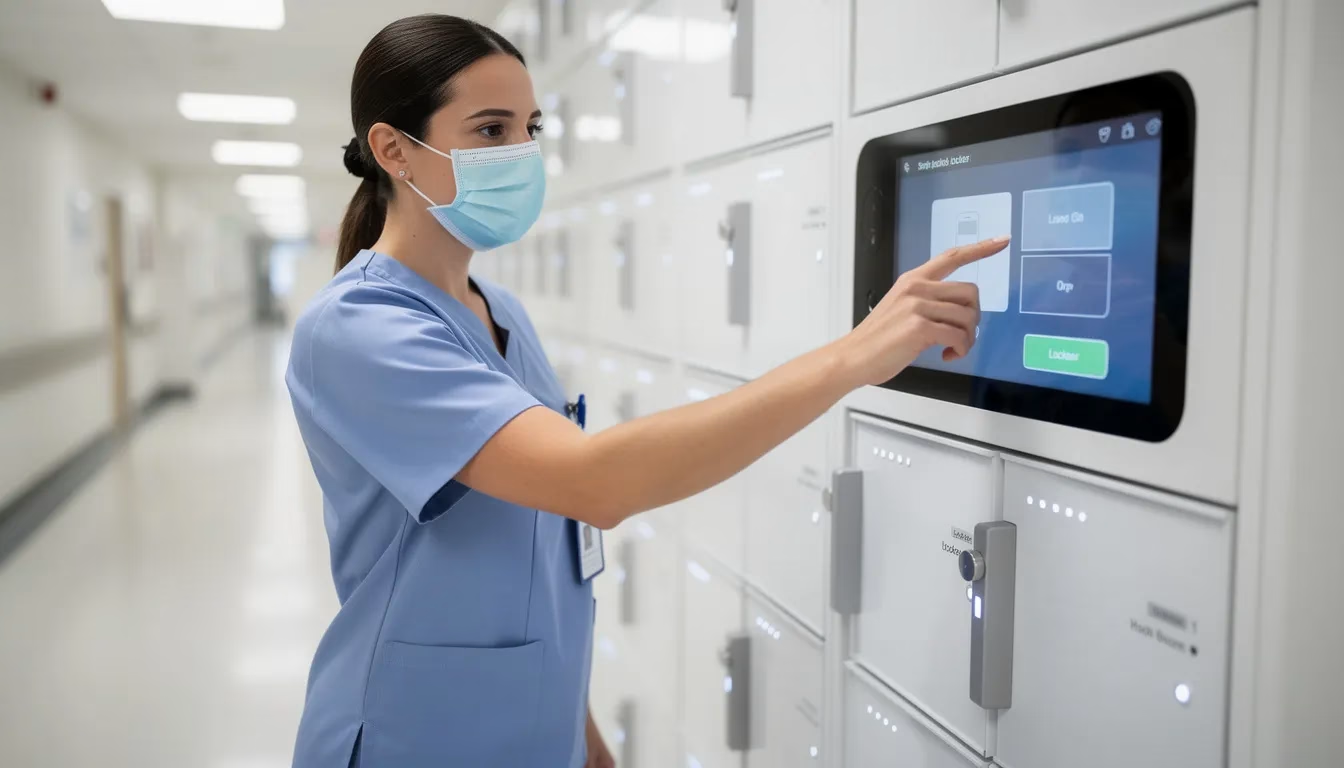
A nurse arrives for a 7:00 a.m. shift and approaches the smart locker near the unit’s charge nurse station. Authentication options include:
Tapping an employee badge (RFID)
Entering a PIN code
Scanning a QR code from a staff ID
Using fingerprint recognition where facility policy allows
The system authenticates against existing badge credentials—no separate account creation required, which minimizes IT involvement. The locker software automatically suggests the most charged device, or it can enforce department-based rules (for example, only allowing ED staff to access ED-designated phones).
The correct locker door pops open, and the system logs: “User X checked out Device Y from Bay Z at 06:57.”
Configurable Access Options
Smart locker solutions support multiple access configurations relevant to various healthcare settings:
Employee ID badge access: Works with existing hospital badge infrastructure
Temporary codes for agency nurses: Time-limited credentials that expire automatically
1:1 device assignments: Specific devices assigned to charge nurses or unit leaders
Multiple devices per bay: Phone plus scanner stored together for efficiency
Supervisor override: Emergency access for leadership during code situations
Device Return and Condition Check
At shift end, the nurse authenticates again and scans the device or selects it on screen. The system prompts: “Is this device working properly?”
This condition-reporting workflow uses a simple Yes/No interface that looks identical regardless of the answer. If the nurse selects “No,” the device is automatically flagged as damaged and removed from circulation—without any visible difference in the return process. This design prevents hesitation about reporting problems.
Charging Verification
Here’s where smart lockers solve one of the most persistent problems in healthcare device management: phones returned but not actually charging.
The system requires the phone or tablet to be physically plugged into the charging cable inside the bay. Smart charge detection confirms actual charging current before completing the return transaction. If the device isn’t drawing power, the nurse sees a clear prompt to reconnect before closing the door.
No more arriving at shift change to find a bay full of dead devices.
UV-C Disinfection
After the door closes, integrated UV-C lighting runs a disinfection cycle. This reduces viral and bacterial load on the device surface between uses, supporting infection control policies without requiring separate cleaning steps.
HonestWaves offers multiple UV-C options to align with medical equipment disinfection standards.
Final Logging and Status
The software records the exact return time, user identity, charging status, and UV cycle completion. The device’s status updates in real time on a central dashboard:
Charging
Fully charged
Damaged
Overdue
Checked out (with user name)
Accountability Without Extra Admin Work or IT Red Tape
Hospitals don’t need another system that creates manual tasks. Smart lockers for healthcare must run in the background, providing accountability without generating administrative burden.
Automated Chain-of-Custody
Every phone and tablet movement is logged automatically—who took it, when, from which bay, and when it came back. When a device goes missing, managers can see exactly who had it last. No mass emails. No guessing. No accusations based on incomplete information.
No Daily Reconciliation
The clipboard sign-out sheet is dead. End-of-shift reconciliation happens through automated overdue alerts instead of manual counts. Charge nurses don’t spend the first 15 minutes of their shift tracking down devices from the previous team.
Lightweight IT Involvement
The system can run in multiple deployment modes to minimize IT friction:
Standalone appliance: Self-contained system with local database—no integration required
On-premise server: Hosted on hospital infrastructure for organizations with strict data policies
Secure cloud: HonestWaves-hosted option for centralized management across locations
Hospitals can bypass complex EHR integration entirely while still achieving full tracking through existing badge IDs.
Controlled Exceptions
Supervisor override options enable quick access during emergencies. Temporary credentials for travelers and agency staff expire automatically after assignments end. The system handles edge cases without creating loopholes in accountability.
Notifications, Alerts, and Real-Time Visibility
In 24/7 healthcare operations, devices that aren’t returned or aren’t charging can directly impact patient throughput. Real time monitoring ensures problems get addressed before they cascade. Automated notifications alert staff or patients when devices are ready for pickup or require attention, improving workflow efficiency and supporting critical processes such as prescription pickup in pharmacy settings.
Notification Types
Alert Type | Trigger | Recipient |
|---|---|---|
Overdue device | Not returned by expected time | Charge nurse, unit coordinator |
Not charging | Device in bay but not drawing power | Staff member (immediate prompt) |
Damage reported | User flagged device as not working | IT/biomed ticketing system |
Low inventory | Too few devices available for next shift | Unit manager |
Prescription pickup | Prescription ready for collection | Patient/pharmacy staff |
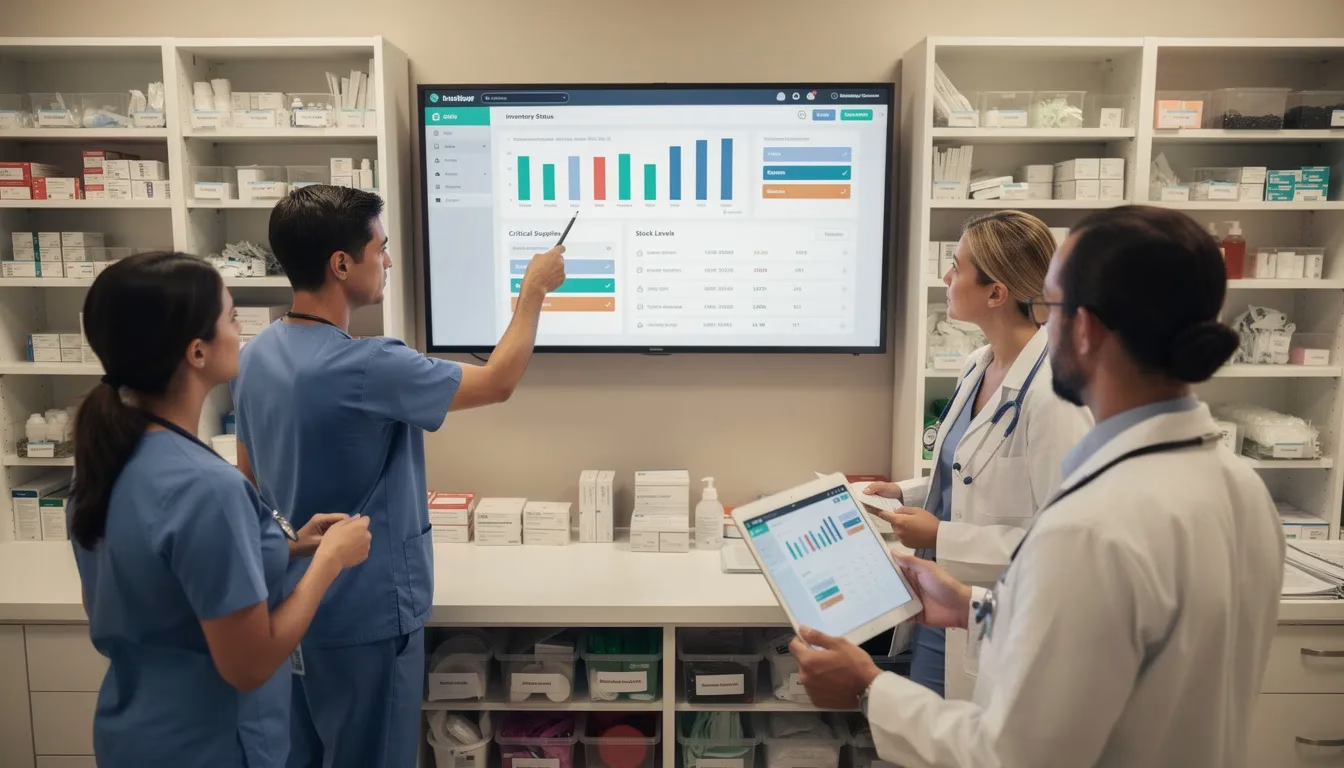
Real-Time Dashboards
The dashboard provides at-a-glance views of device status:
How many devices are checked out
Which are fully charged and ready
Which are actively charging
Which are overdue
Which are flagged for repair
Use cases include charge nurses doing a quick check at shift huddle, IT reviewing weekly utilization trends, and leadership tracking compliance across units.
Design Considerations for 24/7 Healthcare Operations
Smart lockers in hospitals must withstand constant use across all shifts while meeting environment-specific constraints. In addition to device management, smart lockers are widely used for personal storage and securing patient belongings in healthcare settings, ensuring safety, accountability, and regulatory compliance.
6.1 Physical Configuration
Modular design allows for flexible installation in hallways, waiting rooms, or staff areas.
Variable bay sizes accommodate everything from phones and tablets to larger medical equipment.
Locker systems can be configured to meet various needs, including different storage requirements for devices, staff items, and patient belongings.
Durable, easy-to-clean materials support infection control protocols.
Physical Configuration
Vertical and horizontal layouts to fit ED hallways, nurse stations, or medication rooms
Variable bay sizes for small phones, larger tablets, and scanner sleds in the same unit
Wall-mounted or freestanding options depending on available space
Accessibility and Usability
Large touchscreens usable with gloved hands
Multi-language support where needed
LED bay lighting that guides users to correct doors during night shifts
Hygiene and Materials
Smooth surfaces compatible with hospital cleaning protocols
Medical-grade finishes resistant to common disinfectants
No crevices or exposed mechanisms that trap contaminants
Power and Network
Battery backup to maintain function during brief outages
Wired Ethernet with secure Wi-Fi or cellular fallback for older facilities
Security and Compliance
Enclosed cable routing to prevent tampering
Lock hardware meeting hospital security standards
Access logging appropriate for operational compliance requirements
Deployment Models That Minimize IT Friction
IT approval can stall good projects for months. Smart locker systems must offer flexible deployment to reduce integration complexity while maintaining security. Deployment models for smart lockers are used across various industries, including healthcare, education, and transportation, to meet diverse operational requirements.
Three Deployment Approaches
Model | Best For | IT Involvement |
|---|---|---|
Standalone local | Single unit wanting fast implementation | Minimal |
On-premise server | Health systems with strict data policies | Moderate |
Secure cloud | Organizations wanting centralized management | Low ongoing maintenance |
Identity Integration Options
Use existing staff ID badges mapped locally—no deep HR system integration required
Optional Active Directory connection for organizations wanting single sign-on
Temporary credential generation for short-term staff
Each model supports incremental adoption: start in one department, prove value, then scale.
Use Cases Across the Hospital: Beyond Nurse Phones
While nurse phones and tablets are the primary focus, smart locker systems manage many healthcare assets and enhance service delivery by streamlining the management of devices, medications, and personal items across departments:
Clinical tablets for rounding, telehealth, and bedside consent
Barcode scanners for medication administration and specimen labeling
RTLS-enabled devices for staff location tracking
Loaner devices for physicians and advanced practice providers
Pharmacy staging for controlled devices designated to specific units
Contractor devices for imaging reps and biomedical vendors needing temporary access
The same infrastructure handles personal belongings storage for patients or staff personal items in secure storage environments.
Patient Care and Smart Lockers
Smart lockers are transforming patient care in healthcare facilities by providing secure, efficient storage solutions for personal belongings, medical supplies, and essential equipment. In busy healthcare environments, these innovative locker systems allow healthcare professionals to focus on what matters most—delivering high-quality patient care—by eliminating the distractions of misplaced devices or unsecured personal items.
In various healthcare settings, smart lockers are used to store patient records, medical devices, and personal items, ensuring that only authorized users can retrieve stored items. This controlled access not only enhances security and compliance but also protects sensitive information and valuable equipment. Healthcare providers benefit from real time monitoring and tracking, which allows them to quickly locate and access the devices or supplies they need, reducing wait times and streamlining workflows.
For patients, the presence of smart lockers means their personal belongings are kept safe and accessible, contributing to greater peace of mind and overall satisfaction during their stay. For healthcare professionals, the ability to easily access medical supplies and equipment ensures that patient care is never delayed due to missing or uncharged devices. By integrating smart lockers into daily operations, healthcare facilities can improve patient outcomes, boost operational efficiency, and create a safer, more organized environment for everyone.
Medical Equipment Management
Effective management of medical equipment is essential for delivering timely and appropriate care in any healthcare facility. Smart locker systems provide a secure, organized way to store and manage critical medical equipment such as defibrillators, ventilators, and dialysis machines, ensuring these devices are always ready for use when patients need them most.
With smart lockers, healthcare professionals can track equipment usage, monitor maintenance schedules, and receive automated alerts when devices require servicing or replacement. This level of oversight reduces the risk of equipment shortages or failures, allowing healthcare workers to focus on patient care instead of spending valuable time searching for devices. Locker systems can also be configured to store sensitive medical devices—like pacemakers or implantable cardioverter-defibrillators—in a secure environment, minimizing the risk of theft or tampering.
By streamlining medical equipment management, smart lockers help healthcare facilities maintain high standards of care, improve workflow efficiency, and ensure that essential devices are always available and in optimal condition for patient use.
Measuring Impact: From Lost Devices to Measurable Savings
Operations leaders need data, not anecdotes. Here are the metrics that demonstrate smart locker ROI:
Reduction in Lost Devices
Baseline: Annual spend on replacement devices and accessories
Target: Near-zero untraceable losses due to full chain-of-custody
Device Readiness
Percentage of devices fully charged at shift start
Decrease in “couldn’t find a working device” complaints
Staff Time Saved
Minutes per shift previously spent searching for devices
Impact on overtime when staff can start tasks immediately
Maintenance Efficiency
Faster identification of damaged devices through automated reporting
Shorter repair cycles because problems are flagged immediately
How HonestWaves Supports Hospitals: From Pilot to System-Wide Rollout
HonestWaves provides hardware, software, and support for device charging and secure storage—functioning as a long-term partner rather than just a hardware vendor.
Consultation and Workflow Design
Discovery sessions with nursing leadership, IT, and clinical informatics
Recommendations for locker placement, bay counts, and access rules per department
Hardware and Configuration
Secure charging lockers with data blocking, UV-C disinfection, and cloud connectivity
Options for rentals or large-order purchases with volume support
Implementation and Training
Standardized training for nurses and ancillary staff (typically 10-15 minutes)
Clear onboarding materials for agency and travel nurses
Ongoing Support
Lifetime warranty coverage on hardware components
Continuous access to usage analytics for refining device pools and policies
Future of Smart Lockers in Healthcare Facilities
The future of smart lockers in healthcare facilities is bright, driven by ongoing innovation and the evolving needs of the healthcare industry. As hospitals and clinics continue to seek ways to enhance patient care, improve operational efficiency, and reduce costs, smart lockers are poised to play an even greater role.
Next-generation smart lockers will offer seamless integration with electronic health records and inventory management systems, enabling real time tracking and monitoring of medical supplies, medications, and personal belongings. Advanced features such as biometric authentication, refrigerated storage for temperature-sensitive medications and vaccines, and real time notifications will address the specific needs of modern healthcare environments.
These solutions will not only provide secure storage but also support compliance, reduce wait times, and improve patient satisfaction by ensuring that essential items are always accessible to authorized users. As the healthcare sector continues to adopt innovative solutions, smart lockers will remain a key component in delivering efficient, secure, and patient-centered service. The benefits—ranging from enhanced security and operational efficiency to improved patient outcomes—make smart lockers an indispensable part of the future of healthcare facilities.
Conclusion: Building Reliable, Ready-For-Use Device Pools in Healthcare
The biggest problem with shared medical devices in hospitals isn’t just charging—it’s lost devices and zero accountability across a 24/7, high-turnover environment. Smart lockers eliminate both problems by creating automatic custody tracking, enforced charging verification, and real time notifications when something goes wrong.
Healthcare lockers don’t just enhance security. They create a predictable device pool that’s always charged, disinfected, and traceable. Healthcare workers retrieve stored items instantly and get back to patient care instead of hunting for equipment.
Hospitals can start with a small pilot in one department—ED, med-surg, pharmacy—and scale once data shows reductions in device loss and staff frustration. The operational efficiency gains compound as more units adopt the system.
Ready to see how smart lockers could work in your healthcare facility? Get a quote from HonestWaves for a tailored workflow review, or schedule a brief assessment to map your current device challenges to a practical solution.