
Why Clinical Device Management Now Matters More Than Ever
A typical U.S. health system in 2025 operates thousands of mobile phones, tablets, barcode scanners, and portable monitors across multiple campuses. Add mobile workstations, handheld radios, and diagnostic equipment, and the number of battery-powered clinical devices requiring daily management becomes staggering. When these devices go missing, run out of charge, or sit idle in the wrong location, the result is delayed medication administration, interrupted bedside charting, and reduced patient throughput.
The operational challenges are familiar to any hospital leader. Handhelds disappear between shifts. WOW carts get abandoned in hallways with 4% battery remaining. Shared phones and tablets create infection-control gaps when cleaning protocols fall through the cracks. Without clear chain-of-custody, accountability becomes impossible—and clinicians waste precious minutes searching for working equipment instead of caring for patients.
HonestWaves provides secure charging stations, smart lockers, and portable kiosks that solve this “last-meter” problem. Our cloud-connected infrastructure complements existing CMMS and ITAM platforms by addressing the physical realities of storage, charging, and controlled access. In addition, HonestWaves offers a comprehensive platform that centralizes clinical device management, storage, and charging, supporting automation and regulatory compliance for healthcare organizations. This article offers hospital leaders a practical framework for managing clinical devices, batteries, and mobile workstations using modern infrastructure and data. HonestWaves is committed to our customers, focusing on delivering tailored solutions that meet the unique needs of healthcare organizations.
This framework provides a streamlined way to manage clinical devices, improving operational efficiency and supporting better patient care.
The four pillars of clinical device management infrastructure:
- Clinical device exchange lockers for structured shared-device workflows
- Smart battery exchange systems for continuous power availability
- Smart docking and storage for mobile workstations
- Lifecycle analytics and asset tracking for operational visibility

From Static Equipment to Mobile Ecosystems
Between 2015 and 2025, hospitals underwent a fundamental shift in how technology supports clinical workflows. Fixed capital equipment like MRI machines and ventilators still anchors diagnostic and therapeutic care, but the daily work of nurses and clinicians now depends on mobile ecosystems: smartphones running Epic Rover, handheld barcode scanners for medication administration, tablets for bedside documentation, and RTLS-tagged infusion pumps that move with patients throughout the facility.
This shift has multiplied the number of batteries, chargers, and accessories that must be controlled and documented. A single nursing unit may now manage dozens of shared devices, each requiring daily charging, periodic disinfection, and clear accountability. To ensure reliable performance and prevent costly repairs, it is essential to understand the specific maintenance and charging needs of different devices and batteries. Traditional CMMS and biomed processes—annual preventive maintenance schedules, paper work orders, reactive repairs—were designed for static equipment with multi-year lifecycles, not devices that change hands every eight hours.
New operational pressures driving the need for device management infrastructure:
- 24/7 access requirements for devices across all shifts
- Rapid turnover between users, sometimes multiple times per day
- Infection-control expectations for shared equipment
- Battery replacement cycles measured in months, not years
- Real-time visibility into device location and charge status
Clinical Device Exchange Lockers: Structuring Shared-Device Workflows
Consider a 600-bed hospital where nurses collect shared phones and scanners from a centralized “device room” at the start of each shift. The room has a charging cart, a sign-out clipboard, and a box of devices in various states of charge. Nurses arrive at 06:45 for the 07:00 shift change, creating a fifteen-minute bottleneck. Devices get grabbed without logging. Some come back at end of shift; others don’t. Accountability is theoretical at best.
Clinical device exchange lockers replace this chaos with a controlled, badge-accessible workflow. These smart lockers issue and receive fully charged, disinfected devices for each shift—ensuring that every nurse starts with a ready device and every device returns to a known location for charging and tracking.
Key elements of clinical device exchange locker systems:
- Workflow: Staff tap their hospital ID badge, the locker assigns a ready device automatically, and the system logs the transaction. At end of shift, the device returns to any available bay for charging.
- Security: Badge authentication via SSO prevents unauthorized access. Server-side logging captures who accessed which bay and when.
- Infection control: UV-C disinfection cycles run between users. Antimicrobial materials and finishes support hospital cleaning protocols.
- Integration: Cloud-connected systems can feed data to CMMS and ITAM platforms, creating auditable records of device usage and availability.
- Real-world application: HonestWaves clinical device smart lockers support RFID badges and PINs, can be deployed on individual units, in EDs, or at main staff entrances, and provide visual status indicators showing charging, ready, or fault conditions.
Designing Locker Workflows for Nurses, Not Just IT
- Co-design with nurse managers, clinical informatics, and biomed to avoid bottlenecks at shift change—IT alone cannot anticipate floor-level realities
- Plan for 1.5× peak users when sizing bay counts per unit to accommodate float pool staff and unexpected demand
- Place lockers near staff elevators or break rooms rather than buried in IT closets where access adds walking time
- Target transaction times under 15 seconds to prevent lines forming at 07:00 and 19:00 shift changes
- Ensure ADA compliance with accessible bay heights and clear visual labeling
- Select infection-control-friendly materials that withstand frequent cleaning with hospital-grade disinfectants
Security, Privacy, and Data Protection in Device Lockers
Shared clinical devices often contain protected health information or active application sessions. Security and privacy requirements for device lockers extend beyond simple physical locks.
- HIPAA considerations: Lockers must prevent unauthorized access to devices containing PHI or logged-in clinical applications
- Audit logging: Server-side recording of all access events supports investigations and regulatory audits
- Data-blocking USB: Charging ports with data-blocking technology prevent rogue data exfiltration or malware injection from compromised charging infrastructure
- Physical security: Steel construction, tamper sensors, hospital-grade floor anchoring, and integration with facility security systems for forced-entry alerts
- Access synchronization: Staff permissions managed from central identity sources (Active Directory, IdP, or HR systems) ensure terminated employees lose access immediately
Smart Battery Exchange Systems: Keeping Critical Workflows Powered
The proliferation of hot-swappable batteries between 2020 and 2025 transformed how hospitals power mobile equipment. WOW carts, rugged tablets, handheld radios, and bedside monitors now depend on batteries that staff can swap without returning the entire device. But this flexibility creates new challenges.
The typical failure mode looks like this: nurses hunt for charged batteries at shift change, hoarding spares at unit desks “just in case.” Meanwhile, carts sit idle in one department while charged batteries gather dust in another. Nobody tracks cycle counts or battery health until a critical failure interrupts patient care. Properly store batteries in designated charging stations or lockers to extend their lifespan, ensure safety, and improve maintenance routines.
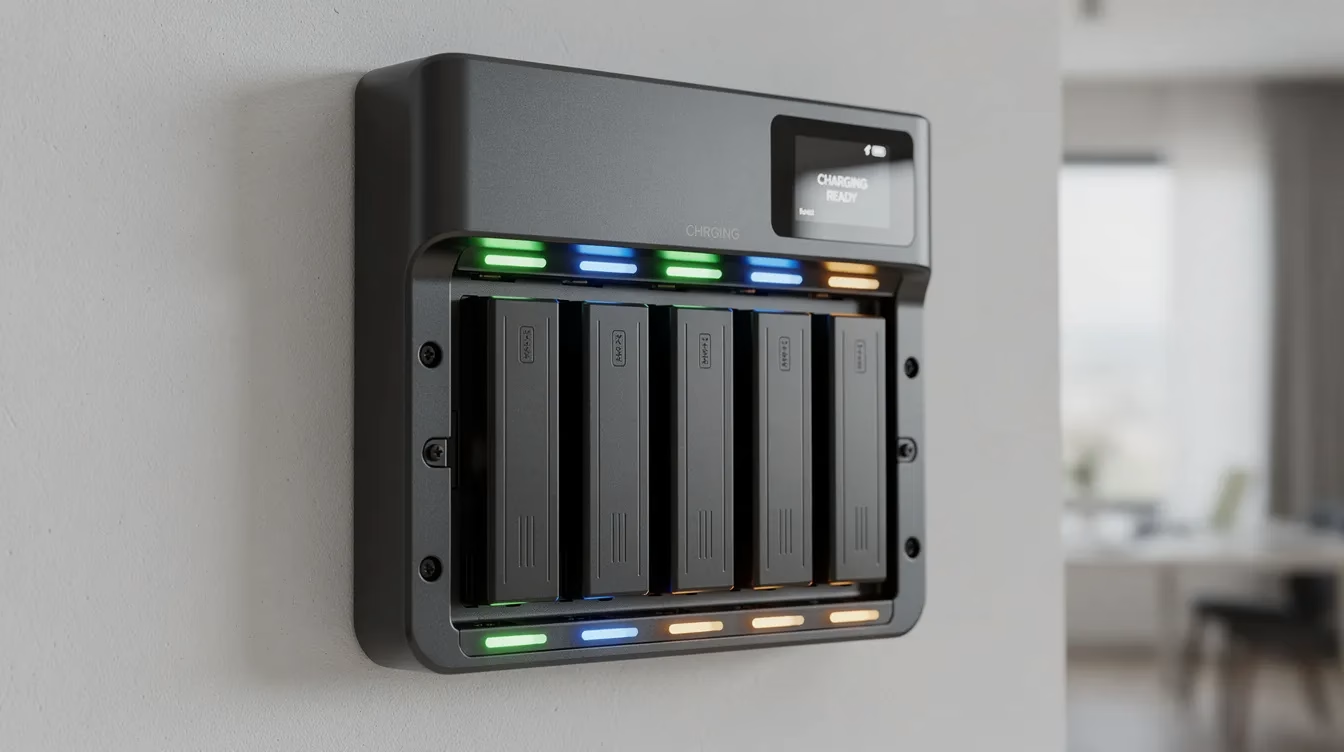
Smart battery exchange systems function like medication dispensing cabinets, but for batteries. Wall-mounted or floor-standing modules with individually monitored bays charge batteries, dispense the next best option (healthiest and most charged), and accept returned depleted units into any bay in the network.
Smart battery exchange workflow:
- Staff badge into the system at any module in the network
- The system dispenses the battery with optimal health and charge level
- Depleted batteries return to any available bay for charging
- Analytics track cycle counts and identify packs nearing end of life
- Forecasting tools support quarterly replacement orders
HonestWaves charging kiosks and lockers can be configured with swappable battery cradles and cloud monitoring to support fleets of WOW carts or handhelds, ensuring continuous power across departments.
Battery Health, Safety, and Replacement Planning
- Lithium-ion safety: Temperature monitoring, proper ventilation, and fire-safe housing are non-negotiable for hospital battery storage
- State of health (SoH) tracking: Monitor charge retention, time to full charge, and abnormal failure trends by manufacturer batch
- Automated alerts: Trigger proactive replacement when batteries exceed 1,000 cycles or drop below 70% capacity
- Budget alignment: Use exchange system data to justify capital requests and align replacement plans with fiscal years
- Failure prevention: Proactive replacement before clinical failure events reduces risk and supports patient safety
Smart Docking, Storage, and Charging for Mobile Workstations
Mobile workstations—WOWs, COWs, documentation carts—are essential to bedside workflows like real-time charting and barcode medication administration. These carts bring computing power directly to patients, but managing them presents unique challenges.
Carts left unplugged in corridors create tripping hazards and battery deterioration. Loose power cords tangle with foot traffic. Without designated storage locations, carts wander between departments, and staff waste time searching for available units with sufficient charge.
Smart docking systems create designated parking spots with guided power connections, automatic charging, and optional electronic check-in/out. A central dashboard tracks last seen location, current battery level, and cart assignment to specific units.
Practical design and tracking elements:
- Clearly marked parking spots with visual cues and floor markings
- Automatic charging initiation when carts dock correctly
- Real-time battery level monitoring across the fleet
- Assignment tracking by unit (ICU vs. Med-Surg) for accountability
- Shortened search time when staff know exactly where carts “live”
- Support for infection-prevention cleaning rounds with predictable cart locations
HonestWaves charging stations and smart lockers can integrate into WOW parking zones, supporting handhelds and spare batteries alongside carts for consolidated technology management.
Designing Charging Zones on Clinical Floors
- Place zones near nurse stations but away from patient room doors to minimize disruption
- Align with egress routes and fire-code requirements—never block emergency paths
- Install visible signage and floor markings so staff immediately recognize where carts must be parked and plugged in
- Provide hospital-grade outlets with surge protection and dedicated circuits
- Ensure Wi-Fi or Ethernet connectivity for cloud-connected docks
- Consider integrating UV-C disinfection cabinets and phone charging lockers nearby to create consolidated “technology hubs” on each unit
Device Maintenance and Repair: Ensuring Reliability and Uptime
So you’re running a healthcare organization in today’s breakneck-speed environment? Then you already know that effective clinical device management isn’t just nice-to-have – it’s absolutely essential if you want to deliver safe, efficient patient care without pulling your hair out. But here’s the thing that doesn’t always get talked about upfront: device maintenance and repair is where the rubber really meets the road. Think about it – regular, proactive maintenance is what keeps your clinical devices actually reliable, slashing the risk of those nightmare unexpected failures that could seriously compromise patient safety or throw your entire clinical workflow into chaos.
Modern platforms like ServiceNow Clinical Device Management are game-changers here, and frankly, it’s about time healthcare caught up. These systems empower your organization to automate maintenance schedules, track asset performance like a hawk, and maintain regulatory compliance without the constant headache. By leveraging these technologies – and we mean really leveraging them, not just checking a box – hospitals can spot potential issues before they escalate into full-blown disasters, schedule preventive maintenance that actually prevents problems, and ensure that every single device is ready for action when you need it most. This isn’t just about minimizing risk (though that’s huge) – it’s about maximizing uptime and supporting both operational efficiency and patient safety in one fell swoop.
Now here’s where it gets strategic: choosing the right partner for clinical device management. This isn’t a decision you want to rush or hand off to the lowest bidder. An experienced partner gets it – they understand the unique demands of healthcare organizations, from those ever-changing regulatory requirements to the absolutely critical nature of device uptime. The right provider will offer comprehensive services that actually make your life easier – we’re talking installing new devices, maintaining existing assets without drama, and providing timely repairs or replacements while also supporting your security and compliance initiatives. Because let’s be honest, you’ve got enough to worry about without wondering if your device management partner really understands what’s at stake.
Lifecycle Management, Asset Tracking, and Analytics
CMMS and ITAM platforms serve as the system of record for clinical assets. Many healthcare organizations build integrations with HL7 FHIR models or leverage platforms like ServiceNow for service now clinical device management capabilities. But these systems are only as good as the data feeding them.
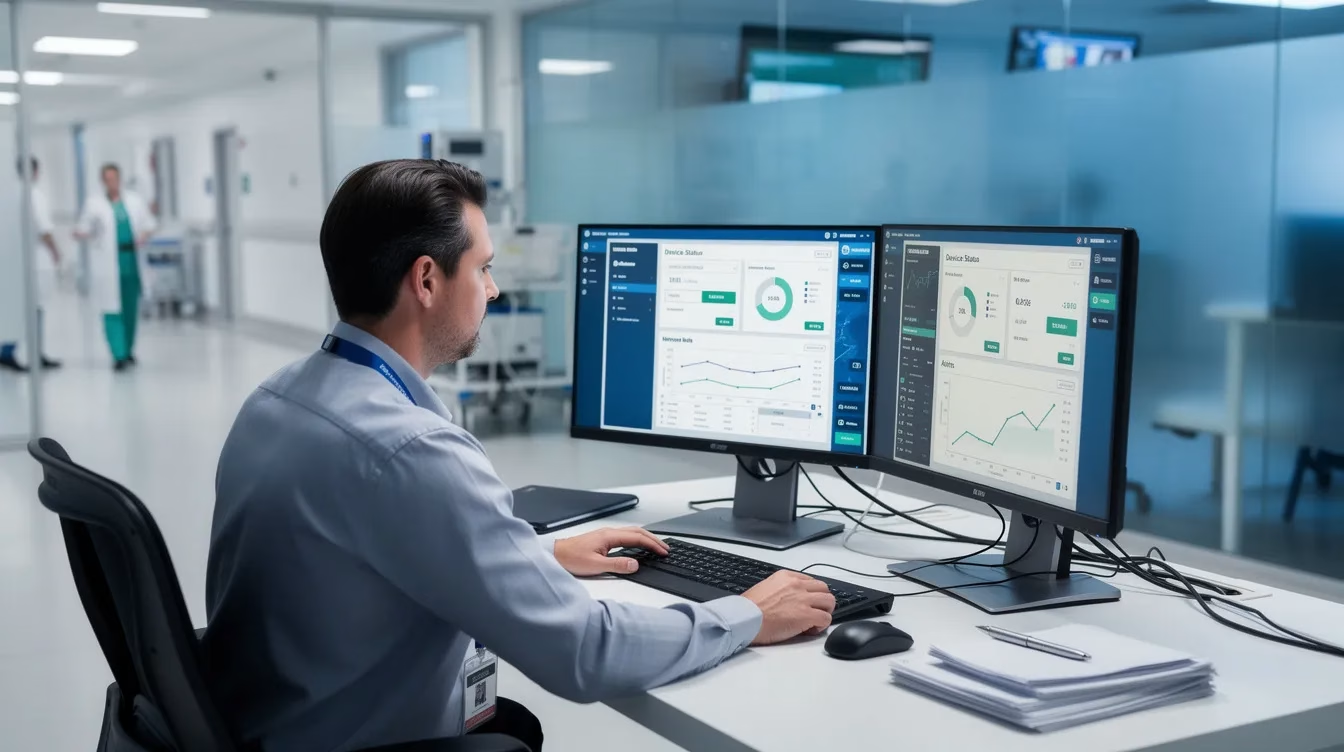
Physical infrastructure—lockers, docks, kiosks—generates higher-fidelity data than manual logging ever could. Real usage hours, charge cycles, dwell times, and user transactions flow automatically into downstream systems.
Specific data points hospitals can capture:
- Check-out and check-in timestamps with user IDs
- Unit and department assignment for each transaction
- Charging compliance rates by device and location
- Battery state at return (percentage, health metrics)
- Device dwell time in lockers vs. active use
This data enables hospitals to:
- Right-size device fleets by identifying underutilized equipment
- Rebalance devices between departments based on actual demand
- Delay unnecessary purchases by extending device lifecycles
- Meet regulatory compliance requirements from JCAHO, CMS, and FDA guidance for auditable maintenance, calibration, cleaning, and availability records
HonestWaves’ cloud portal exposes usage and charging analytics for our lockers and stations. Data can be exported or integrated with existing CMMS dashboards to create a unified view of device operations.
Integrating Physical Infrastructure with CMMS and ITAM Platforms
- Use APIs or secure data feeds to connect smart lockers and charging stations with existing clinical device management systems
- Configure event-based triggers: missing-in-action alerts when devices aren’t returned by end of shift
- Open work orders automatically when a bay is flagged as damaged or charging failures recur
- Synchronize access controls so staff roles and permissions flow from central identity sources
- Build unified dashboards merging device health, battery analytics, and regulatory documentation into one view for clinical engineering and IT leadership
Implementing Clinical Device Management Infrastructure
Successful implementation starts with a phased rollout. Begin with a pilot unit—an ED or high-acuity Med-Surg floor with significant device usage—before scaling across the enterprise. This approach allows teams to refine workflows, identify gaps, and build organizational confidence.
Early stakeholder involvement is critical. Nursing leadership understands floor-level realities. Clinical informatics bridges technology and care delivery. IT manages integration and security. Clinical engineering and biomed handle device maintenance. Infection prevention ensures cleaning protocols are realistic. Facilities addresses power, space, and construction requirements.
Implementation checklist:
- Conduct a baseline assessment: count mobile devices and batteries per unit, map informal workflows, and quantify lost time and device losses from the previous 12 months
- Develop standard operating procedures for check-out/check-in, cleaning, damage reporting, and handling overdue devices
- Create quick-reference guides posted at lockers for immediate staff reference
- Identify super-user champions on each floor to support adoption and troubleshoot issues
- Establish regular feedback loops during the first 90 days to capture and address concerns
- Plan training sessions that respect clinical schedules and avoid shift-change crunch times
- Partner with HonestWaves for hardware rentals, large-order support, and customized locker/charging layouts tailored to your existing footprint
Looking Ahead: Building Resilient, Always-On Clinical Device Environments
As hospitals continue adding mobile devices to clinical workflows, the missing piece isn’t more technology—it’s the infrastructure to manage what already exists. Structured systems for device exchange, battery management, smart docking, and lifecycle analytics reduce downtime, prevent lost equipment, and directly support better patient care.
Emerging trends point toward even tighter integration between physical infrastructure and digital platforms. AI-driven predictions for battery failures, real-time location system integration, and dynamic allocation of device pools based on census and acuity are all on the horizon. Healthcare organizations that invest in foundational infrastructure today will be positioned to adopt these capabilities as they mature.
Next steps:
- Discover how HonestWaves can partner with your hospital as a long-term infrastructure provider for secure charging, smart lockers, and portable kiosks
- Get a Quote for a tailored clinical device management plan designed around your facility’s unique needs
FAQs
What is clinical device management in hospitals?
Clinical device management in hospitals is the process of organizing, storing, charging, tracking, and maintaining shared mobile devices such as phones, tablets, barcode scanners, portable monitors, and mobile workstations. Its goal is to keep devices available, secure, and ready for clinical use at all times.
Why is clinical device management important for modern hospitals?
It is important because hospitals now rely heavily on mobile, battery-powered devices for bedside charting, medication administration, communication, and patient monitoring. When devices are missing, uncharged, or poorly tracked, it can delay workflows, reduce staff efficiency, and affect patient care.
How do smart lockers improve clinical device workflows?
Smart lockers help hospitals control shared-device access by assigning devices through badge-based authentication, logging check-outs and returns, and ensuring devices are charged and ready for the next user. They also improve accountability, reduce device loss, and support infection-control workflows.
What are smart battery exchange systems in healthcare?
Smart battery exchange systems are charging and dispensing solutions that provide staff with fully charged batteries for mobile devices and workstations. They help reduce downtime, improve battery availability, track battery health, and support proactive replacement before failures disrupt care.
How can hospitals improve clinical device charging and storage?
Hospitals can improve charging and storage by creating dedicated charging zones, using smart lockers and charging stations, standardizing check-in and check-out workflows, tracking battery health and device usage, and integrating infrastructure data with CMMS or ITAM platforms for better visibility and compliance.