
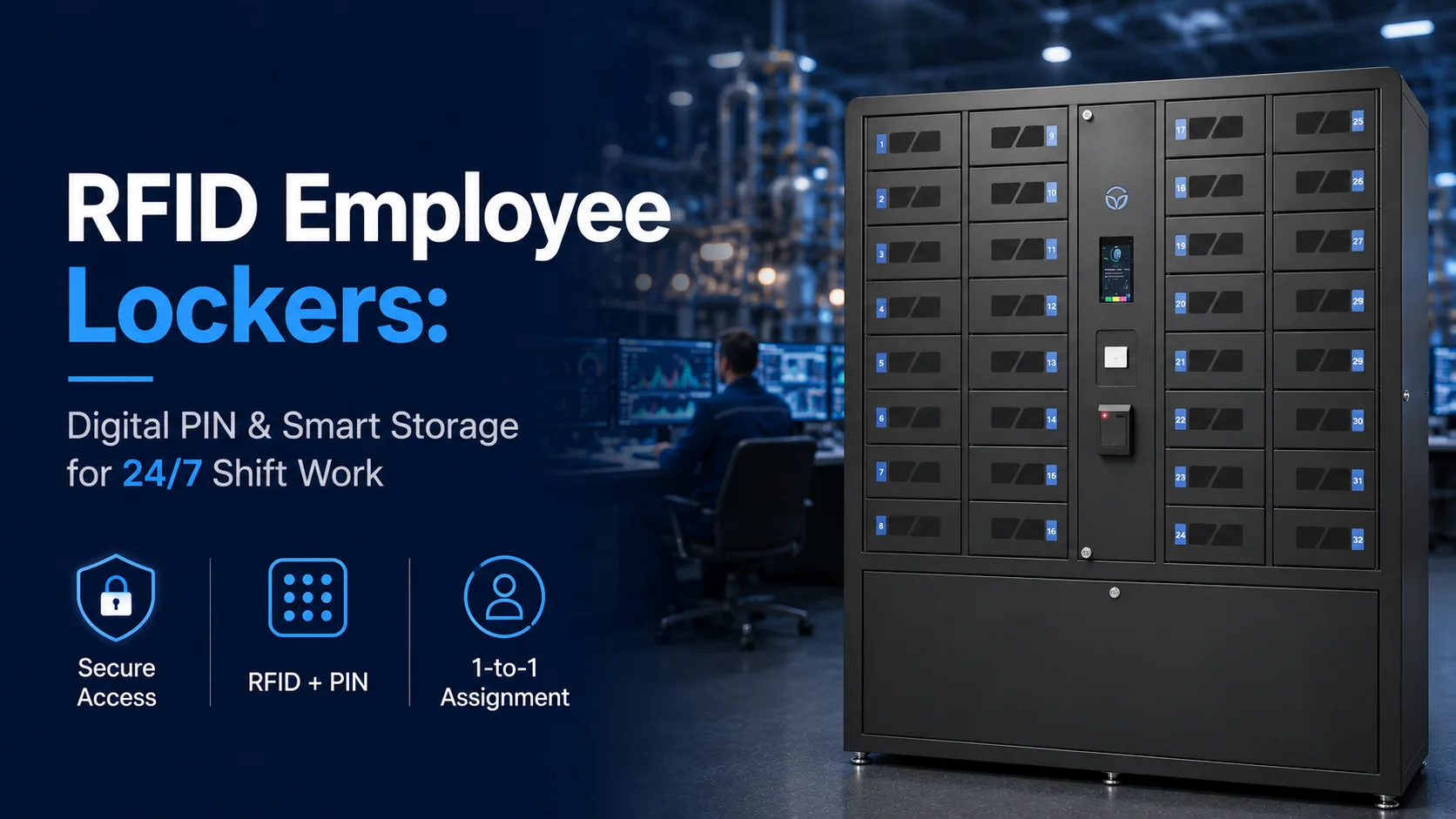
When your facility runs around the clock and every shift change is a race against the clock, the last thing your team needs is a bottleneck at the locker room. RFID employee lockers with digital PIN backup eliminate that friction – giving every worker fast, keyless entry to secure storage and charged devices, whether they’re full-time staff or a contractor who started this morning.
Key Takeaways
- RFID and digital PIN employee lockers remove padlock bottlenecks, deliver full accountability, and keep shift changes flowing smoothly in 24/7 facilities.
- HonestWaves smart lockers combine secure storage with built-in device charging, so phones, scanners, and handhelds stay powered and ready between shifts.
- Our 20, 26, and 32-door RFID employee lockers support both 1-to-1 assignments and shared pool workflows, making them ideal for large plants and multi-shift operations.
- Manager master-override access and whole-assembly UL/NRTL safety certifications give facility leaders the emergency control and compliance they need.
- HonestWaves hardware can be deployed today as a simple RFID/PIN locker system and later upgraded to full asset-tracking and device management software as needs grow.
Why RFID & PIN Employee Lockers Matter for 24/7 Shift Work
Picture a distribution center at 6:55 a.m. – 150 workers flooding in while the night shift tries to hand off scanners, radios, and phones. Traditional lockers with padlocks turn this into a hassle: lost keys, forgotten combinations, and ad-hoc locker sharing that nobody tracks. RFID-enabled lockers are suitable for environments with shared workspaces or hybrid schedules exactly like this one, where overlapping shifts, temp staff, and strict device policies create constant pressure.
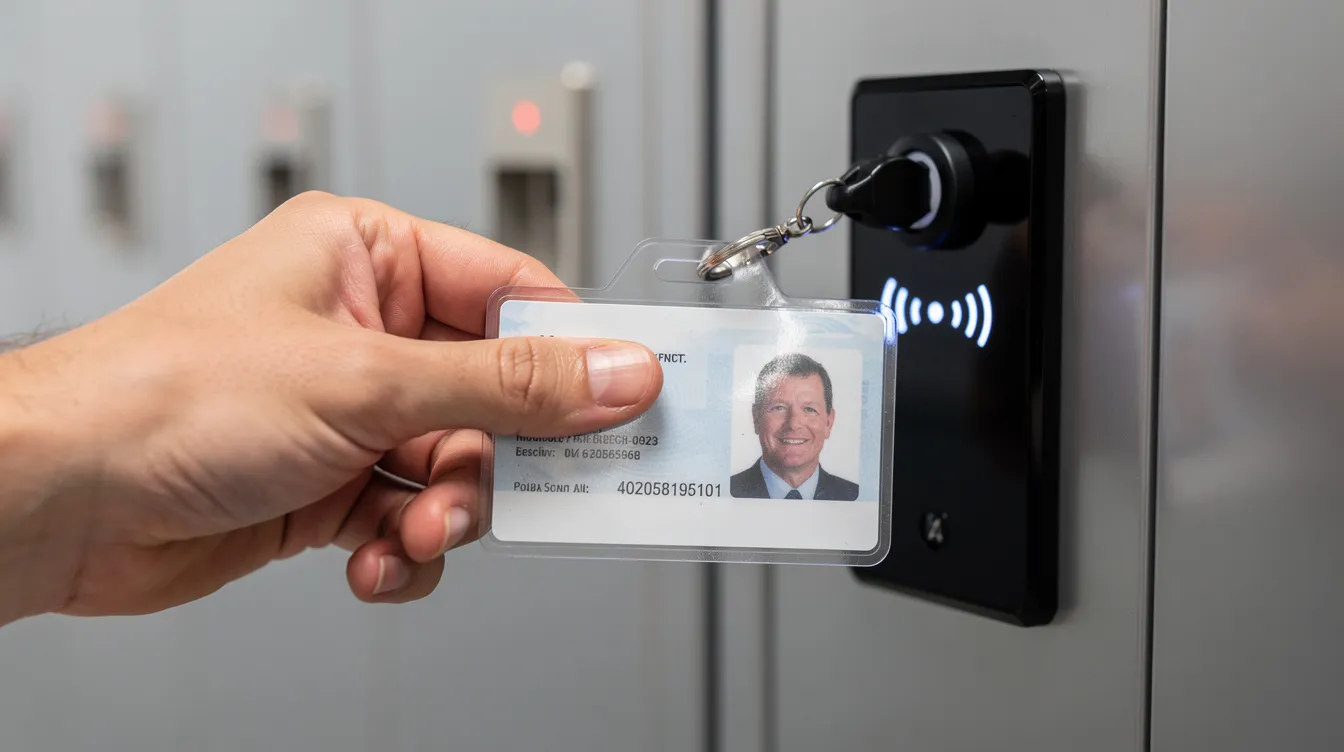
RFID technology utilizes electromagnetic fields to identify and authenticate users via tags – the same employee badge your team already swipes at the door. Smart lockers use RFID for secure, keyless access, cutting minutes off every shift change and giving employees a self-service experience that keeps lines short and throughput high.
At HonestWaves, our smart locker systems were built specifically for these environments across various industries – distribution, manufacturing, healthcare, schools – where downtime, clutter, and lost devices directly hit safety KPIs and your bottom line.
The Limits of Traditional Padlocks and Manual Locker Systems
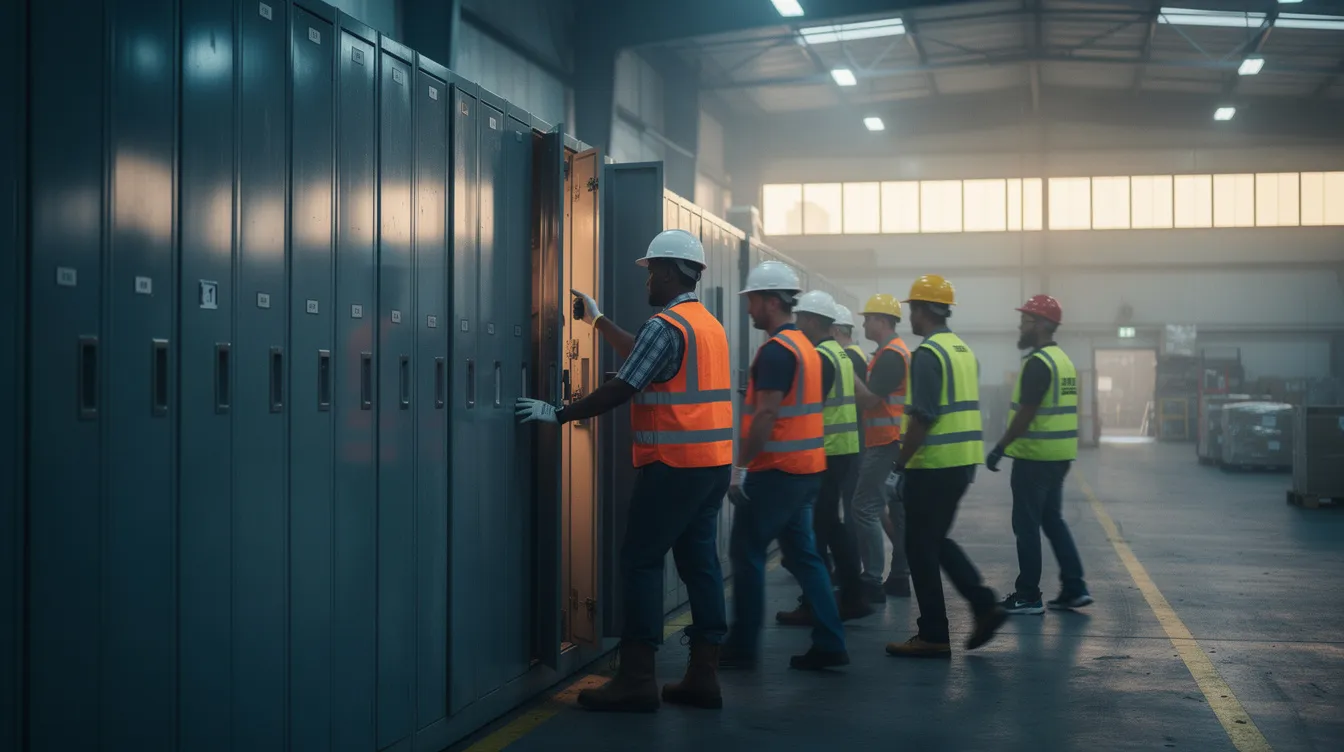
Padlocks were fine when a locker held a lunch box. Today, a single compartment might secure a $2,000 handheld scanner, personal devices, PPE gear, and personal items like wallets and bags. Traditional lockers can’t keep up.
The pain points are concrete:
- Managing keys becomes a full-time job – supervisors issue, track, and replace key rings constantly.
- Cut-off locks pile up whenever an employee leaves or loses a key.
- Zero audit trail means disputes over missing equipment go unresolved.
- Time lost at shift change as staff hunt for open lockers or working locks adds up fast.
Do the math: 200 workers × 30 seconds each = one full hour of non-productive time per shift change. Across three shifts, that’s three hours a day of wasted labor. Monarch Casino’s deployment of smart lockers documented roughly $31,000 in annual savings once they eliminated these delays and admin overhead.
RFID locker systems improve workplace security and reduce administrative burdens in a way padlocks never can. Automated locker management saves up to 90% of management time – turning what was a constant drain into a hands-off system. This isn’t a nice-to-have tech upgrade; it’s a direct, practical fix for problems that cost real money every shift.
How RFID Employee Lockers Work in a Smart Locker System
At its core, an RFID employee locker is a standard storage locker upgraded with contactless readers and digital control electronics. RFID systems consist of a tag, reader, and antenna – and in most cases, employees carry unique RFID tags typically integrated into ID badges or fobs they already own.
Access methods include:
- An rfid badge already used for door access or time-and-attendance
- Digital PIN codes for contractors, visitors, or employees without badges
- Both PIN + RFID together for added security in sensitive zones
The user flow is straightforward: scan your badge or enter a PIN at the central interface. The system assigns or opens a locker door automatically. The employee stores items and, where enabled, charges devices during the shift. At shift end, the same credential reopens the locker and can release it for the next user. This is how smart locker technology works in practice.
Smart lockers automate check-in and check-out processes, and RFID systems maintain comprehensive audit trails logging every interaction – who opened which door, when, and for how long. This enhances visibility and data reporting, and automated check-in/check-out reduces manual tracking errors that plague manual systems. Tagging grants employees access via their RFID credentials to designated lockers, whether those are 1-to-1 assigned personal lockers or shared pool day-use bays.
HonestWaves RFID Employee Lockers: Hardware Built for Round-the-Clock Facilities
HonestWaves is a B2B provider of smart lockers and cell phone charging stations built for hospitals, universities, corporate offices, and industrial plants. Our smart charging lockers are designed as infrastructure – not consumer gadgets.
Hardware configurations include:
| Cabinet Size | Best For | Footprint |
|---|---|---|
| 20-door | Small teams, pilot deployments | Corridors, break areas |
| 26-door | Mid-size operations, hybrid teams | Team rooms, security checkpoints |
| 32-door | Large plants, multi-shift operations | Main entrances, locker rooms |
Every compartment includes built-in charging – AC outlets and/or USB-C power delivery – making each bay both employee storage and a charging station for phones, laptops, radios, and handheld scanners. Charging capabilities ensure devices are always ready for use when the next shift arrives. Cabinets are cloud-connected, enabling remote status checks, firmware updates, and usage analytics.
Construction matters to facility managers: durable steel enclosures with tamper-resistant hinges, ventilation and cable routing for safe continuous charging, and finish options that match production floors, offices, and healthcare environments. RFID locks are harder to breach due to encrypted communication protocols, and each unit is engineered for tens of thousands of openings per year. Smart storage lockers automate check-in and check-out processes without mechanical failure.
Built-In Charging, Safety Certifications, and Manager Override: What Sets HonestWaves Apart
When every shift depends on working devices, combining charging and secure storage in one smart locker system eliminates an entire category of operational risk.
Charging and data protection: each locker bay is wired for safe charging of smartphones, handheld scanners, or small tablets. Surge protection is standard. Data-blocking USB ports prevent “juice jacking” – power flows in, but no data transfers out. This matters in any facility where personal devices or company equipment share space.
Whole-assembly safety certifications: HonestWaves locker systems carry whole-assembly electrical safety certifications (UL/NRTL), not just component-level approvals. This distinction matters to risk managers, landlords, and AHJs during inspections. A UL Listing on the complete assembly covers electrical shock, fire, and mechanical hazards – exactly what insurance underwriters look for.
Manager master-override access: authorized supervisors can unlock any locker in seconds via admin PIN, RFID card, or management console. This covers medical emergencies, security incidents, or forgotten credentials when a shift is about to start. All override events are logged for accountability. RFID technology enhances workplace security through instant credential deactivation – the moment an employee leaves or a badge is reported lost, access is revoked system-wide. Smart lockers reduce device theft by providing secure access that traditional locks simply cannot match.
For high-risk environments like healthcare facilities, optional UV-C disinfection sanitizes shared devices between users, achieving up to 99.9% pathogen reduction without extra manual steps. These features are standard options, not costly custom add-ons.
Designing Locker Workflows for Shift-Based Teams: 1-to-1 vs Shared Pool Models
The right locker workflow is as important as the right hardware, especially in plants running two or three shifts per day.
1-to-1 assignment: each employee locker is permanently tied to one worker’s employee badge. Workers keep PPE, personal items, and sometimes corporate devices in the same compartment. The “home locker” doesn’t change from shift to shift – ideal for personal storage and consistent routines.
Shared pool (day-use): employees or temps tap their badge to receive any free locker for the duration of a shift. This model works best for device management use cases – loaner phones, radios, scanners – and maximizes utilization of a finite number of storage lockers. RFID systems allow flexible and remote management of locker assignments, and RFID locker systems can optimize space usage by analyzing locker demand and usage patterns. Many smart lockers deployed in shared-pool mode can reduce device overstock from 20% to 5%.
Hybrid setups are common among HonestWaves customers: Bank A configured as assigned personal lockers for core staff, Bank B as shared digital lockers for scanners, tablets, or radios. Organizations should add a 15-25% buffer for locker capacity to handle headcount fluctuations. For example, a 3-shift manufacturing plant using two 32-door banks (64 bays total) can support 120 workers, with analytics from the smart locker system guiding capacity planning.
ROI for Facility Managers: Throughput, Accountability, and Employee Experience
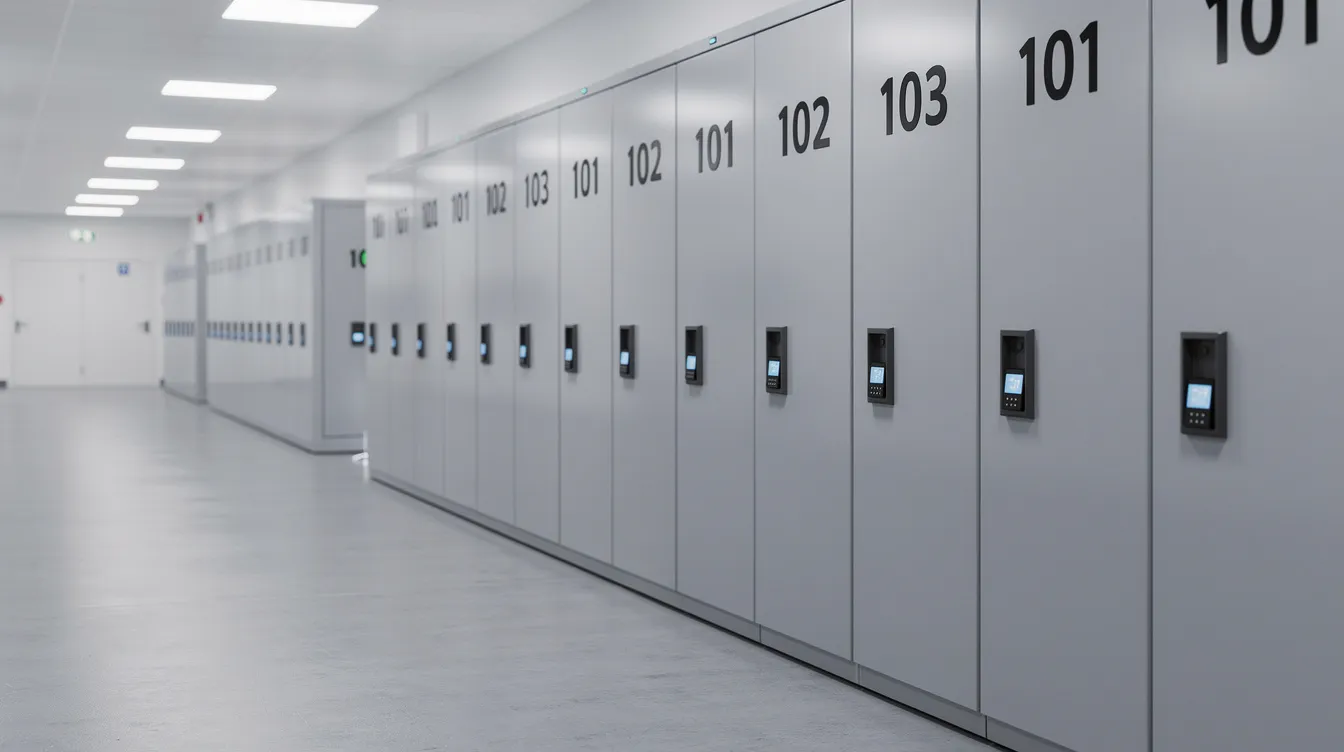
RFID employee lockers connect directly to metrics facility managers care about: throughput, overtime, and incident rates.
Time savings: automating locker access and device handoff saves 2–3 minutes per employee at shift change. For a 150-person operation across three shifts, that’s 15–22 hours per week of reclaimed productive time. Smart lockers provide real-time tracking of stored devices, and real-time tracking helps identify missing devices quickly – ending the “who had the scanner last?” investigations that drain supervisor time.
Accountability: every locker opening is tied to a user and timestamp. Lost devices or damaged PPE can be traced back to the last user. Smart lockers with RFID reduce device theft and loss significantly – one HonestWaves deployment at a Midwest distributor eliminated device losses entirely within 60 days, saving over 5 hours per week per location with ROI achieved in under three months. Smart lockers automate device check-in and check-out processes, and real-time tracking improves visibility and data reporting for lockers across every location.
Cleaner break rooms and organized employee storage also improve safety (fewer tripping hazards from bags and gear left on floors) and boost employee experience. HonestWaves’ usage analytics help identify peak locker demand times, right-size compartment counts before expansions, and prove the total cost of ownership in internal budget discussions. We also offer rentals and pilots, letting facilities test smart lockers at one gate or department before a campus-wide rollout.
Future-Proofing Device Management: From Simple RFID Lockers to Full Asset Tracking
You don’t need a complex software stack on day one. HonestWaves supports a “start simple, grow smart” approach:
- Phase 1: Deploy hardware as straightforward RFID/PIN smart lockers for personal storage and phone charging in a hybrid office or plant environment.
- Phase 2: Add device management workflows for shared radios, scanners, or tablets – automated check-in/check-out with charging.
- Phase 3: Upgrade to full asset-tracking software with integration into ITSM, MDM, or HR systems. Smart lockers can integrate with existing MDM systems for enhanced management, and RFID systems can integrate with existing building access systems and existing access control systems.
Our cloud-connected hardware is API-ready, supporting future connections to mobile device management platforms and enabling real time tracking of which serial-numbered device sits in which bay. Investing in UL/NRTL-certified, modular HonestWaves hardware now avoids a costly rip-and-replace when corporate mandates for digital chain-of-custody arrive.
Ready to transform your facility’s approach to employee storage and device management? Request a free consultation and let us help you design a locker roadmap that scales for the next 5–10 years – starting with the unique needs of your operation today.
FAQ: RFID Employee Lockers and Smart Locker Systems
These questions cover implementation details and operational concerns that facility managers commonly raise when evaluating office lockers and smart locker solutions for shift-based environments.
How long does it take to install RFID employee lockers in an existing 24/7 facility?
Most HonestWaves deployments are installed in phases to avoid disrupting operations, often starting with a single bank near a main entrance or break room. A 2–3 cabinet install (20–32 doors each) can typically be completed in a single day once power and network drops are in place. We provide site planning support to coordinate electricians, IT, and your facility team so work can be scheduled between shifts or on low-volume days.
Can HonestWaves RFID lockers integrate with our existing employee badges?
In most cases, yes. If your company already uses RFID or proximity badges for doors, time clocks, or Apple Wallet-based credentials, those same credentials can typically be mapped for locker access. Our engineers work with your security or IT team to configure badge data securely. Where identity systems aren’t yet unified, PIN-based keyless entry keeps everyone covered without extra tokens or keys.
What happens if power or network goes down – can employees still reach their belongings?
Honest Waves lockers include controlled fail-safe behaviors reviewed during onboarding. Authorized managers retain physical and service-access methods to open any locker in emergencies, and all override events are recorded once systems come back online. Because these lockers hold personal items and critical devices, business continuity planning – including redundant power options – is part of every deployment.
Are HonestWaves smart lockers only for phones, or can they handle other devices and PPE?
While we’re known for secure phone charging stations, the same hardware supports handheld scanners, radios, small tablets, laptops, keys, and personal storage for wallets and bags. Different door counts and compartment sizes can be combined to create zones optimized for material storage, device management, or both. Share an inventory of your devices and employee storage needs, and we’ll recommend the right efficient mix – whether you need to store bags, manage equipment, or keep shared gear charged and ready.