

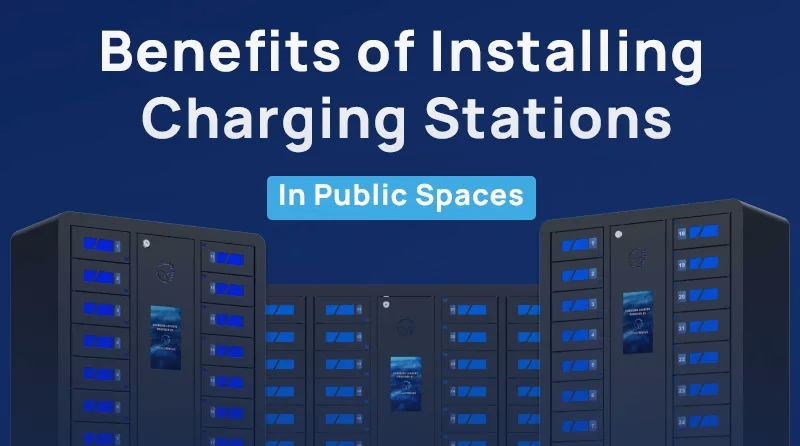
Last Friday, a school administrator walked down a hallway hunting for a working outlet. A student needed to call a parent. The phone showed 2% battery. The only outlet sat behind a locked staff door.
That tiny moment explains the Benefits of Installing Charging Stations. This is not about shiny kiosks. It is about removing friction. Friction turns into interruptions, safety risks, and bad reviews.
I used to think charging stations were optional. I was wrong. After seeing the same problems repeat in schools, offices, and retail, I changed my mind. Not because of tech hype. Because of human behavior.
Executive Summary
You will learn how charging stations create measurable value in three settings: schools, offices, and retail. You will also learn when they backfire, and how to avoid the common traps.
You will get a practical station-type comparison, modern standards to look for in 2026, a defensible ROI model, placement rules, and a troubleshooting guide for predictable failure points.
You will also see five short case studies. They include outcomes and timelines. I kept the numbers conservative on purpose. Optimistic math convinces nobody.
If you need a quick definition first, start with What a phone charging station is.
What are the biggest benefits in one sentence?
The biggest Benefits of Installing Charging Stations are fewer interruptions, safer connectivity, cleaner spaces, and longer on-site engagement you can track in tickets, dwell time, and satisfaction.
Here is the catch. Benefits only appear when you choose the right station type and the right placement. Buying the wrong unit feels like progress. Then complaints start.
Smartphones are nearly universal in the US. That makes charging demand boring and constant. Boring demand still creates real costs when you ignore it.
Why do schools benefit from charging stations even with phone restrictions?
Schools benefit when charging supports safety and logistics, not classroom scrolling. Students still need power for rides, schedule changes, and supervised device programs.
Phone restriction policies keep expanding. That does not remove the need. It shifts charging to lunch, passing periods, and after school. If you ignore that shift, students charge in bad places.
For education-specific ideas and products, see charging solutions for schools and universities.
What I wish I had known earlier
I used to recommend hallway wall outlets as a quick fix. It sounded efficient. In practice, it created clusters. Clusters created supervision problems. Now I prefer fewer stations placed in monitored zones.
Case study 1: fewer front office interruptions
A high school tested one 16-bay lockable station near the library entrance. They posted one rule: charge during lunch and pick up before the bell. After four weeks, the front office logged fewer “borrow a cable” requests. Staff also reported fewer students lingering around hallway outlets.
If your team debates lockers, this contrarian safety guide helps: school locker safety and charging tradeoffs.
How do charging stations support safety and emergency readiness?
Charging stations support safety by keeping phones usable during long days. That helps with parent contact, transportation changes, and emergency alerts.
Dead phones create chaos in pickup lines. They also push people to roam for power. A station keeps people in supervised spaces. It reduces last-minute scrambles.
I will say something unpopular. In many schools, open charging tables are a liability magnet. They look friendly, but they invite cable loss and device mix-ups. If you cannot supervise the area, assume problems will happen.
Do offices really need charging stations when people bring chargers?
Offices need shared charging because people forget cables and USB-C has changed the ecosystem. Meeting rooms waste time when power access is scarce.
For a broader workplace overview, see this guide to phone charging stations for businesses.
Behind the curtain: what breaks meetings
A meeting rarely fails because someone cannot charge. It fails because charging becomes the first distraction. People talk about cables instead of decisions. The room loses momentum.
Case study 2: meeting room delays shrink
A 120-person office added small multi-port hubs to six meeting rooms. They also added one secure station near reception for visitors. Over one month, the IT desk saw fewer charger requests. The office manager estimated about ten minutes saved per day across teams.
How can retail use charging to increase dwell time without creating loitering?
Retail wins when charging sits in a controlled zone, like customer service or a lounge. It improves comfort and can increase dwell time, while staff keep visibility.
Here is what surprises people. A charging station does not sell products by itself. It buys attention. You still need layout, signage, and a reason to stay.
For retail examples, see phone charging stations for malls and retail outlets.
Case study 3: controlled lounge wins
A mall retailer tested a charging kiosk near a staffed counter for eight weeks. They tracked lounge use and nearby sales by time blocks. They saw more time spent in the zone and fewer outlet requests at the desk. The biggest benefit was calmer customers during waits.
Which charging station types fit schools, offices, and retail?
Pick the station type based on supervision, theft risk, and how long people stay. One size fails across schools, offices, and retail.
I prefer solutions that reduce staff babysitting and cable loss. If cables are loose, cables vanish. That is not a theory. That is a pattern.
| Type | Best for | Key benefit | Tradeoff |
| Tabletop hub with USB-C and USB-A | Offices, staff rooms | Fast, low cost | Cables disappear |
| Wall-mount station | Hallways, lobbies | Saves space | Needs solid mounting |
| Lockable charging locker | Schools, gyms, retail | Theft control | Needs clear user flow |
| Freestanding kiosk | Retail, events | Branding options | Higher upkeep |
| Mobile charging cart | Classrooms, training | Flexible | Must be secured |
| Power bank rental system | Venues, malls | Charge while moving | Stock control |
| Built-in furniture charging | Offices, lounges | Clean design | Hard retrofit |
| Outlet towers | Waiting areas | Simple access | Open theft risk |
To browse station categories, see the charging stations collection and the full products catalog.
What technical standards matter most in 2026?
USB-C Power Delivery, clear wattage per port, and safe electrical design matter most. Outdated ports cause slow charging, heat, and user complaints.
Wireless charging helps in offices and lounges. It still disappoints some users. Cases, misalignment, and slow speed create more complaints than you expect.
For safety, look for UL listings or equivalent safety marks on products. For permanent installs, follow local code requirements. The National Electrical Code often guides safe electrical work in the US.
What does it cost, and how do you defend ROI to leadership?
Costs range from simple meeting-room hubs to secure lockers and kiosks. You defend ROI by pricing time saved, reduced support load, and reduced device loss.
Start with staff time saved. Assume three charging interruptions per day. Assume three minutes each. That is nine minutes daily. Across 200 workdays, that is 30 hours saved.
Now add risk. Open charging tables can lead to lost devices. Even one incident can erase months of savings.
For budgeting examples, see SecureCharge 16 or a smaller hub like ChargeHub 5.
Case study 4: theft incidents stop
A manufacturing office used an open table for charging. Two phones disappeared in one quarter. They replaced it with a secure locker in the break room. Incidents stopped in the next quarter, based on internal logs. Employee trust improved right away.
Where should you place stations for maximum impact?
Place stations where people already wait, where staff can see them, and where cables will not create trip hazards. Then add one sign that sets expectations.
Schools: main office, library entry, commons. Offices: meeting rooms, reception, break rooms. Retail: customer service, fitting-room waiting zones, cafe seating.
For placement ideas across environments, see public phone charging locations and the main phone charging station overview.
What predictable failures should you plan for?
Most failures come from missing cables, unclear rules, blind-spot placement, and slow charging. Solve those four and you prevent most complaints.
Cables disappear. Use tethered cables, lockable bays, or controlled checkout. Rules stay vague. Post one line with time limits. Stations sit in blind spots. Move them into visible zones. Ports underperform. Test with real USB-C devices.
Case study 5: the cable black hole
A coworking space started with an open station and loose cables. Half the cables vanished in two weeks. They switched to tethered cables and a simple sign. Cable loss dropped sharply. The front desk stopped managing charger drama.
Which tools and brands are worth considering, and what hype should you ignore?
Good vendors publish clear power specs, support modern USB-C, and build durable housings. Hype vendors hide wattage and ship flimsy cables that fail fast.
HonestWaves focuses on commercial environments and security-first options. LocknCharge and Bretford show up often in education device programs. PowerGistics also targets school workflows. ChargeFUZE focuses on public charging programs for venues and retail.
For power components, Anker and Belkin often deliver consistent quality. UGREEN can offer good value, but check certifications and real wattage. For surge protection, APC and Tripp Lite are common in office deployments.
If you want a scoped recommendation for your space, use the custom quote request.
What about privacy, data security, and “juice jacking” fears?
Use power-only ports or data-blocking practices in public charging. People worry about USB data risks, and visible trust signals matter.
Post a short notice that explains your setup. Use lockers to reduce tampering. Inspect cables often, and replace damaged ones quickly.
Conclusion: install less, but install smarter
Charging stations are a small form of hospitality. In schools, they support safety and reduce hallway chaos. In offices, they prevent meeting-room power drama. In retail, they keep shoppers comfortable and present.
The Benefits of Installing Charging Stations show up fastest when you choose control. Start with one pilot location and measure for 30 days. Then scale what worked and retire what did not.
If you have a space that keeps generating outlet fights, tell me what it is. I am always curious which tiny friction is causing the biggest mess.
FAQ
Are charging stations worth it for schools?
Yes, if you control placement and supervision. Secure charging reduces outlet hunting and supports safety workflows.
Do charging stations increase retail sales?
They can, when charging, sit near service zones. It improves comfort and can increase dwell time.
Will charging stations encourage phone use in class?
They can, if you place them in unsupervised corridors. Place them near staff and align rules to policy.
What is the safest setup for students?
A lockable station in a supervised area. Avoid unsupervised open charging with loose cables.
How many ports do I need to start?
Pilot with 8 to 16 ports in one high-traffic area. Expand based on usage.
How do I prevent cable theft?
Use tethered cables, lockers, or controlled checkout. Open cable piles fail.
Do I need an electrician?
Often, yes for wall mounts or higher-capacity installs. Follow local code and safety rules.
What is a good time limit?
In public spaces, 20 to 40 minutes works well. It provides a meaningful top-up.
What should I measure to prove value?
Track support requests, complaints, zone dwell time, and device-loss incidents.
Are charging stations a good investment for businesses?
They can be, if you place them where they reduce support load and improve experience.