

- Federally qualified health centers and community health centers face unique challenges that blend cybersecurity risk, physical security gaps, and the daily reality of managing patient belongings and mobile devices across multiple clinic sites.
- A modern FQHC security strategy must integrate cybersecurity controls, physical access management, and secure infrastructure for phones, tablets, and laptops used in clinics, mobile units, and school-based sites.
- Secure phone charging stations, smart lockers, and charging tables from HonestWaves help protect patient data and belongings while reducing staff workload and loss-related reimbursements.
- The 2026 HIPAA Security Rule changes, rising ransomware attacks, and growing reliance on electronic health records make proactive security investments urgent for health centers of all sizes.
- This article provides a concrete, step-by-step framework FQHC leaders can use to identify gaps and implement practical security solutions, including managed services and smart locker infrastructure.
Why FQHC Security Solutions Matter in 2026?
Picture a mid-sized health center network: six clinic locations, two mobile units, one school-based site. Every provider depends on an EHR system that can’t go down. Patients are checking portal messages on their phones in the waiting room. And last month, a nursing staff member clicked a phishing link that locked out three workstations for 48 hours. Phishing remains a common attack vector in the healthcare industry, and this scenario is playing out at federally qualified health centers across the country.
The mission of community health centers is to deliver quality care to underserved populations – often on razor-thin margins. Security failures don’t just cost money. They interrupt patient care, erode community trust, jeopardize HRSA funding, and put patient safety on the line. From 2018 to 2023, large healthcare breaches doubled and the number of individuals affected surged by over 1,000 percent, driven largely by ransomware and hacking.
The pressures are intensifying: more OCR audits, pending HIPAA Security Rule updates expected to finalize around mid-2026, rapid telehealth growth, and patients arriving at every visit with smartphones they expect to charge. A layered security approach integrates physical and cybersecurity measures, and the solutions must be affordable, scalable, and tailored to FQHC workflows.
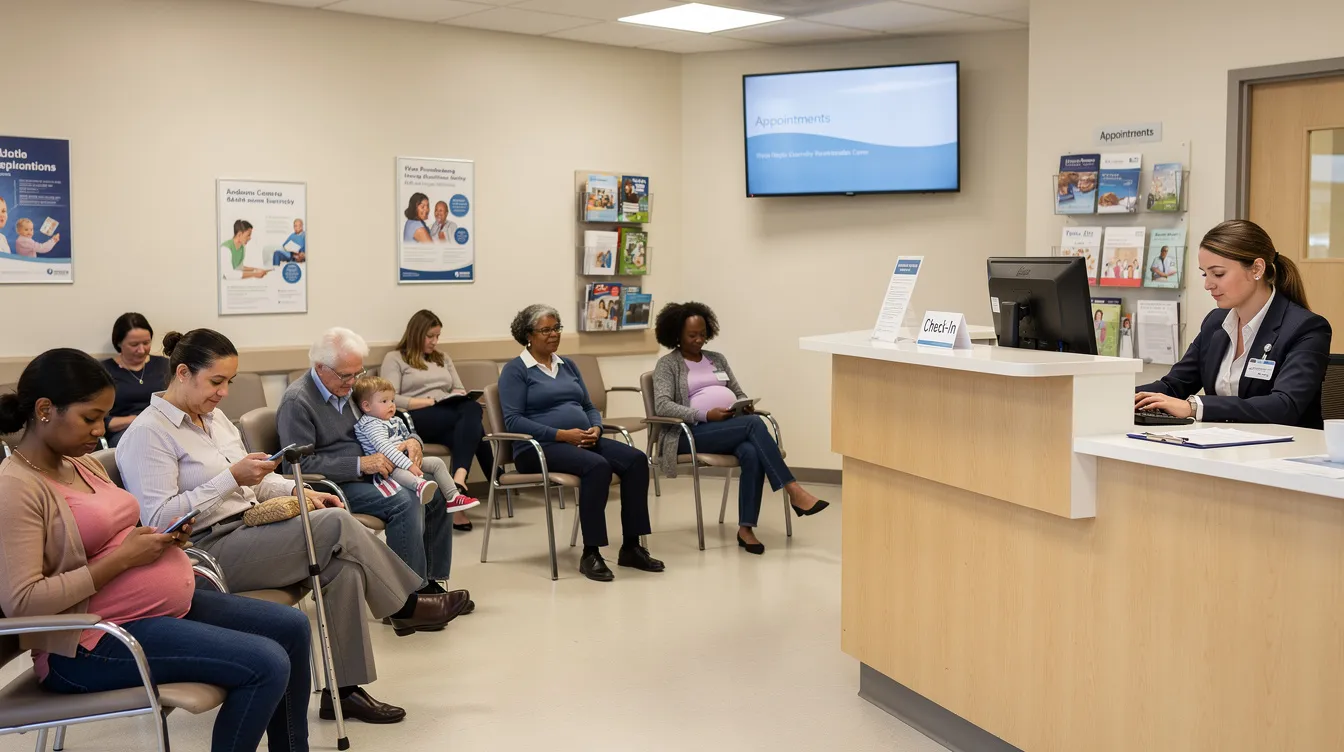
Core Security Challenges Facing Federally Qualified Health Centers
FQHCs share many of the same risk factors as large hospital systems – but with a fraction of the staff and budget. That makes prioritization critical, and it means the consequences of getting it wrong hit harder and faster.
Cybersecurity weaknesses are pervasive. Many healthcare centers still run legacy systems with delayed patch cycles, weak passwords, and unsecured Wi-Fi across clinic and community locations. FQHCs face unique security challenges due to limited IT staffing, often with just one to three IT professionals supporting dozens of sites. Healthcare facilities must protect patient safety and ePHI under constrained budgets, and that constraint often means proactive security projects get pushed to the back burner.
Physical security gaps compound the problem. Open waiting rooms, thinly staffed nights, unlocked storage rooms, and poor tracking of patient belongings and staff devices create easy targets. Data loss can be catastrophic for healthcare providers without proper backup, and the same applies to lost or stolen laptops and tablets containing cached patient data.
Data governance issues round out the picture: inconsistent policies about patient phone use, ad-hoc device charging in exam rooms, and no standard processes for storing essential items during procedures. Every one of these gaps is a potential compliance violation – and a potential entry point for cyber threats.
Regulatory Compliance Landscape: HIPAA, HRSA, and Beyond
FQHC security solutions must align with HIPAA, HRSA BPHC requirements, and applicable state privacy laws. The regulatory requirements aren’t getting simpler – they’re getting more prescriptive.
FQHCs must conduct annual security risk analyses for HIPAA compliance. Regular security risk assessments are a core requirement under HIPAA, and HIPAA mandates annual updates to the Security Risk Analysis. The 2024 NPRM to strengthen the HIPAA Security Rule proposes removing the distinction between “required” and “addressable” safeguards, making controls like encryption and multi-factor authentication mandatory across the board. Specifically, encryption of all PHI in transit and at rest becomes mandatory by 2026, and multi-factor authentication is required for all administrative access to HIPAA systems.
HRSA BPHC compliance matters just as much. Operational site visits in 2025–2026 evaluate IT capacity, data protection, and incident response alongside clinical quality measures. OCR audits require comprehensive documentation of all systems handling PHI – including how devices are stored and charged in clinical areas.
Non compliance can lead to regulatory penalties and increased infection rates. On the flip side, compliance reduces contamination rates by 55.7% in healthcare, reinforcing that these regulations serve patient outcomes, not just paperwork. For healthcare centers hosting connected equipment, FDA 21 CFR Part 820 governs medical device storage compliance, adding another layer to the regulatory landscape.
Secure storage solutions for patient belongings, phones, and tablets directly support HIPAA’s physical safeguard requirements by reducing unauthorized access to devices that contain or access patient data.
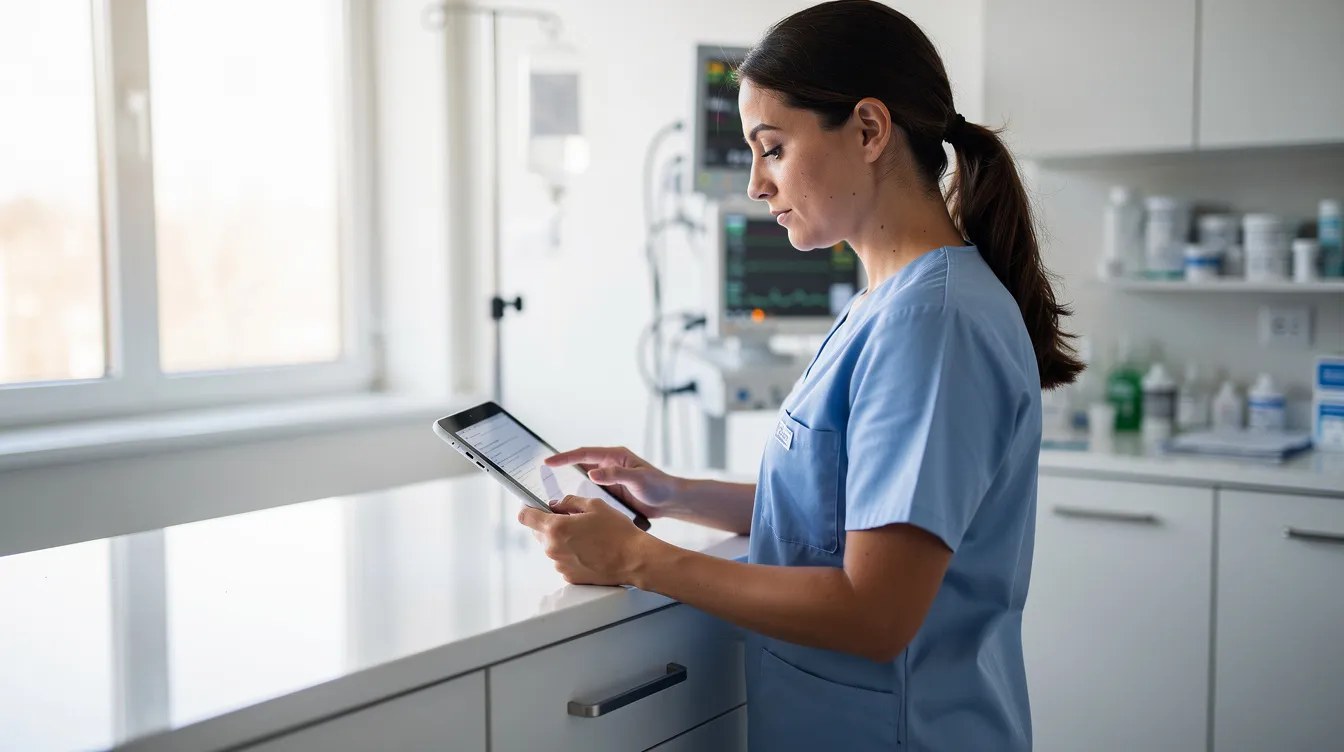
Protecting Patient Data: From EHR Systems to Personal Devices
Protected health information now flows across EHR platforms, patient portals, texting apps, and patient-owned phones. The traditional focus on server and network security – firewalls, VPNs, encrypted EHR hosting – remains essential, but it’s no longer sufficient. Security tools must extend to tablets on clinical carts, shared kiosks at registration, and staff laptops carried between sites.
The risk from patient devices is real and often overlooked. Phones plugged into uncontrolled USB outlets can be exposed to data exfiltration or malware through “juice jacking.” Visitors accessing public Wi-Fi, or leaving portal access open on unattended devices, create additional exposure points. Data encryption must be applied for data both at rest and in transit, and end-to-end data encryption ensures ePHI remains unreadable if intercepted.
Best practices for protecting patient data in a health center include:
- Multi-Factor Authentication (MFA) is crucial for defending against credential theft across all clinician and administrative staff logins
- Endpoint Detection and Response (EDR) provides continuous monitoring and threat isolation on every device touching the network
- Regular vulnerability scanning helps catch configuration gaps before attackers do
- Network segmentation and zero-trust models are effective for IoT security; segregating networks reduces potential lateral movement during attacks
- Cybersecurity measures including firewalls, encryption, and regular audits form the baseline defense layer
Rigorous vendor management requires maintaining Business Associate Agreements (BAAs) with every partner that touches ePHI. Ongoing security awareness training helps staff recognize security threats, and training on secure remote work practices is essential for workforce security – especially as telehealth expands.
Implementing a clear incident response plan ensures timely breach reporting and defines escalation procedures when incidents occur. Continuous monitoring can improve incident response times without large teams, which is critical for FQHCs with small IT departments. Using data-blocking USB technology in public charging areas prevents data exfiltration when patients or visitors charge devices onsite – a simple physical control with outsized impact.
Patient Belongings and Physical Security in Community Health Centers
Mismanaged patient belongings – phones, wallets, hearing aids, assistive devices – create both patient safety risks and real financial exposure. When a patient’s hearing aid disappears during a procedure or their phone goes missing from a waiting room, the organization faces reimbursement claims, staff time spent searching, and damaged trust.
Most healthcare centers still rely on manual processes: paper logs, simple plastic bags, unsecured cabinets, or ad-hoc storage in nurse stations. The failure points are predictable. Items get left in procedure rooms during turnovers. Bags are misplaced during intra-facility transfers. Valuables left in waiting areas vanish. Even in smaller health centers, annual reimbursements for lost items can reach five or six figures.
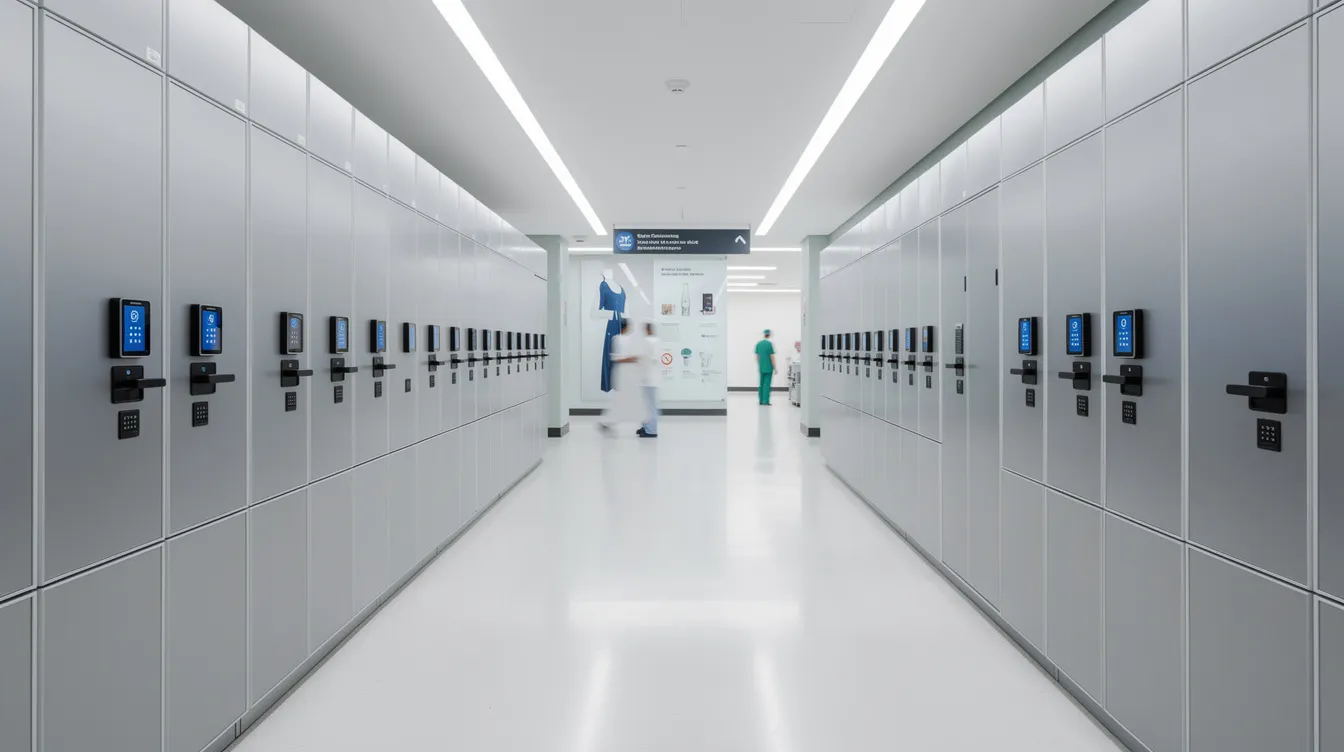
Smart lockers offer a fundamentally better approach. Smart lockers automate data gathering for patient belongings, tracking valuables with a computer-controlled sensor network. They maintain real-time reports on item availability and sign-out patterns, giving administrative staff and nursing staff clear visibility. Smart lockers reduce human error in managing patient belongings, and healthcare centers can use RFID tracking with smart lockers to maintain chain of custody from intake through discharge.
Secure phone charging stations prevent device theft in public areas, addressing one of the most common sources of patient complaints. Standardized, centralized storage systems lower anxiety during behavioral health visits, reduce disputes, and improve satisfaction scores.
Technology Infrastructure and Managed Services for FQHC Security
Many FQHCs depend on managed services to keep networks, EHR systems, and security tools running across multiple sites. With limited internal resources, outsourcing critical IT functions isn’t a luxury – it’s a survival strategy.
FQHC managed IT services support IT infrastructure management across the entire organization. Managed IT services include cybersecurity and compliance management, covering everything from 24/7 monitoring and patch management to endpoint protection and clinical device management. FQHCs require tailored IT solutions for unique operational challenges – a one-size-fits-all approach rarely works across clinics, mobile units, and school-based sites.
Key capabilities to look for in a managed services partner:
- Data backup and disaster recovery are key features of managed IT services
- Managed IT services ensure compliance with regulations like HIPAA through centralized logging and vulnerability scanning
- FQHCs benefit from round-the-clock IT support services, especially when incidents strike outside business hours
- Integration of infrastructure devices like smart lockers and charging stations into the same managed environment for centralized monitoring and firmware updates
When evaluating SLAs, health center leaders should request clear metrics: uptime guarantees for clinical systems, response times for security incidents, and defined responsibilities for EHR support and backup. Even with managed services, FQHCs must maintain internal ownership of risk decisions, policies, and vendor oversight to remain audit-ready. No partner replaces the organization’s responsibility to monitor its own security posture.
Secure Phone Charging, Smart Lockers, and Charging Tables in Healthcare Centers
Phones and tablets are now essential items for both patients and staff. Secure charging and storage isn’t an amenity – it’s part of a health center’s overall security and operational efficiency strategy.
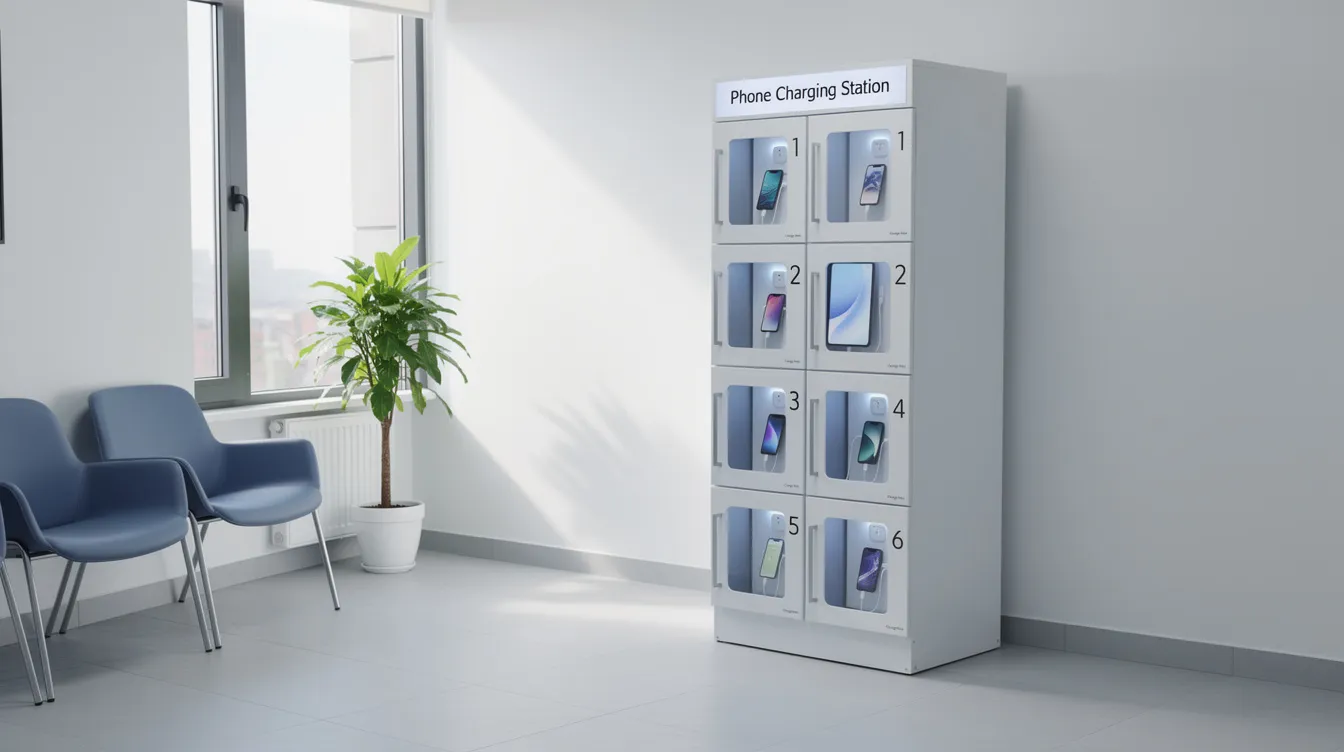
Phone charging stations configured for waiting rooms and lobbies feature tamper-resistant enclosures and data-blocking USB ports. Public charging stations can support multiple device types simultaneously, handling both Android and iOS devices without requiring patients to carry their own cables. Cell phone charging stations in hospitals reduce the clutter of loose cables and eliminate the need for patients to hunt for open outlets near medical device equipment.
Smart lockers tailored to healthcare centers offer individually locked bays for patient belongings with PIN or RFID access and full audit trails for every access event. RFID or pin access enhances security for charging stations, and optional integration with patient wristbands or visitor badges streamlines the workflow for administrative staff at intake.
Charging tables and portable charging kiosks are best deployed in behavioral health day rooms, infusion centers, and dental waiting areas – anywhere patients wait for extended periods. They reduce staff interruptions from patients asking for chargers, address complex needs in long-wait settings, and keep clinical areas organized.
Charging stations can include UV-C disinfection features for hygiene, allowing simultaneous device charging and surface disinfection to support infection prevention. Cloud-connected charging stations offer usage analytics for management, enabling the team to report on utilization and identify gaps in coverage. These hardware solutions minimize trip hazards from loose cables and keep unsafe power strips away from sensitive medical equipment.
How HonestWaves Supports FQHC Security and Patient Experience?
HonestWaves is a B2B hardware partner focused on secure device charging and smart storage solutions for hospitals and healthcare centers, including FQHCs and community health centers. The product line spans wall-mounted phone charging stations, freestanding portable charging kiosks, charging tables, and smart locker designed for patient belongings and staff devices.
Every USB port includes built-in data blocking technology. Lockable compartments, cloud-connected management dashboards, and configurable access control (PIN, QR code, RFID) provide the security and tracking that healthcare providers need. UV-C disinfection options, a lifetime hardware warranty, and support for large multi-site deployments with consistent configurations make HonestWaves a practical fit for health center networks with complex, distributed operations.
HonestWaves solutions integrate into a broader FQHC security strategy by complementing existing HIPAA controls, reducing belongings loss, collecting usage analytics, and freeing clinical staff from ad-hoc belongings management. If you’re evaluating FQHC security solutions that address both physical and digital risk, get a quote to outfit a pilot clinic, mobile unit, or your entire network.
Step-by-Step Roadmap to Implement FQHC Security Solutions
This is the practical part. Here’s how operations leaders can plan and implement over three to six months without learning the hard way.
- Assess: Conduct walk-throughs of waiting rooms, registration areas, procedure rooms, and behavioral health units. Document current device use, storage practices, and where patients currently charge phones. Run an analysis against your HIPAA Security Risk Analysis to identify gaps.
- Prioritize: Rank gaps by impact and feasibility. Unsecured belongings in high-volume clinics, unmonitored public charging areas, and missing device charging in long-wait settings like infusion clinics are typically the highest-priority targets.
- Standardize policies: Define who can access lockers, how items are logged at intake, how long items can be stored post-discharge, and escalation procedures for unclaimed belongings. Make these processes part of your compliance documentation.
- Pilot: Deploy secure phone charging stations and smart lockers in one to two locations. Collect feedback from frontline nursing staff, registration team members, and patients. Refine workflows before system-wide rollout.
- Integrate and document: Add hardware to your asset inventory, schedule firmware updates through your managed services provider, review access logs, and update your HIPAA Security Risk Analysis with the new controls.
Measuring ROI: Cost, Compliance, and Patient Safety Benefits
Quantifying security investments in terms that resonate with CFOs and grant funders is essential to the organization’s success. Without data, security remains a cost center instead of an enabler.
Direct cost reductions include fewer reimbursements for lost valuables, lower ad-hoc spending on low-quality chargers, and reduced IT time spent troubleshooting unsafe power setups. One hospital system achieved a 25% reduction in inventory costs and estimated $100,000 in annual savings after deploying smart cabinet technology for high-value items.
Compliance and risk benefits are harder to quantify but critical: stronger HIPAA physical safeguards, better audit documentation, and lower breach likelihood from compromised USB ports or stolen devices. A healthcare provider that can demonstrate these controls during an OCR audit or HRSA operational site visit is in a fundamentally stronger position than one scrambling to maintain compliance after the fact.
Patient safety and experience improvements include reduced confusion for older adults whose hearing aids or glasses are secured, fewer falls from patients searching for belongings, and higher satisfaction scores. Track specific metrics before and after implementation: belongings loss claims per quarter, incident reports involving patient devices, wait-area complaints about charging, and staff time spent on belongings issues. Use this data in HRSA UDS narratives, grant applications, and board reports to show how security infrastructure supports your mission and improves patient outcomes.
Conclusion: Building Resilient, Patient-Centered Security in Health Centers
Modern FQHC security blends cybersecurity, physical security, and patient-friendly infrastructure like secure charging and lockers into a coherent plan that supports efficient care delivery. Small, targeted investments – starting in high-risk, high-traffic areas – deliver outsized benefits in compliance, patient safety, and community trust.
Security isn’t a compliance checkbox. It’s the infrastructure that keeps your organization running and gives patients a calmer, more dignified experience. As HIPAA regulations tighten, telehealth usage grows, and patient expectations become increasingly digital, the healthcare centers that invest now in practical, layered security will be the ones that thrive. Contact HonestWaves to explore how secure charging and locker solutions fit into your next-year security plan.
Frequently Asked Questions
How do secure phone charging stations prevent data theft?
Secure charging stations use data-blocking technology that physically disables the data pins in USB connectors, allowing only power transfer. This prevents malware injection and data exfiltration – a risk known as “juice jacking.” In a healthcare environment where patient portals and EHR apps run on personal devices, this is a critical safeguard.
Where should smart lockers be placed in a health center?
The highest-impact placements are at intake and registration, behavioral health units, infusion centers, and emergency or urgent care areas – anywhere patients are separated from their belongings during care. Location affects both security and workflow; lockers near registration enable staff to implement storage and retrieval without extra trips.
How do FQHCs with mobile clinics deploy portable charging kiosks?
Portable charging kiosks are designed to be moved between sites without permanent installation. FQHCs can assign kiosks to mobile unit schedules, store them securely between deployments, and manage them through cloud dashboards – no dedicated on-site IT expertise required.
What funding options exist for FQHC security hardware?
Health centers can use capital budgets, operational funds, or HRSA grant resources. Rental and leasing options reduce upfront costs. HonestWaves supports planning for multi-site rollouts and can provide documentation to support grant applications and procurement processes.
How do locker and charging solutions fit into existing HIPAA policies?
Update your Security Risk Analysis to include new hardware as a physical safeguard. Document access control procedures, incident response plans for lost items, and staff training protocols. These additions strengthen your compliance posture and provide clear documentation for audits.