
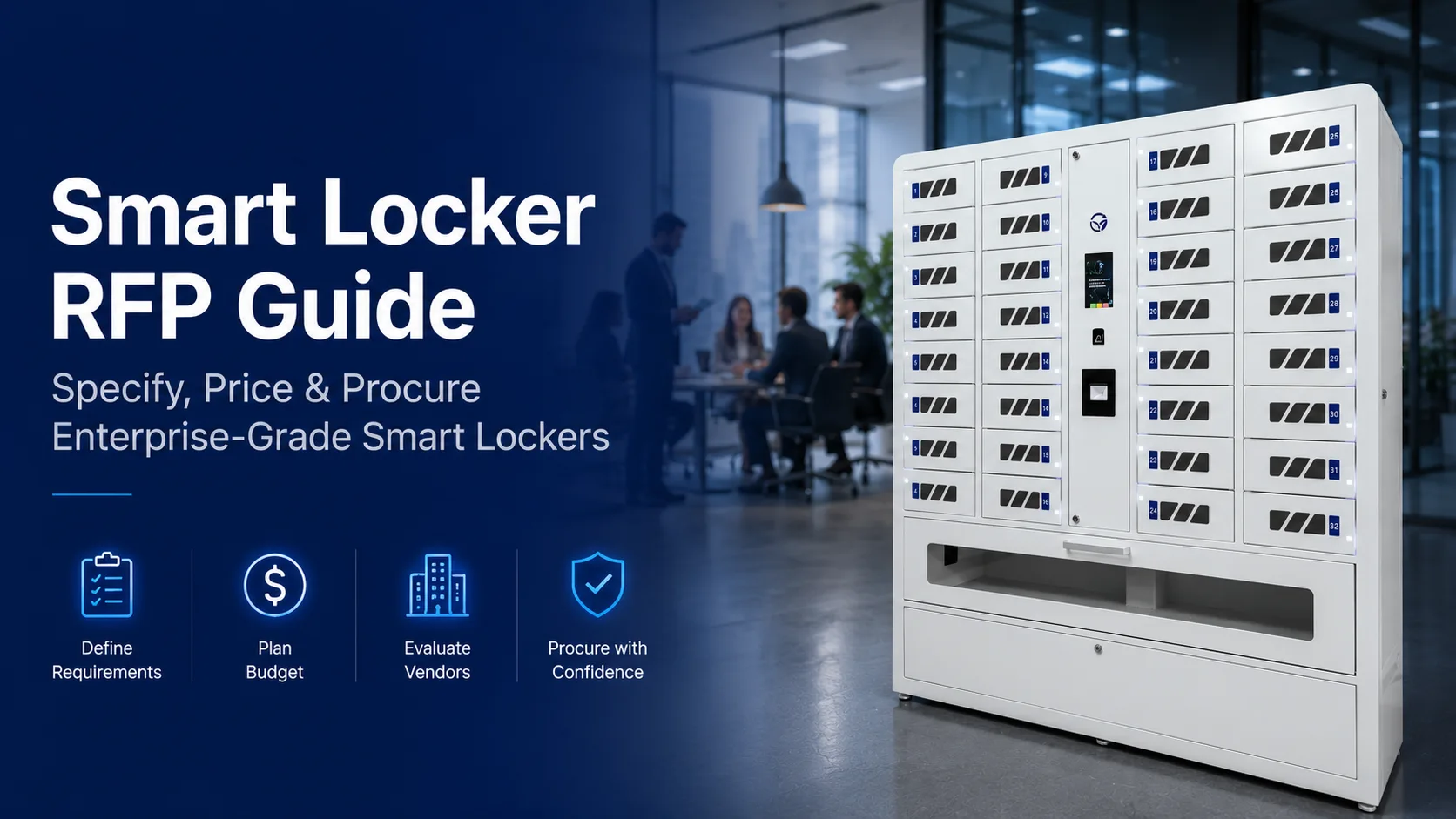
Introduction: Avoiding Lock-In in Your Next Smart Locker RFP
Don’t get trapped into a proprietary smart locker software subscription you can’t escape. A smart locker RFP is a formal request for proposals to buy corporate lockers: secure, digitally controlled storage systems that use PIN codes, RFID badges, mobile apps, or facial recognition. Procurement, CRE, and CIO teams should control the specification before suppliers define the rules.
Smart lockers are growing across hybrid workplaces, universities, hospitals, schools, government facilities, and click-and-collect workflows. Corporate adoption accelerated in 2024, and the 2025–2026 demand is being driven by device programs, asset swaps, parcel pickup, and self-service equipment access. Smart lockers now sit beside phone charging stations, portable charging kiosks, charging tables, and other connected infrastructure.
HonestWaves supplies secure phone charging stations, smart locker systems, portable kiosks, and charging tables for business, education, healthcare, venues, and public facilities. Our position is simple: zero hidden software fees, premium locker hardware, custom integration, and lifetime hardware warranty. This guide gives you a copy-pasteable smart locker RFP template, technical requirements, and a TCO checklist to compare proposals accurately.
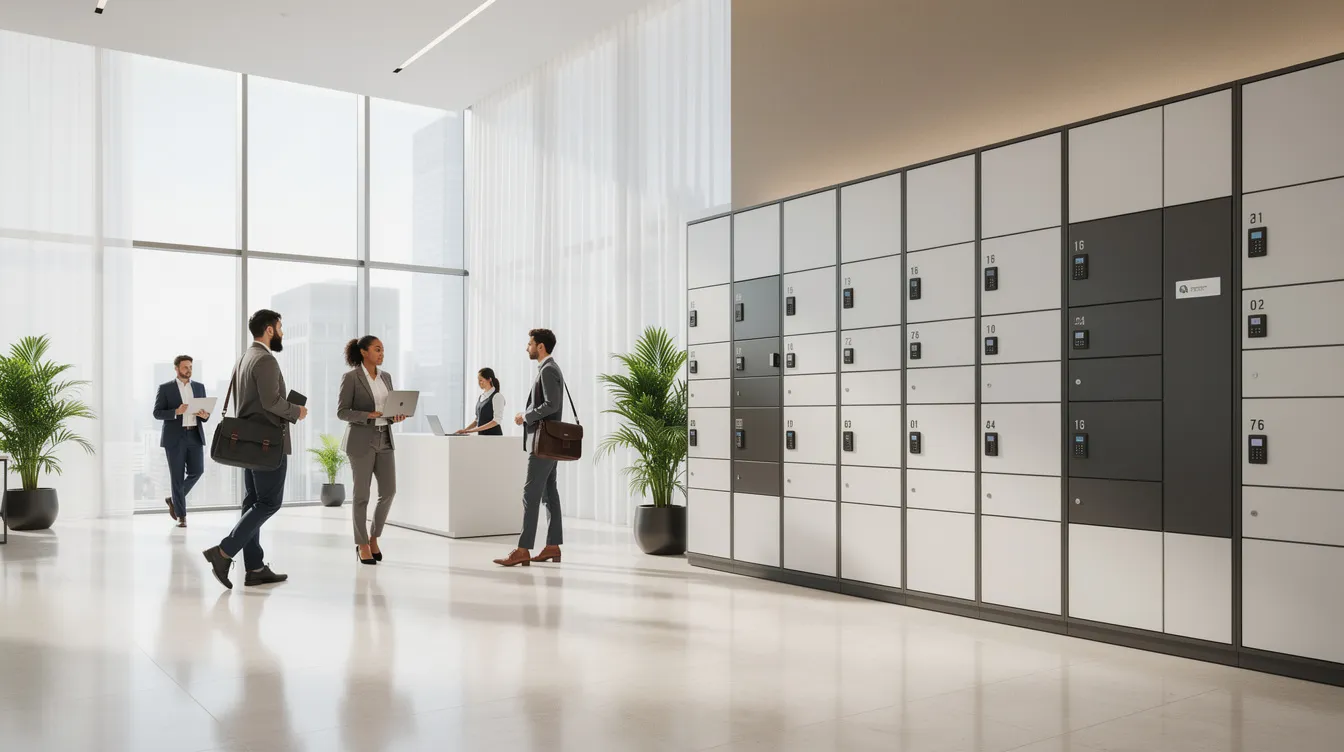
Key takeaways: 5 smart locker procurement pitfalls to avoid
Most failed locker projects trace back to five avoidable mistakes: vague specs, bad software terms, poor integration, missing compliance, and weak security. Use these risks as the lens for every vendor response, every demo, and every pricing table. Short answer: if the RFP is soft, the contract will be expensive.
Key procurement pitfalls
- Hidden recurring software fees: Smart locker pricing can look reasonable upfront, then rise through per-door licenses. Ask: “Describe all recurring fees by year for 5 years for 100 lockers across all locations.”
- Proprietary badge and lock ecosystems: A vendor may force its own card, app, or credential. Ask: “Can the smart locker system use our current HID, MIFARE, campus card, PIN, and mobile credential options?”
- Vague hardware specs: Thin metal, weak hinges, and low-cycle locks create maintenance issues. Ask: “Provide gauge, materials, lock cycle testing, finish, and load ratings.”
- Ignoring ADA and life-safety layout rules: Poor placement can create compliance problems. Ask: “Show how the locker design meets local disability laws, egress rules, and accessible reach ranges.”
- Weak data and charging security: USB charging without data blocking creates avoidable risk. Ask: “How does the platform protect devices, logs, identity tokens, and charging ports?”
Smart locker system RFP basics: Scope, objectives, and stakeholders
Defining scope and success criteria up front is the strongest protection against scope creep, weak proposals, and cost overruns. An effective Request for Proposal for smart lockers must clearly define technical, operational, and financial requirements so vendors bid the same solution instead of guessing your needs. Buyers should also understand how proposals will be scored before release so success criteria are clear from the start.
Your RFP cover section should include:
- Organization profile, company background, and current pain points
- Number of sites, locations, floors, and expected bays per site
- Use cases: device charging, asset management, parcel pickup, staff lockers, visitor lockers, or student storage
- Target users: employees, nurses, students, visitors, field staff, contractors
- Timeline: RFP release, questions, bid deadline, demos, pilot, installation, go-live
- Budget model: capital purchase, rental, lease-to-own, or phased investment
- Vendor qualifications: proof of experience, customer references for similar projects, and audited financials
Transparent evaluation criteria help vendors understand expectations and keep bids comparable.
Stakeholders should include Procurement, IT/CIO, CRE/Facilities, Security, HR, Finance, and end-user representatives. Objectives should be measurable: reduce device loss, cut help desk tickets, automate break/fix swaps, save reception staff time, improve chain of custody, and create a better user experience.
Hardware specs you cannot afford to compromise on: Locks, gauge steel, and power
Most cheap lockers fail for predictable reasons: weak metal, poor locks, underpowered charging, bad cable routing, or unsafe heat buildup. The RFP must make the minimum acceptable standard obvious. If a vendor cannot provide datasheets, certificates, and test evidence, assume the locker is not equipped for enterprise use.
Require 14 to 18-gauge cold-rolled steel, welded frames, reinforced doors, tamper-resistant hinges, anti-pry designs, and modularity for future scale. Specifications for hardware in smart lockers should include dimensions, modularity, compartment configurations, indoor or outdoor use, and weather resistance where needed.
Locking requirements should include:
- Electronic locks tested for 500,000+ operations
- PIN, RFID, mobile credential, and key override options
- Audit logging of each locker open, close, and failed access attempt
- Heavy-duty steel construction, tamper-proof features, and surveillance capabilities where the site requires them
Power matters just as much. Many smart lockers include built-in device charging capabilities, allowing users to access fully powered equipment at any time, making them operational tools for high-usage environments. Demand UL-certified power supplies, surge protection, data blocking USB-A/USB-C, AC outlets where required, automatic current limiting, cable management, ventilation, thermal cutoff, and fire-safety documentation.
HonestWaves designs premium-gauge steel systems with integrated secure charging, data blocking technology, optional UV-C disinfection, and a lifetime hardware warranty. Phrase your minimum standard around outcomes: durable, safe, serviceable, and built for real traffic.
Software integrations: Connecting your lockers to Active Directory, RFID badges, and workplace communication tools
Software lock-in and weak integration create the biggest long-term costs and user frustration. Smart lockers are often managed through cloud-based software, enabling real-time tracking, automated check-in/check-out, access logs, and notifications to support chain of custody tracking through audit logs and automated notifications, helping teams find records quickly across sites while reducing manual tasks across large organizations.
Your smart locker RFP should request:
- Azure AD/Microsoft Entra ID, Okta, SAML, OAuth, SCIM, and API-based user management
- Granular roles for IT, Facilities, Security, HR, and local admins
- Compatibility with existing RFID badges, HID, MIFARE, campus cards, PINs, and mobile credentials
- Webhooks or APIs for Slack, Microsoft Teams, email, or SMS alerts when a locker is accessed, left open, overdue, or reassigned
- Browser-based admin console, multi-site dashboards, CSV/JSON exports, audit logs, analytics, and usage reports
Add a security verification clause. Require documentation showing how the platform verifies identity tokens, performs authentication, records verification successful events, rejects invalid requests, protects against malicious bots, and meets data privacy requirements such as SOC 2, GDPR, and CCPA. If a vendor uses a website security service, the page displayed to users should clearly explain what is happening while the system checks for bot activity. HonestWaves supports deep Active Directory and workplace tool integration, and buyers should request sandbox access before award.

The hidden subscription fees in smart locker software licensing
Smart locker pricing often looks reasonable at first. Then the invoice expands: per-locker monthly licenses, per-user fees, paid integrations, support tiers, cloud add-ons, reporting upgrades, and automatic escalators. These line items are what drives subscription costs over time. Over five years, smart lockers cost far more than the purchase order if software is not controlled in the RFP.
Common models include:
- Per-locker or per-door monthly pricing
- Per-user pricing
- Tiered feature bundles
- Per-location licenses
- Flat-rate enterprise licensing
- Upfront purchase plus annual maintenance
Require a 5-year TCO table for a defined scenario, such as 120 doors across 3 locations. Separate hardware, software, installation, support, training, customization, integrations, maintenance, hosting, and escalation. Smart locker RFPs should require vendors to outline total cost of ownership, including ongoing subscription fees and maintenance costs over a multi-year period, so you know what to expect if support, hosting, or reporting are priced separately.
Example:
| Bid | Upfront cost | Software | 5-year result |
|---|---|---|---|
| Vendor A | $42,000 | $9/door/month for 120 doors | $106,800 before support |
| Vendor B | $48,000 | Bundled flat-rate enterprise platform | Predictable TCO |
Ask what happens if the subscription ends. Can lockers still open? Can records be exported? Are there data export fees? HonestWaves avoids surprise add-ons with transparent line-item quotes and zero hidden per-locker software fees.
Smart locker pricing and cost drivers: How to benchmark quotes
Smart locker system cost is driven by four pillars: hardware build, software platform, installation, and ongoing services. Comparing only price per bay is how buyers end up choosing underbuilt equipment, so benchmark quotes by comparing apples to apples. The right comparison is cost per usable bay plus 5-year TCO plus operational value.
Smart charging lockers typically cost between $3,000 and $12,000, depending on the size, number of compartments, built-in charging features, and software capabilities. The cost of a smart locker depends on hardware configuration, software licensing, installation, and customization options. Smart locker pricing can vary widely based on workflow complexity and cloud management/reporting features.
| Deployment type | Typical range | Watch closely |
|---|---|---|
| Basic 8–10 bay system | $2,500–$5,000 | Limited software, weaker reporting |
| 16–24 bay charging locker | $5,000–$10,000 | Power, badge compatibility, warranty |
| Enterprise/multi-site system | $10,000–$14,000+ | APIs, analytics, SLA, custom workflows |
Cost drivers include steel gauge, bay count, door sizes, charging vs. storage-only, touchscreen interfaces, custom branding, outdoor materials, and integration depth. Installation may involve electrical drops, data drops, anchoring, seismic requirements, wall or floor mounting, after-hours labor, and union labor. Pricing also shifts based on the deployment place, such as indoor vs. outdoor use or higher-traffic environments.
Some providers offer rental or lease-to-own options for smart lockers, which can be an ideal fit for schools and businesses looking to manage costs over time or test the solution before fully committing. Renting smart lockers allows organizations to avoid large upfront costs and provides flexibility in managing their storage solutions as needs change, often with ongoing support and maintenance services included. Smart locker rentals can also reduce manual labor and improve operational efficiency by providing secure, self-service access to devices. For events, portable smart locker kiosks and phone charging station rentals can be budgeted as OpEx.
Smart Locker RFP Template: Copy-paste structure and sample clauses
This section gives you a ready-to-use smart locker RFP template. Copy it into your document, adjust the scope, and send it to qualified suppliers. A comprehensive smart locker RFP should include company background, project objectives, operational scope, hardware specifications, software integration requirements, security compliance, pricing, evaluation criteria, and submission instructions.
SMART LOCKER RFP TEMPLATE

1. Executive Summary
Our organization is requesting proposals for a secure smart locker solution for [locations]. Vendors must provide hardware, software, installation, training, support, maintenance, and pricing.

2. Project Background and Objectives
Describe current workflows, device storage issues, parcel pickup needs, staff time impact, and target business outcomes.

3. Operational Scope
Provide bay counts, locker type, indoor/outdoor requirements, charging needs, visitor/staff/student use cases, and rollout schedule.

4. Hardware Requirements
Locker hardware must use 14–18-gauge cold-rolled steel, welded frames, reinforced doors, tamper-resistant hinges, anti-pry design, modular construction, and documented dimensions. Electronic locks must be rated for 500,000+ cycles and support RFID, PIN, mobile credential, and emergency key override. Charging must include UL-certified power, surge protection, data blocking USB-A/USB-C, AC options, ventilation, and thermal protection.

5. Software and Integration Requirements
The platform must support Azure AD/Microsoft Entra ID, Okta, SSO, SCIM or API provisioning, role-based user management, existing RFID badges, audit logs, CSV/JSON exports, webhooks, and Slack/Teams/email/SMS notifications.

6. Security and Compliance
Vendor must document encryption, firmware update process, security verification, privacy controls, SOC 2/GDPR/CCPA readiness, log retention, ADA layout support, fire-safety documentation, and emergency access.

7. Pricing and TCO
Provide 5-year