
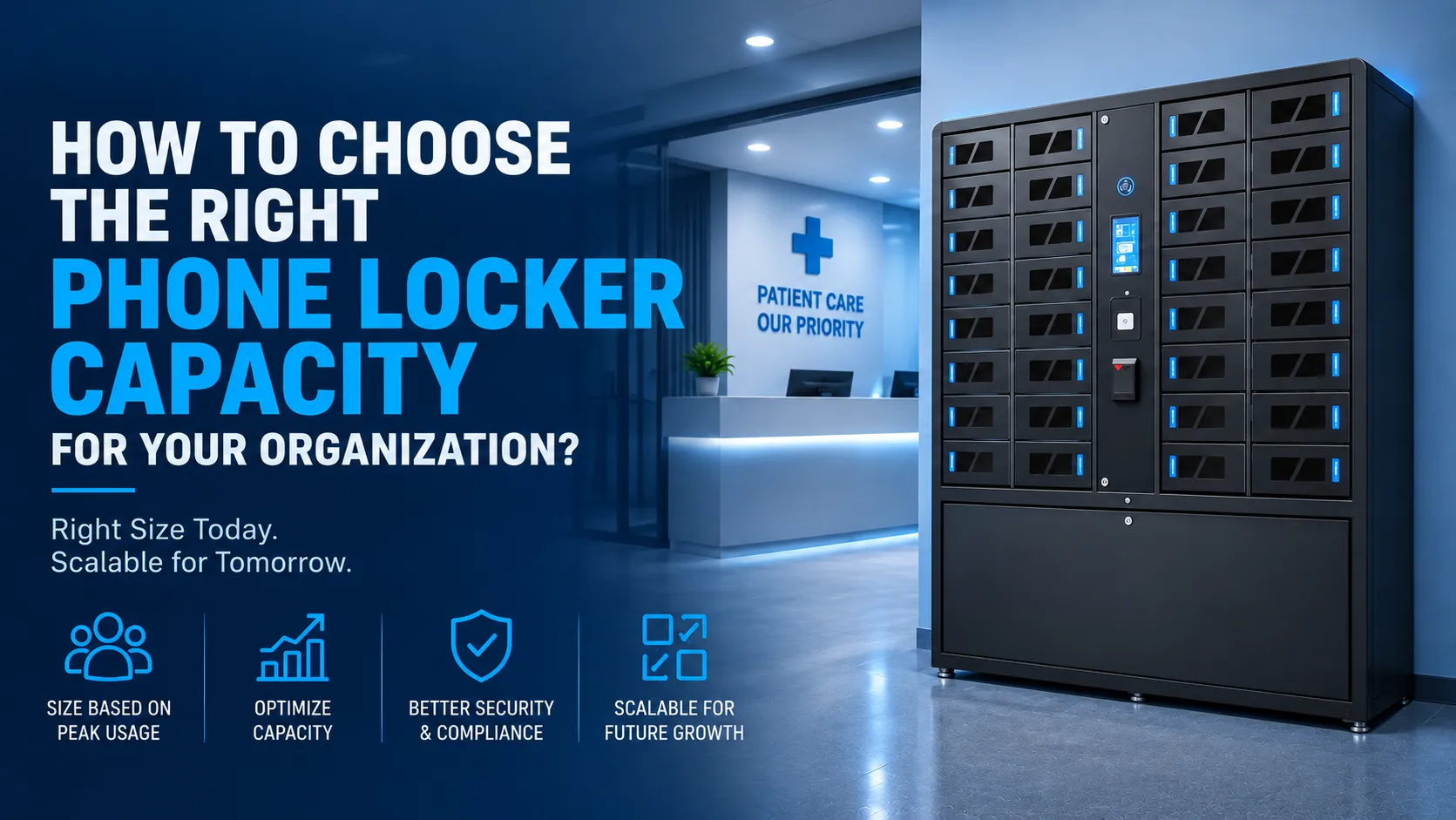
Choosing the right phone locker capacity requires evaluating daily user volume, not just buying a unit that looks about right. Get it wrong, and you end up with queues at shift change or empty compartments burning budget. This guide walks through how to size cell phone lockers for any facility, from a 900-student school to a three-shift manufacturing plant.
- Capacity must be based on peak usage (the busiest 30 to 60 minutes) rather than total headcount or visitors across a full day.
- “How many lockers” really means “how many compartments.” Assigned versus shared use can cut hardware needs by 50% or more.
- The environment type (schools, healthcare settings, factories, events, or modern offices) and whether charging is required will influence the layout, floor space, and locker system choice.
- A practical starting point: count peak simultaneous users, multiply by adoption rate, then add a 15 to 25% buffer.
- HonestWaves can model peak usage, recommend the right mix of charging versus non-charging bays, and design a smart locker system or simple metal lockers with room to grow.
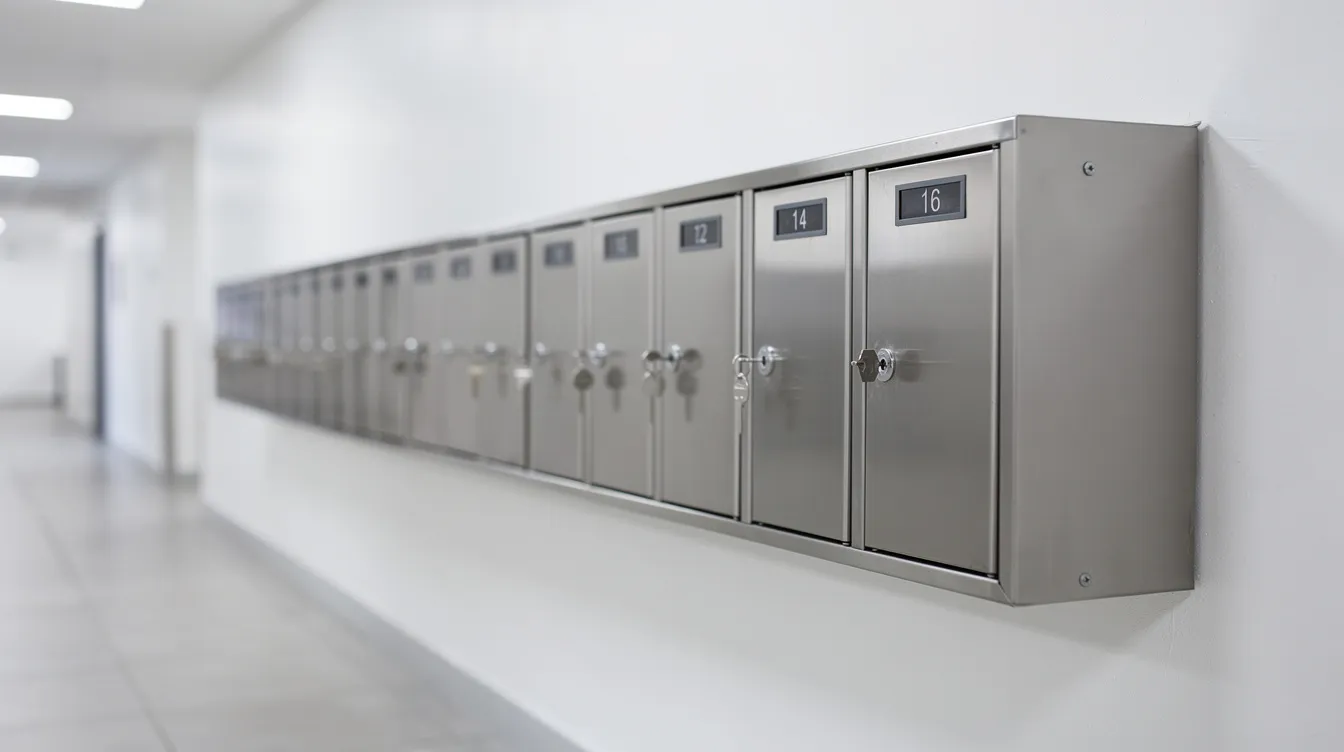
Start with Who Will Use the Cell Phone Lockers (and How Often)
The first step is not choosing hardware. It is mapping user groups, daily use frequency, and usage patterns for phones and small personal items. Cell phone lockers are designed for short-term device storage, but “short-term” means different things in different environments.
Common user groups include:
- Employees on shifts (factories, warehouses, gyms)
- Students in schools or universities
- Patients and visitors in healthcare settings
- Event attendees at venues and fitness centres
- Contractors and temporary staff
- Office visitors in modern offices
Separate these into daily use (staff locking personal devices each shift) and occasional use (visitors, parents, guests). Each group has different dwell times: 8 to 10 hours for employees, 1 to 3 hours for visitors. Analyse whether user locker needs are simultaneous or staggered, because that distinction shapes how many compartments you actually need.
Consider industry regulations that may dictate immediate device surrender upon entry. A factory floor with a strict no-phone policy drives 100% adoption. An optional secure storage policy at an office might see 30 to 70% uptake. Smart lockers come in two types: storage and device management. Workplace storage lockers are for personal items like bags and clothes; device management lockers are for shared technology like laptops and tablets. HonestWaves uses these inputs in capacity workshops before recommending any cell phone locker or smart locker system.
Calculate Capacity from Peak Usage, Not Just Headcount
Peak usage is the busiest 30 to 60 minute window when the locker system sees the most concurrent devices stored or retrieved. Sizing for average use creates queues and workarounds in shared environments like schools and hospitals; people end up sharing one locker or keeping phones at desks, which defeats the purpose.
To estimate how many compartments you need:
- Count the maximum number of people requiring storage simultaneously. For example: 900 students during class, 80 nurses per night shift, or 4,000 festival visitors at evening peak.
- Estimate adoption rate. 100% for mandatory phone bans; roughly 60% for voluntary secure storage.
- Multiply and add a 15 to 25% buffer for growth and special events.
A secondary school with 900 students and a strict “no cell phone during lessons” policy at 77% of U.S. K-12 schools now prohibiting phones in class needs close to 100% adoption. That is 900 × 1.15 = roughly 1,035 compartments.
For a manufacturing site with 200 production workers per shift and 3 shifts, peak usage hits at shift change when incoming and outgoing workers overlap. At 90% adoption: 360 concurrent users. Add 20% buffer: approximately 432 compartments. Ensure total locker compartments exceed peak daily volume by at least 10% to 15%, and anticipate future organizational expansion when planning storage capacity.
HonestWaves can review access logs from existing smart lockers or card systems to refine these estimates over time.
Assigned vs Shared Lockers: Choosing the Right Locker Strategy
Assigned lockers give each person a permanent compartment. Shared lockers rotate access among more users throughout the day. Determine whether lockers will be assigned permanently or shared dynamically before ordering hardware.
- Assigned: Simple expectations, easier communication, but requires a near 1:1 ratio between users and compartments. Higher hardware and floor space cost.
- Shared: Shared locker systems require fewer lockers than assigned ones. Lower cost per user, but needs better access control and analytics, often via a smart locker system with digital access systems.
Consider a 500-employee corporate office. With assigned metal lockers, you need 500 units. Switch to hybrid work where daily attendance averages 250 employees, and 250 shared smart lockers cover the correct number. Short dwell times (2 to 3 hours for a meeting block) allow even more users per compartment per day, fitting more users into the same footprint.
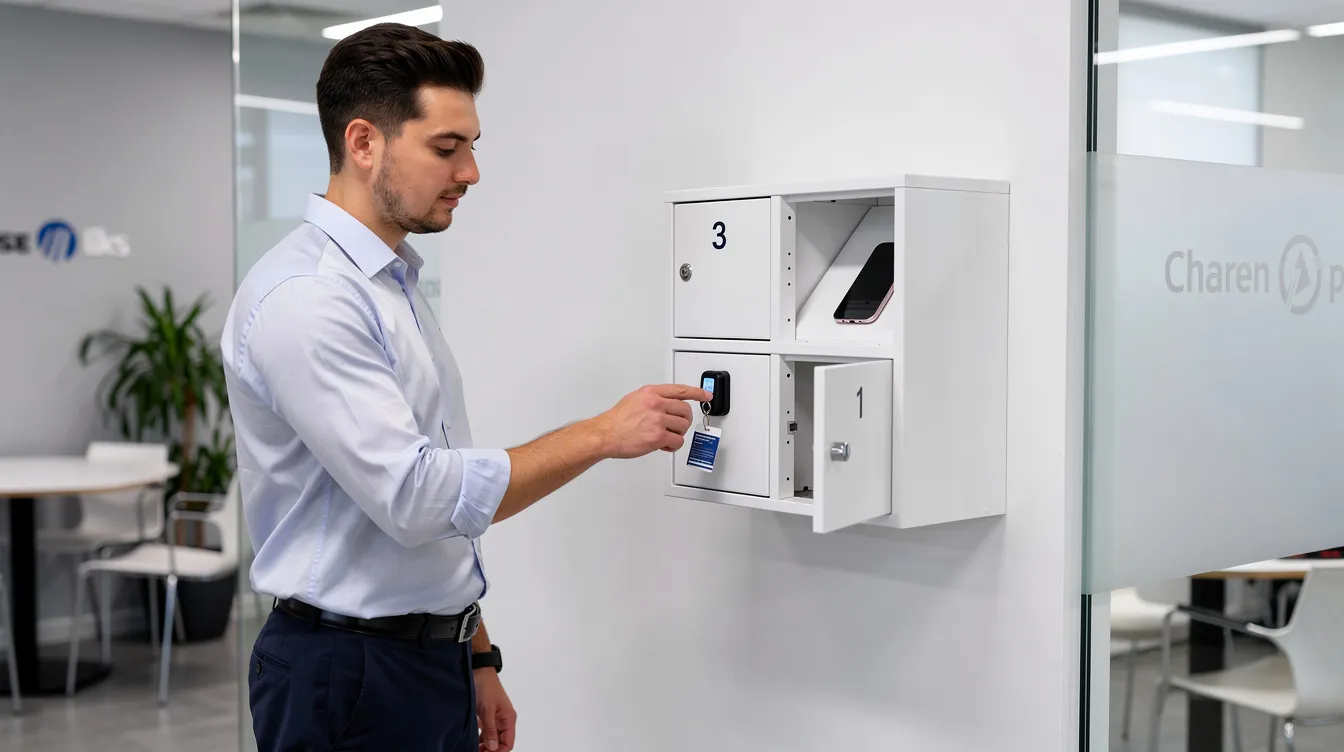
Electronic locks eliminate the need for physical key locks. RFID or app access enhances locker security features and suits shared environments well. HonestWaves cell phone lockers can be deployed as simple key-based units for assigned use or as smart lockers managed by PIN, RFID, or QR codes for shared use.
Deciding How Many Compartments per Unit, and What Size?
“How many lockers” often means “how many compartments per cabinet.” Configuration can change total storage capacity in a tight footprint. Common configurations include 8-door, 16-door, and higher-density panels sized for phones, wallets, and keys, not large bags.
Select compartment size based on what users carry:
- Standard smartphones with protective cases: internal depth ≥7.5 inches, width ≥4 inches
- Oversized phones and power banks: slightly larger cube lockers
- Occasional tablets or handheld scanners, if the locker system also supports shared work devices
Verify that compartments can accommodate larger smartphones with protective cases. Standard compartments fit a single phone but may need to accommodate larger items. Multi-tier lockers increase capacity without needing more floor space; they provide more compartments in the same footprint.
For example, a hospital installing 6 banks of 15-door phone charging lockers near visitor waiting areas totals 90 compartments, covering their peak visitor count. Customization includes specific compartment counts and mixed locker sizes. Lockers can be fitted with coat hooks and internal shelves for added convenience. More compartments per unit increase capacity but may reduce internal space for charging cables or UV-C disinfection modules. HonestWaves designs both compact phone-only cabinets and multi-device smart lockers, and can recommend the right locker mix after reviewing the device inventory and policy.
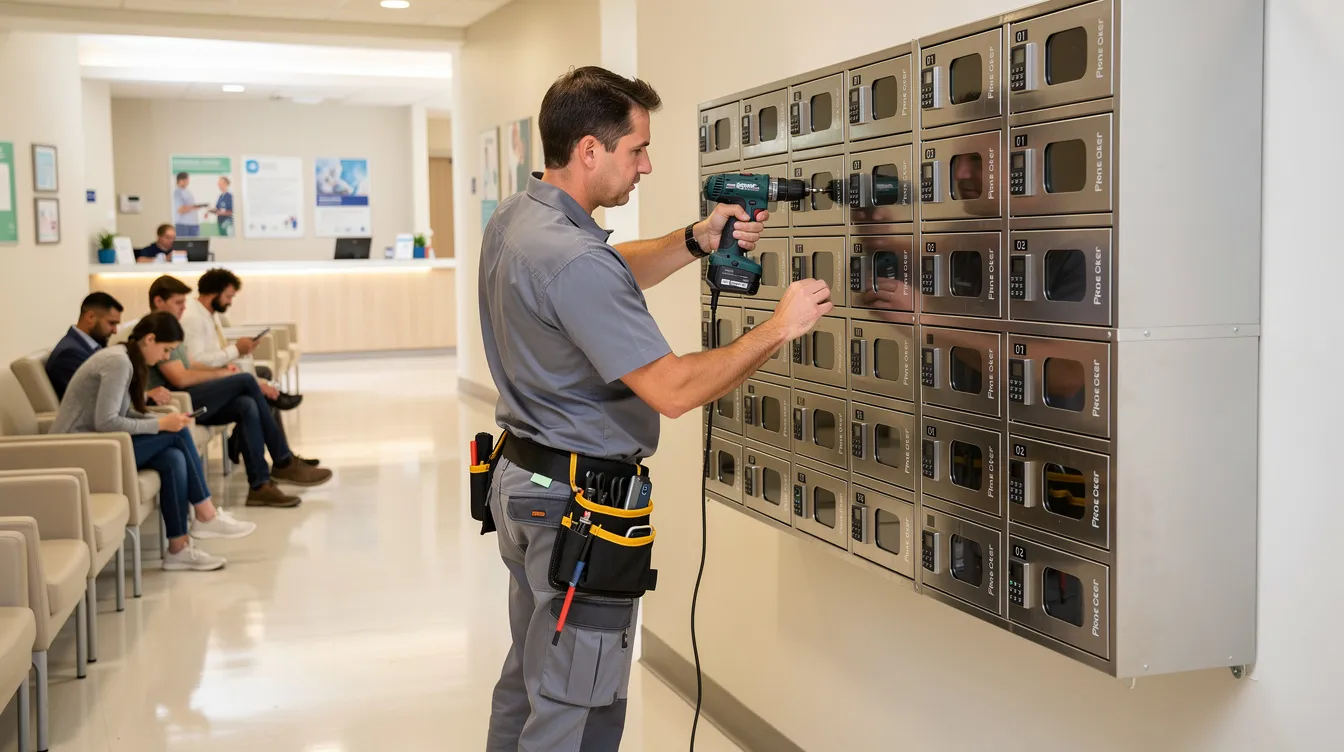
Charging vs Non-Charging Phone Lockers: Impact on Capacity and Layout
Pure storage cell phone lockers hold mobile devices in a secure place without power. Charging phone lockers include USB or AC outlets in each compartment, adding convenience but also complexity.
Charging is essential for long hospital visits, full-day conferences, university campuses, and manufacturing sites where employees depend on their phones after shifts. Non-charging is suitable for exam halls, secure facilities with strict phone bans, or short training sessions where the goal is distraction-free time.
Charging lockers affect capacity decisions in two ways. Users may leave devices longer (charging to 60 to 80%), which increases dwell time and raises the number of bays needed. Power and heat constraints may mean fewer compartments per cabinet to allow ventilation. A FUYL-type locker bank can draw roughly 1,000 watts at 110V when many bays charge simultaneously.
A 2026 university library installing 3 smart locker towers with 10 charging bays each (30 total) and 40 non-charging compartments nearby balances power demand and budget. Lockers can be customized with integrated charging layouts and ventilation patterns. Infrastructure considerations (available circuits, load calculations, cable management) determine where and how many units you can install. HonestWaves’ data-blocking technology, UV-C disinfection options, and cloud monitoring should all be factored into compartment count and layout planning.
Layout, Footprint, and Shared Environments
Even the correct number of lockers will fail if the layout creates bottlenecks in corridors, lobbies, or staff entrances. Measure available wall or floor space before selecting locker banks. Plan locker layout to avoid congestion in high traffic areas and ensure adequate aisle clearance for locker access and safety. Locker layout should facilitate quick individual access for users.
Best practices by environment:
- Schools: Distribute several smaller cell phone locker banks near classroom zones and locker rooms, not one wall in reception. See smart locker systems for schools.
- Hospitals: Spread lockers across waiting areas, staff lounges, and visitor entrances to reduce clutter and avoid crowding.
- Events and stadiums: Place multiple banks near main gates and secondary entrances to smooth check-in during peak usage.
Existing walls and columns constrain space availability. Choose between wall-mounted, recessed, or freestanding locker banks based on available space and limited space conditions. Metal lockers are the most durable option for high-use areas and are more durable than laminate lockers. Steel lockers resist impact, corrosion, and tampering; thin doors may flex and weaken over time. Quality steel gauge affects locker service life, and reinforced doors improve durability and security. Powder-coated finishes reduce maintenance time and costs while supporting aesthetic appeal. High-density metal lockers save floor space but need ventilation planning when combined with charging.
HonestWaves can work from floor plans or CAD drawings to propose specific locker locations, counts, and bank sizes that keep user flow smooth.
Right-Sizing a Smart Locker System with Room to Grow
Organizations rarely get capacity perfect on day one. Modular locker systems allow easy reconfiguration based on needs, so you can start smaller and expand.
Begin with a pilot: 40 to 60 compartments for a single department or building. Gather real-world data on peak usage and dwell time before rolling out facility-wide. Usage analytics from cloud-connected smart lockers (check-in/check-out times, compartment occupancy, failed access attempts) reveal whether to add more lockers or adjust policies. Controlled access zones enhance security in high-risk environments, and tamper-resistant locks ensure personal belongings remain safe.
For example, a 2026 government office starts with 2 smart locker banks for 120 staff, monitors peak occupancy over 90 days, and adds a third bank only in areas that approach 80% utilization. Define clear thresholds: average peak occupancy above 75% for 3 consecutive months triggers budget planning for expansion. Add a 10% to 15% capacity for growth to accommodate future demands.
HonestWaves offers both hardware sales and rentals, allowing organizations to temporarily boost phone locker capacity for large events or seasonal peaks without overbuying.
Partnering with HonestWaves to Design the Right Locker System
HonestWaves is a B2B specialist in secure phone charging stations, cell phone lockers, and smart locker systems for organizations across schools, hospitals, offices, and event venues.
A capacity consultation typically includes:
- Reviewing headcount, visitor patterns, and device policies
- Mapping peak usage windows and shared versus assigned needs
- Recommending precise compartment counts and configurations
Product options relevant to capacity include compact metal lockers for basic phone storage, smart charging lockers with RFID or PIN access for shared environments, and charging stations, charging tables, and portable kiosks that offload demand from phone lockers.
Customization can include color requirements and numbering systems. The lifetime warranty on core hardware, large-order support, branding options, and integration of data-blocking technology and UV-C disinfection are all available. Store personal devices with confidence using combination locks, electronic locks, or biometric access depending on specific requirements. Document your current pain points (queues, lack of space, policy breaches) and share them when requesting a quote so the proposed locker capacity is tailored and evidence-based.
Get a Quote from HonestWaves once you have estimated users and peak usage in your own facility.
FAQ
How much buffer capacity should I plan beyond my current peak usage?
Plan a buffer of 15 to 25% extra compartments above your best estimate of peak concurrent users. In stable environments with low turnover, 10 to 15% is acceptable. For fast-growing teams, venues with seasonal spikes, or facilities considering stricter phone policies, aim for 25%. Revisit buffer assumptions annually or when you open new buildings, add shifts, or change your phone policy.
Can I retrofit existing metal lockers into a smart locker system?
Retrofitting is sometimes possible by adding electronic locks and a controller. Door sizes, ventilation, and cabling often limit how many compartments can safely support charging or analytics. Use retrofits for non-charging storage solutions and deploy purpose-built HonestWaves smart lockers for high-usage or charging-intensive locations. Learn more in the guide to transforming old lockers into smart lockers.
What if our phone policy changes after we install lockers?
Policy shifts (moving from optional to mandatory storage) can push adoption from 40 to 60% of users to nearly 100%, requiring more compartments. Choose modular locker banks and leave wall or floor space for at least one additional bank so capacity can grow without redesigning the entire installation. This is the specific problem many schools face when transitioning to bell-to-bell phone bans.
Do I need different locker capacities for staff vs visitors?
Staff typically need longer-term secure storage (entire shifts), which drives higher base capacity. Visitor lockers can be sized from appointment or ticketing data and have shorter dwell times. Separate staff and visitor locker banks physically and logically; use RFID badges for staff and PIN codes or QR codes for visitors to keep capacity management simple.
How quickly can HonestWaves deploy additional lockers if demand grows?
Lead times vary by configuration and finish, but modular charging kiosks and portable phone lockers can often be shipped or rented within weeks for urgent needs like new school terms or major events. Share your growth timeline when requesting a quote so HonestWaves can plan production and logistics to match your capacity milestones. A trusted supplier with rental options prevents you from overbuying for temporary spikes.