

A smart locker gives you a secure, self service spot to store, charge, and retrieve your stuff without waiting for anyone. That’s phones, laptops, parcels, uniforms, shared devices, you name it.
Think about a student grabbing a repaired laptop from a campus locker at 10 pm. A nurse locking up her tablet between shifts. An event attendee who needs their phone charged and safe while they’re in a concert hall. Smart lockers are commonly used in universities, hospitals, and offices for exactly these reasons.
The biggest advantage? You get convenience, secure storage, 24/7 access, and faster pick up of parcels or devices, all rolled into one system. No lines, no waiting for staff members, no wondering if your package got swiped off a doorstep. It’s the kind of thing that sounds simple until you realize how many problems it quietly solves.
What Is a Smart Locker, Really? (And How Is It Different From a Regular Locker?)
You probably remember traditional locker setups. Metal boxes, physical keys, maybe a combination lock you’d forget the code to within a week. They worked, sort of. But they gave you zero visibility into who opened what or when.
A smart locker is a completely different animal. It’s a locker system that combines physical compartments with electronic locks and cloud-based software for management and tracking. Every time someone opens or closes a locker door, the system records it. That digital lock replaces physical keys, and the management software handles user permissions, notifications, and audit trails automatically.
Here’s the part people miss: an electronic locker with just a keypad isn’t the same thing. A true smart locker system gives you real time data, remote access controls, role-based permissions, and integrations with other software. Smart lockers are secure automated storage units, not glorified gym lockers with a battery.
Some systems, like the ones we build, also include built-in USB-C charging, UV-C disinfection for shared smart devices, and data blocking technology that keeps your phone safe from digital snooping while it charges. If you want to understand the full picture of what qualifies as a smart locker, we’ve got a deeper guide on that.
How Does a Smart Locker Work From a User’s Point of View?
Let’s paint a quick picture. It’s 7 am. A nurse walks into the break room, drops her personal phone into a designated locker bay, taps her RFID badge, and the locker door clicks shut. Her phone starts charging. At 3 pm, she walks back, taps the same badge, grabs a fully charged phone, and heads home. The entire process took maybe ten seconds total.
Smart lockers use digital codes, apps, or scanners for package delivery and device storage. The basic flow looks like this:
- An item goes into a compartment (dropped off by a user, delivery person, or IT staff).
- The system sends a notification. Customers receive notifications when their parcels are ready, or when a device is available.
- The recipient authenticates using PIN codes, RFID cards, or mobile apps for access.
- The locker door opens, they grab their item, and the system logs the entire process.
It feels dead simple on the user’s end. But behind the scenes, smart locker technology is tracking every transaction, managing permissions, and sending alerts. That’s what makes it “smart” instead of just “electronic.”
For many of our lockers, your device charges while it’s stored, so you walk away with something fully powered up, not just securely stored.
The Real Benefits of Smart Lockers for Everyday People
Nobody cares about “cloud-connected asset management platforms” when they’re just trying to grab a package before dinner. People care about outcomes. So let’s talk about what actually changes.
No more lost keys or forgotten combinations. Smart locks eliminate the need for a mechanical key or memorizing a code that changes every semester. Your access code, badge, or QR code is your key.
Package theft basically disappears. Smart lockers prevent package theft and missed deliveries. If you buy online a lot, you’ve probably had that sinking feeling when a package vanishes from your doorstep. A Pitney Bowes study found that 53% of Americans are nervous about packages being stolen. Smart lockers reduce theft by securing items until retrieval, plain and simple.
24/7 access changes everything. Smart lockers support 24/7 access for parcel delivery and device pickup. A student doesn’t need to wait until the mailroom opens at 9 am. An employee on a night shift can pick up their uniform from a locker at 2 am. Smart lockers provide 24/7 secure access for users and enable 24/7 access to stored items, enhancing productivity across the board.
Faster everything. No lines at the front desk. No waiting for a store associate to dig through a pile of boxes. Smart parcel lockers let you walk up, authenticate, and go.
Why Businesses and Institutions Care About Smart Lockers (Even If Users Just See Convenience)
From the user side, it feels like magic. From the operations side, it’s pure math.
A smart locker system replaces manual processes like key management, handwritten sign-out sheets, and ad hoc handovers at IT counters. Smart lockers reduce the need for manual handovers, freeing staff members to focus on other tasks that actually require human judgment.
Warehouses use smart lockers for managing shared operational equipment, like barcode scanners and radios. Hospitals track shared tablets. Universities manage laptop loaner programs. Corporate offices handle hot-desking supplies. The use cases are different, but the logic is the same: user access can be managed remotely and digitally, without someone standing behind a counter.
Smart lockers integrate with existing operational workflows and can even connect with third-party software applications, like IT asset management platforms or HR systems. Smart locker systems automate order collection and management processes, and that’s where the real efficiency gains show up.
What’s interesting is how organizations often start small. They’ll install a bank of lockers for one use case, like shared device storage, and then expand the same locker system to handle parcels, visitor items, or uniforms once they see the benefits of smart lockers in action.
Smart Locker Alerts: Overdue Devices, Tampering, and Maintenance Made Visible
Here’s something most people don’t think about until they need it. One hidden superpower of a smart locker is real time alerts that flag problems before they snowball.
Overdue device alerts. Say a barcode scanner hasn’t been returned to its assigned locker by end of shift. The system can automate notifications, pinging the supervisor with a dashboard alert or email. No more chasing people down the hallway asking, “Hey, did you bring that scanner back?”
Tampering alerts. Repeated wrong PIN attempts, a locker door forced open, or access at unusual hours? The system logs it and can send real time alerts to security teams. Each access event on a smart locker is logged digitally, creating a reliable audit trail that holds up under scrutiny. Smart locker systems automate notifications and transaction records so nothing slips through the cracks.
Maintenance alerts. A charging port that stops delivering power, a door latch that’s failing, or a sensor on the fritz? These show up as service tasks before users even notice a problem. It’s proactive, not reactive.
If you manage fleets of shared devices or run public charging stations, these alerts mean you can run your operation by exception. You’re not constantly checking every locker. You’re only stepping in when the system tells you something needs attention. We go deeper on smart locker alerts for overdue devices, tampering, and maintenance in a separate post.
Popular Ways People Use Smart Lockers in Real Life
Most people first encounter smart lockers in one context, maybe parcel pickup at an apartment building, and assume that’s all they do. The reality is way broader. Smart lockers enable flexible use for various storage needs.
Online shopping and smart parcel lockers. You buy online, choose a locker location for delivery, and the delivery person drops your package in a smart package locker. You get a code, show up whenever, and grab it. Smart lockers are available 24/7 for parcel retrieval, and they even allow someone else to pick up your parcel if you share the access code. The parcel locker business model is reshaping how retail stores and consumers shop for goods.
Personal device storage and charging. Visitors at hospitals, gyms, arenas, and schools use lockers for personal storage of phones, tablets, and laptops. Items are securely stored and charged simultaneously.
Education. Laptop loan programs, secure exam material storage, and student parcel locker pickup in residence halls. Smart lockers enhance public services in community settings like libraries and campus resource centers, too.
Self service IT exchanges. Employees drop off broken devices and pick up replacements from a designated locker compartment. No appointment needed, no waiting.
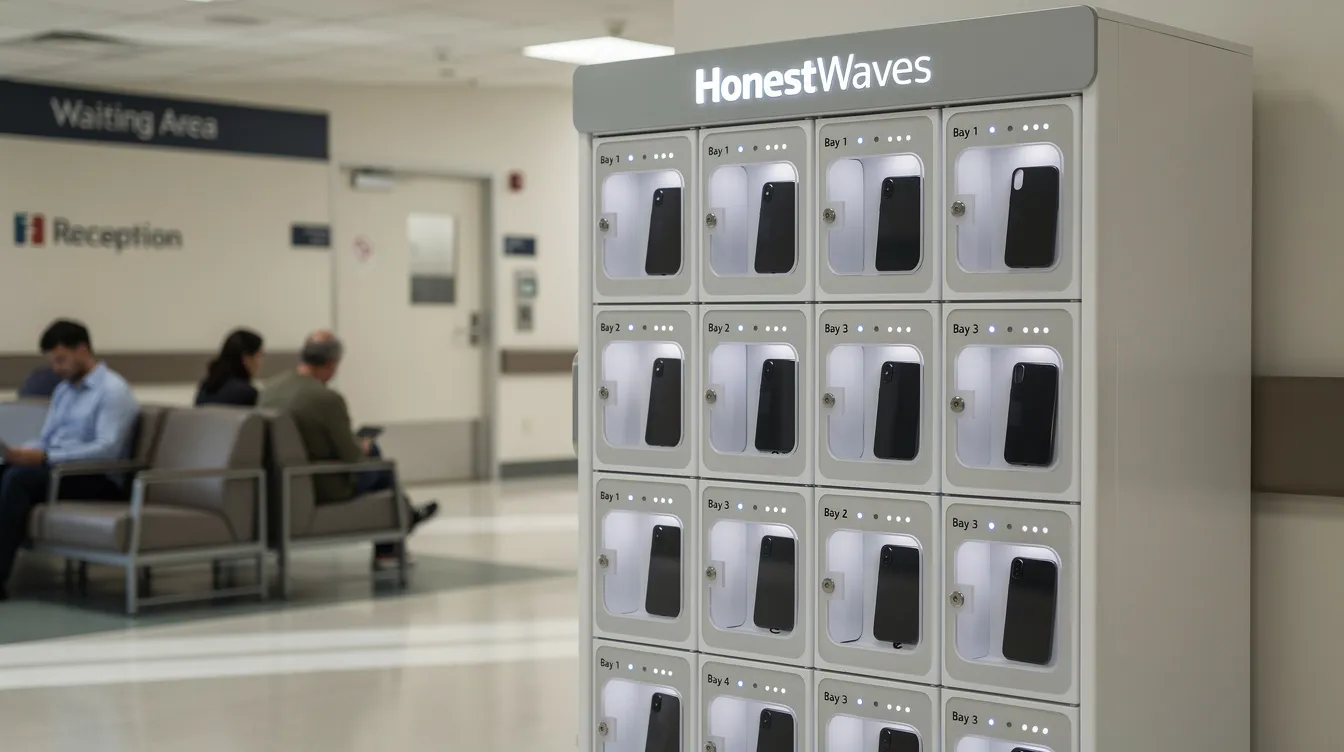
Retail and order fulfillment. Smart lockers automate order collection in retail environments, supporting the entire process from online order to in-store pickup without tying up a store associate.
How Smart Lockers Improve Customer and Visitor Experience?
Modern customers expect self service. They want to grab their parcel delivery, charge their phone, or pick up a loaner device without standing in line or hunting down staff.
A smart locker kiosk near a building entrance or lobby can cut queues at front desks, IT counters, and mailrooms dramatically. Users can retrieve parcels in under 30 seconds. That’s not a marketing claim; it’s the reality when you replace manual sign-outs with a quick scan or PIN entry.
Smart lockers can provide contactless collection of packages, which became increasingly important after 2020 in healthcare and public venues. There’s real peace of mind in that, especially in hospitals.
Here’s a small story that illustrates it. Imagine a parent sitting in a children’s hospital waiting room. Their phone is at 4%. They’re anxious, waiting for updates from the doctor, and they can’t leave to find a charger. A bank of phone charging lockers in the waiting area means they lock up their phone, it charges while they focus on their child, and they grab it back whenever they need it. That’s customer experience done right.
Security, Privacy, and Data Protection With Electronic Locker Systems
People worry about two things when lockers involve electronics: someone stealing their stuff, and someone stealing their data. Both are valid concerns.
On the physical side, smart lockers are designed to be tamper-proof and durable. We’re talking welded steel construction, tamper-resistant hinges, and controlled access per compartment. These aren’t flimsy gym lockers. Smart lockers use advanced locking mechanisms to prevent unauthorized access, and research from IEEE on “Smart Locker 2.0” deployments showed unauthorized access dropped by roughly 98%, with user satisfaction hitting 92%.
On the digital side, communication between the locker and the cloud is encrypted. Authenticated access means only the right person opens the right door, and every event is logged for compliance purposes, whether that’s HIPAA, FERPA, or internal policy.
Now here’s the thing that doesn’t get talked about enough. When you charge a phone through a public USB port, there’s a risk called “juice jacking,” where a bad actor can pull data through the same cable that delivers power. Our lockers use data blocking technology: power flows in, but data cannot flow out. Your device charges without any risk of digital snooping. That’s a secure system for personal belongings and confidential documents alike.
Smart locker solutions handle privacy carefully. Only authorized facility managers can see locker access logs, and the smart locker software uses role-based permissions to keep sensitive information locked down.
Smart Lockers, Operational Efficiency, and Your Bottom Line
Let’s talk numbers, because that’s where smart lockers stop being “nice to have” and start being essential.
Smart lockers can improve operational efficiency by automating manual tasks that used to eat hours every day. Think about a warehouse where handheld scanners get signed out on a clipboard. Devices go missing. Nobody knows who had what. Smart lockers can reduce device loss by over 90% in warehouses, according to real deployment data. That’s fewer replacements, fewer disruptions, and real savings at distribution centers.
Retailers can save up to 90% on shipping costs using smart lockers for buy online, pick up in locker (BOPIL) models, cutting out last-mile delivery expenses and failed delivery attempts. Smart lockers optimize space and inventory management, giving you real time tracking of what’s stored, what’s been picked up, and what’s overdue.
Here’s a simple before vs. after comparison:
| Before Smart Lockers | After Smart Lockers | |
|---|---|---|
| Device sign-out | 2+ hours/day (manual) | ~15 minutes/day |
| Lost devices per quarter | 12-15 | 1-2 |
| Package distribution staff time | 3 hours/day | 30 minutes/day |
| Audit trail | Paper logs, gaps | Automated, complete |
Vpod case studies show up to 90% less administration in some deployments. That kind of operational efficiency adds up fast, whether you’re running a campus mailroom or a logistics network.
Why a Smart Locker Can Be a Game Changer Specifically for Device Charging?
Phones and tablets aren’t accessories anymore. They’re mission-critical tools. A nurse needs her phone for care coordination. A warehouse worker needs a charged scanner. A student needs a laptop for class. Keeping these devices powered and safe matters more than most people realize.
A smart locker with built-in charging means you lock up a phone, tablet, scanner, or laptop and come back to a fully charged device. No tangled cables draped across public spaces. No “I left my phone charging in the break room and now it’s gone.”
Our lockers offer multiple cable types in each bay (USB-C, Lightning, Micro-USB), fast charging capability, UV-C disinfection options for shared devices, and configurable compartment sizes. The SecureCharge 32 Bio, for example, combines biometric access with UV-C cleaning in every bay. That’s secure storage solutions and hygiene in one unit.
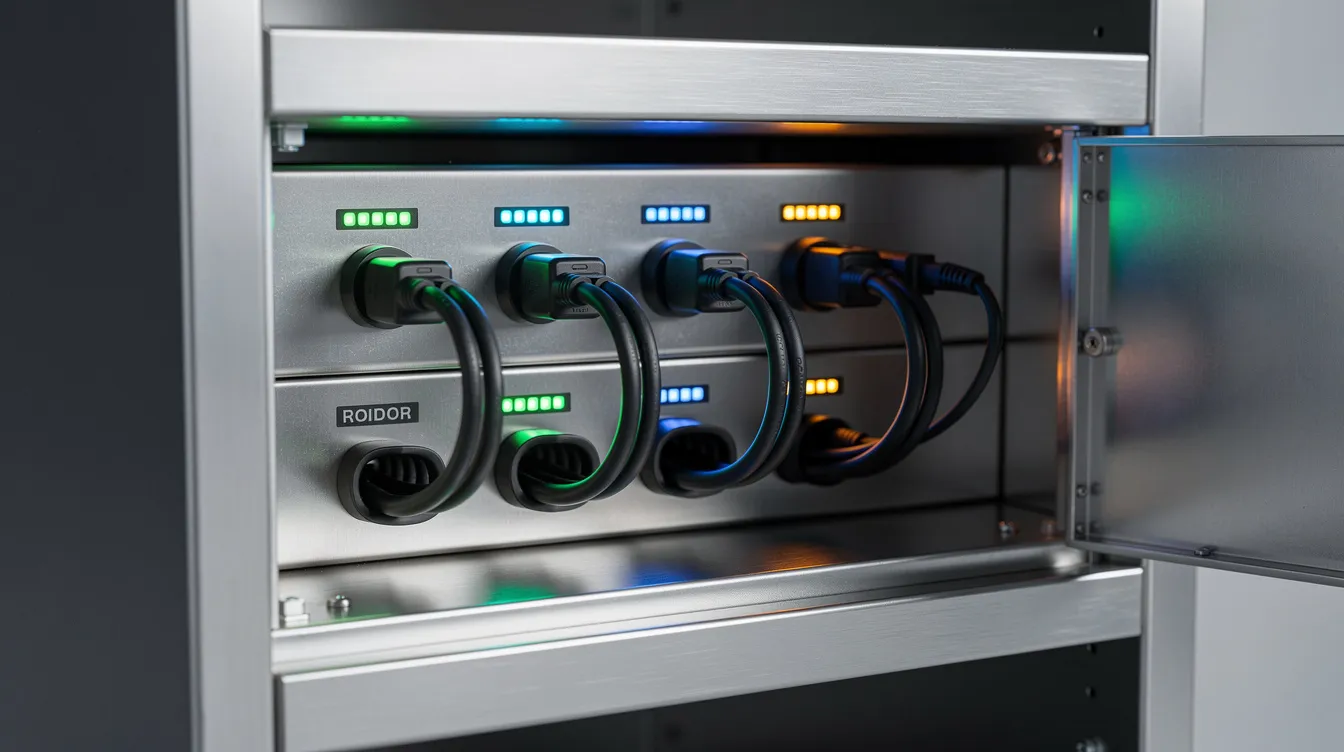
Alerts and logs track which bays or cables are failing, so maintenance stays proactive. You can browse our full smart locker lineup to see what fits your setup.
How to Decide If a Smart Locker System Makes Sense for You?
Not every space needs a smart locker. But a lot of organizations underestimate the hidden costs of doing nothing. Here’s a quick gut check:
- Do people regularly ask for secure storage or charging?
- Are staff members constantly handling parcels or signing out devices?
- Are shared assets like scanners, tablets, or radios going missing?
- Are there queues at IT, the front desk, or a local post office mailroom?
If two or more of those sound familiar, it’s worth exploring. Smart lockers can retrofit existing locker banks with smart technology, so you don’t always need to start from scratch. You might not need fewer lockers; you might just need smarter ones.
Our advice? Start small. Pilot a single bank of lockers focused on one clear problem. Once you see the results, expanding is easy. We offer rentals, permanent installs, and custom branded locker solutions built from high quality materials, so you’re not locked into a massive commitment upfront. Advanced technology shouldn’t require a leap of faith.
Browse the smart locker category to see what’s available, or request a personalized quote to find out what makes sense for your space.
FAQs
Do I need an app to use a smart locker?
Not always. Many systems let you use a PIN, QR code, RFID badge, or an access code sent via email or SMS. Apps are an option, not a requirement.
Are smart lockers only for parcel delivery?
Not even close. They handle device charging, personal storage, shared equipment management, IT exchanges, and more. A parcel locker is just one type of smart locker solution.
What happens if I forget to pick up my item from a locker?
Most systems send reminders. After a set period, items may be moved to overflow storage or the organization’s lost-and-found, depending on their policy.
Can smart lockers charge my phone safely?
Yes, especially with data blocking technology that lets power flow but prevents data transfer. Smart lockers offer a secure way to charge without risking your information.
Is a smart locker the same as a parcel locker?
A parcel locker is a specific use case. Smart lockers span device charging, personal belongings storage, digital locker workflows, and more. Think of a parcel locker as one flavor of a broader secure storage solution.
How hard is it to install a smart locker system in an existing building?
It depends on power and network availability. Many units are plug-and-play for interior spaces. Outdoor or larger installations may need site prep. Seamless integration with existing infrastructure is usually straightforward, especially with the right support.
Conclusion:
People want smart lockers because they make daily life smoother, safer, and less stressful. It’s really that simple. Convenience, security, faster access to parcels, reliable device charging, and better customer satisfaction, all wrapped into a system that mostly runs itself.
Whether you’re a student, a hospital visitor, a facility manager, or someone who just wants their online order waiting safely when they get home, the goal is the same: quick, reliable access to what you need without hassle.
If you’re curious how this could work in your space, browse our smart locker lineup or request a tailored quote. Sometimes the smallest changes to a space make the biggest difference in how people experience it. A smart locker might just be that change for you.