
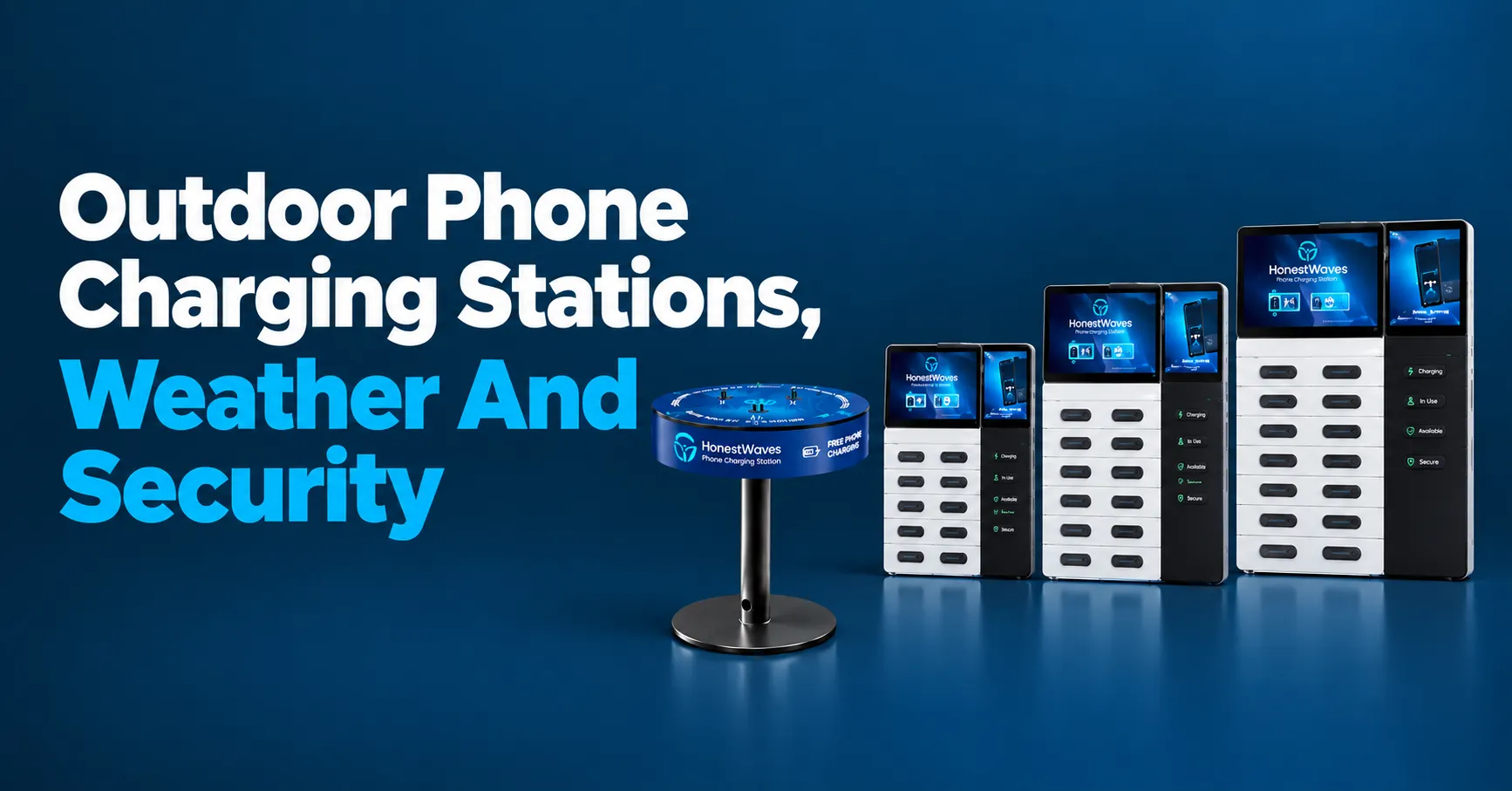
Outdoor Phone Charging Stations, Weather And Security
Table of Contents
You’re standing outside a stadium or crossing a university quad when the sky opens up. Your phone’s at 8%, and there’s a charging station right there on the plaza. But rain is hammering the pavement. Is it actually safe to plug in?
Short answer: yes, if the station was built for outdoor use. Properly designed outdoor phone charging stations handle rain, direct sun, and wild temperature swings without putting you or your device at risk. Modern units rely on weatherproof housings, high ingress protection enclosures, surge protection, and secure smart lockers to keep everything safe. The key word there is “properly designed.” Not every unit belongs outside.
That weather resilience isn’t just about convenience. It connects to bigger ideas like critical infrastructure protection, energy security, and making sure people on campuses, at hospitals, and in government facilities can stay powered and connected when it matters most. Throughout this post, we’ll walk you through how to choose, place, and protect outdoor charging stations so they last for years without becoming a liability.
Why outdoor phone charging stations matter for modern campuses and cities
Outdoor spaces have changed. University courtyards aren’t just places you walk through anymore. Students sit on benches with laptops. Hospital systems are expanding outdoor waiting areas to reduce indoor crowding. Stadiums are building fan zones where tens of thousands of people want to scroll, share, and stay charged.
In 2024 and 2025, several U.S. school districts installed pedestal style charging stations in courtyards with USB ports and standard outlets, all rated for rain and snow. Cal Poly Humboldt built a wireless solar charging station outdoors, and when the first one was stolen, they rebuilt it with theft prevention in mind. These aren’t experiments. They’re part of daily life now.
What do visitors, employees, and students expect? Always on connectivity, safe power access, and somewhere secure to leave a phone while they’re in a meeting or at a game. If a station looks rusty, leaky, or sketchy, people won’t touch it.
That’s where products like our outdoor charging lockers, portable charging kiosks, and charging tables come in. They’re designed to handle real weather conditions while keeping devices secure.
Here’s the part people miss: these aren’t just amenities. During a storm or an emergency on campus, a dead phone means someone can’t receive an alert. Outdoor charging is part of communication infrastructure. Treat it that way.
Weather 101 for outdoor charging: rain, sun, heat, cold and wind
Before you pick a station, you need to understand what weather actually does to outdoor equipment. The main threats break down like this:
- Heavy rain and wind driven water
- Standing water and flooding
- UV radiation from direct sunlight
- Extreme heat (surface temperatures can exceed 50°C even when air feels cooler)
- Freezing cold, ice, and condensation cycles
- Wind blown debris: dust, sand, salt near coasts
Think about the variety. Summer storms in the Southeast U.S. dump inches of rain in minutes. Desert installations in the Middle East bake under UV all day. Coastal sites deal with salt spray that eats metal. Northern climates see repeated freeze and thaw cycles that crack seals and warp doors.
Outdoor phone charging stations and EV chargers share surprisingly similar weatherproofing challenges. Enclosures, cabling, connectors, and sealed internal electronics all face the same moisture and temperature stress. Performance of outdoor charging stations varies by climate severity, and outdoor EV charging stations are built to withstand heavy exposure to the elements using the same principles.
Weather resistant charging stations should be built with corrosion resistant materials, especially in coastal or humid environments. With extreme weather events becoming more frequent due to climate change, it’s imperative to think beyond “will it survive this summer” and plan for a 5 to 10 year lifespan. Batteries in modern chargers even have thermal management systems that warm the battery pack before fast charging in cold weather conditions.
IP rating basics: how to read weather protection for outdoor stations
If you’ve shopped for any outdoor electrical equipment, you’ve probably seen “IP65” or “IP54” thrown around. But what does it actually mean?
IP stands for ingress protection. It’s a standard from IEC 60529. The first digit tells you how well the enclosure blocks solids like dust or sand. The second digit tells you how well it handles water. Higher numbers mean better protection. IP ratings indicate a charging station’s resistance to dust and water exposure, and they matter more than most spec sheet details.
Here’s a quick comparison:
| Rating | Dust Protection | Water Protection | Best For |
|---|---|---|---|
| IP54 | Protected against harmful dust | Splash proof from any direction | Sheltered outdoor spots |
| IP65 | Completely dust tight | Low pressure water jets | Fully exposed outdoor use |
| IP67 | Completely dust tight | Temporary immersion up to 1m | Flood prone areas |
IP65 is the minimum rating for outdoor charging stations. If your site has flood risk or gets hosed down (stadium concourses, for example), IP67 is worth the upgrade. NEMA ratings provide similar protection guidance against environmental conditions in outdoor installations and are commonly referenced in North American projects.
Indoor hallway charging lockers can get by with IP20 to IP44, lighter gasketing, and less focus on corrosion. Outdoor models need full water seals, UV resistant housings, and sealed cable entries. High quality outdoor chargers have gaskets and seals to block moisture and debris at every access point. Charging stations should have ingress protection ratings to resist dust and water, and you should always look for electrical safety certifications when choosing outdoor charging equipment.
At HonestWaves, we build our lockable smart lockers around these ingress protection principles, working with integrators who understand local regulations and compliance requirements.
Rain, snow and standing water: keeping power live but safe
Water is still the number one practical risk for outdoor electrical equipment. Even at low voltage USB levels, moisture can short contacts, corrode circuit boards, and support mold growth inside enclosures.
Now here’s the thing most people overlook: there’s a huge difference between rain falling on the outside of an enclosure and standing water pooling around the base. Rain and snow pose minimal shock risks during normal operation if the unit is properly designed. Heavy rain does not cause charging units to short circuit if they’re built right. But water sitting against conduit joints and base plates? That’s where real damage starts.
One campus we heard about installed charging pedestals right next to a landscaped lawn, too low to the ground. After the first big storm, water pooled around the bases, seeped into joints, and they had to retrofit drainage troughs and raise the base plates. Water damage repairs cost 3 to 5 times more than proper protection would have from the start. Proper installation location minimizes risks associated with standing water.
What to look for in a well designed outdoor station:
- Drip edges or overhangs above doors
- Sealed door gaskets on every smart locker bay
- Sloped tops that shed water and snow
- Drainage channels or weep holes
- Raised pedestals above expected flood or sprinkler levels
- Sealed cable glands and grommets where wires enter
- Charging stations must have sealed cable connections for weatherproofing
Water management features in charging connectors are also vital for preventing freezing in cold climates. Low temperature cables maintain flexibility in harsh conditions to prevent cracking, which matters a lot if your deployment is anywhere with real winters. Charging cables and connectors must endure both physical handling and weather exposure over years of operation.
UV, heat and cold: the slow killers of outdoor charging hardware
Rain gets all the attention, but UV radiation is the quiet destroyer. Over 2 to 5 years, UV exposure can degrade plastics used in outdoor chargers, causing yellowing, surface crazing, and eventually cracking. Research on polymer aging shows that after 4 years of natural weathering, polycarbonate retained only about 17% of its original fracture strain. UV radiation can cause brittleness and failure in charging stations built with unprotected plastics. UV resistant materials are essential for outdoor charging stations, full stop.
Heat is another challenge. Charging stations can experience thermal shutdowns above 50°C (122°F), and that threshold is easier to hit than you’d think when solar loading adds to ambient temperature. Chargers use temperature sensors to manage overheating during operation, and smart thermal management prevents damage during heatwaves or high electrical loads. High temperatures can cause thermal throttling in any charger, whether it’s a phone station or an EV charger. Charging stations should withstand temperatures up to +55°C for reliable outdoor use.
Then there’s cold. Extreme cold slows down charging speeds initially, plastics become brittle, gaskets harden, and condensation inside enclosures can freeze overnight and thaw during the day, dripping onto electronics. It’s a slow, grinding cycle.
The fix? UV stabilized plastics or powder coated metal housings. Light colored finishes that reflect heat. Internal ventilation that doesn’t compromise sealing. Components rated for at least negative 20°C to positive 50°C, wider if your region demands it.
One stadium in a sun exposed location watched their plastic panel housings yellow and crack within two summers because cheap materials were used. In the next phase, they moved to shaded placement under canopies and specified UV stabilized enclosures. The lesson: paying more upfront for the right materials extends your replacement cycle from 2 to 3 years out to 7 to 10 years. That’s a real budget win.
Physical security, tampering and critical infrastructure protection outdoors
Outdoor phone charging stations aren’t just gadgets sitting on a sidewalk. When deployed at hospitals, transit hubs, or government facilities, they sit close to critical infrastructure, near power distribution panels, network access points, and sometimes the power grid itself.
Common risks include vandalism, theft of cabling or internal power modules, prying open smart locker doors, and attempts to hook into internal wiring. Cable theft from EV chargers has become a documented problem, and the same logic applies to phone charging stations. Mechanical impact resistance ratings are important for outdoor charging stations facing these threats.
Physical security measures protect energy infrastructure from evolving risks and threats. An unsecured station can become a weak entry point near more sensitive critical equipment. NERC develops physical security standards for the North American grid, and the Federal Energy Regulatory Commission sets standards that affect how organizations in the energy sector approach physical protection. Even CIRCIA mandates cyber incident reporting within 72 hours, reflecting how cybersecurity and physical security are now combined concerns for infrastructure. Remote substations often lack adequate surveillance and staffing, which is a parallel problem for outdoor charging assets left unmonitored.
Practical layers of protection include:
- Heavy gauge steel or aluminum housings
- Tamper resistant hinges and fasteners
- Secure mounting to concrete with tamper proof bolts
- Controlled access to service panels with restricted keys
- Access control systems that verify credentials for facility entry
- Video surveillance providing 24 hour monitoring of the area
You can also pair stations with nearby security cameras, access controlled electrical rooms, or established patrol routes. The responsibility falls on security teams to treat outdoor charging as part of their physical security plan, not a standalone IT gadget, especially on energy, utility, or government sites. This is a national security consideration at scale.
Smart locker alerts and monitoring: overdue devices, tampering and maintenance
Smart outdoor phone charging lockers are increasingly common at universities, arenas, and transit hubs. They combine secure storage with charging and, critically, with monitoring systems that detect electrical anomalies and can shut down charging if something goes wrong.
What do smart locker alerts actually do? They send notifications for overdue devices, forced door events, repeated failed PIN entries, offline status, and internal temperature anomalies. Tampering detection through door sensors and lock position indicators helps incident response teams react quickly. This technology enhances the availability and reliability of outdoor assets.
From a maintenance perspective, alerts for failing power modules, overheated components, or tripped breakers let you schedule service before a big event or exam week. That’s the difference between a proactive department and one scrambling to fix things after they break. Regular maintenance can prevent costly weather related failures that would otherwise take stations offline.
At HonestWaves, our smart locker solutions use cloud connected management dashboards and usage analytics so facilities teams can see which outdoor stations are busiest, which need weather related inspection, and where to focus resources. It transforms outdoor charging from “set and forget” into managed infrastructure with real reporting and procedures.
Choosing and siting outdoor phone charging stations for your climate
Before you order anything, run through these questions:
- What are your local temperature extremes, both high and low?
- What’s your UV index and how many direct sun hours hit the site?
- How much annual rainfall, snow, or ice should you plan for?
- Is the site near the coast (salt spray and corrosion risk)?
- Is there flooding history or poor drainage?
- Are sprinklers, fountains, or wash down zones nearby?
For siting, place units under awnings or shade structures when possible. Keep them away from sprinklers and areas where runoff collects. Mount base plates above expected flood or snow drift levels. Make sure there are clear sight lines for security cameras and enough space for users to comfortably access doors.
Fixed installations need permanent foundations, stronger materials, and hardwired electricity. Portable kiosks or rental units for seasonal events need rugged enclosures, modular sealing, and more frequent inspections. Either way, establish your minimum IP rating, physical security expectations, and network availability before talking to any vendor.
Operations, inspection and maintenance in real weather
Even the best outdoor phone charging station needs regular attention. Here’s a simple schedule:
- Weekly: quick visual walk by checking for visible damage, loose parts, or pooled water
- Monthly: test doors, locks, charging ports, and seals
- Quarterly: deep clean, check gaskets, inspect for corrosion
- Annually: complete review of internal electronics, grounding, surge protection, and overall operation
What to look for: cracked seals, water stains inside doors, rusting hardware, loose pedestals, damaged USB ports, discoloration from UV, and any software alerts from smart lockers. A dirty, faded station quietly reduces trust even if it technically still works. Customers won’t use something that looks neglected.
Our outdoor ready stations are designed with easily replaceable modules and clear status indicators to minimize downtime. We encourage teams to document inspections and tie them into broader facility maintenance and physical security routines, particularly for sites classified as critical infrastructure where the ability to provide technical assistance quickly is part of the operation.
FAQs
Are outdoor phone charging stations safe to use in the rain?
Yes. Properly rated stations are designed for normal rain and pose minimal risk. Just avoid units that are visibly damaged or sitting in standing water.
What IP rating should I look for in an outdoor charging station?
IP65 is a solid baseline for most exposed outdoor sites. Go with IP67 if you’re in a flood prone or heavily washed down area.
Can extreme heat or cold damage outdoor charging stations?
Absolutely. Long term exposure stresses components and seals. Match your station’s temperature rating to your local climate and inspect regularly under those circumstances.
How do smart locker alerts improve security around outdoor charging?
Alerts for tampering, overdue devices, and faults let teams respond quickly. They turn lockers into monitored assets rather than unmanaged boxes.
Do outdoor charging stations affect energy security or critical infrastructure?
They’re small pieces of a bigger puzzle. They support communications, emergency updates, and daily operations, so they deserve the same reliability and physical protection thinking as other infrastructure.
Can I convert an indoor charging locker into an outdoor one?
Usually not safely. Purpose built outdoor models with the right IP rating, sealed cable connections, and UV resistant materials are a much better path than trying to retrofit indoor units.
Conclusion
The core lesson here is straightforward. Outdoor phone charging stations work reliably in real weather when you respect rain, UV, temperature, and physical security from day one.
- Choose the right IP rating for your site (IP65 minimum, IP67 for wet or flood prone areas)
- Design and specify materials for your actual climate, not just average conditions
- Integrate physical security into the plan from the start, not as an afterthought
- Set a simple inspection routine and stick to it
These stations quietly support energy security on campuses and in cities by keeping people connected during busy days and bad weather. When someone’s phone is charged during an emergency, that’s infrastructure doing its job.
Take a few minutes to map your most used outdoor spaces. Where would secure, weather ready charging remove friction for visitors, staff, or students? We work with teams on design, siting, and long term support to make sure outdoor deployment goes smoothly and holds up for years.
If you’re ready to explore what fits your specific climate and security needs, request a quote here and let’s figure it out together.