
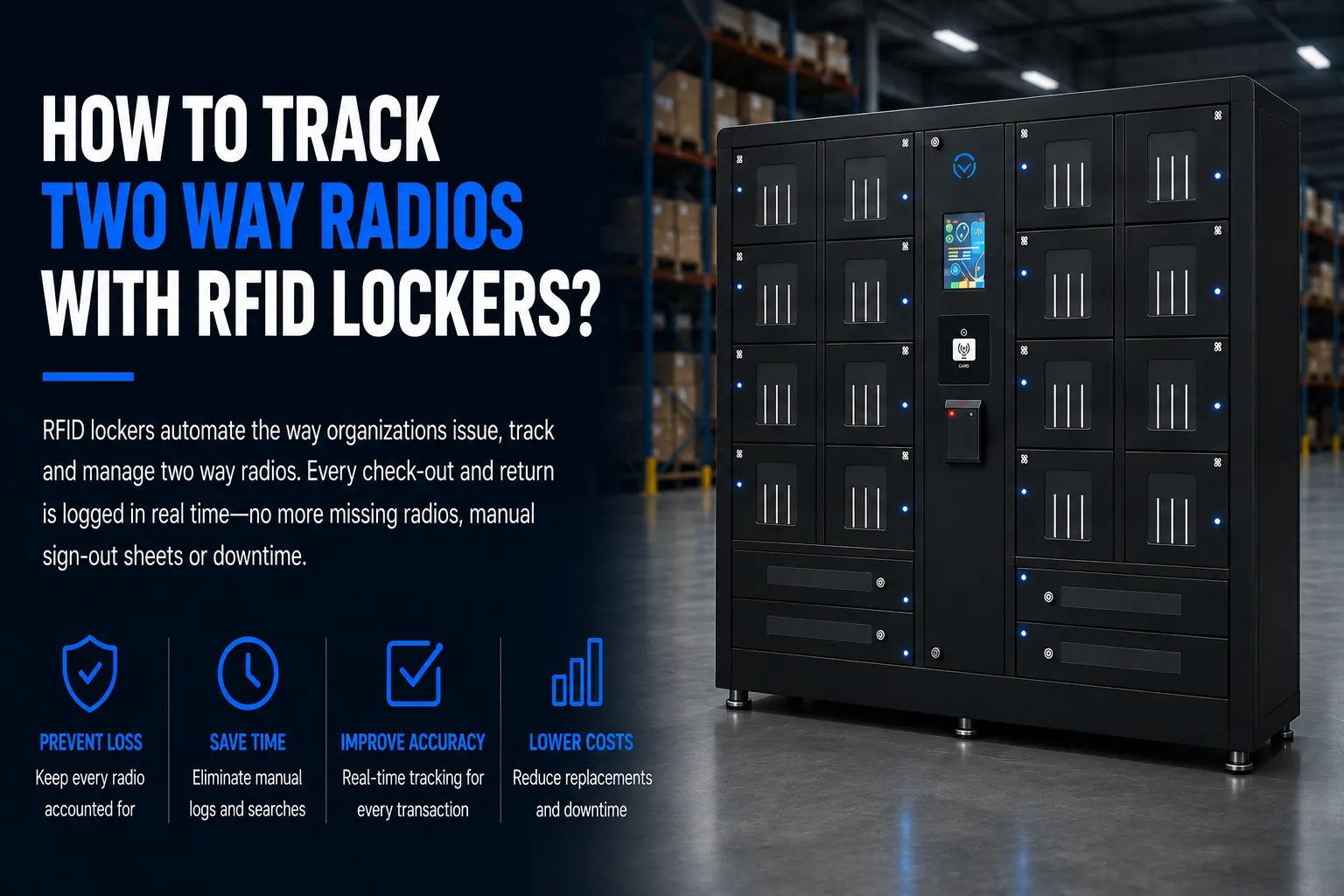
Organizations across the United States lose thousands of dollars every year to missing, uncharged, or misassigned two way radios. Whether it’s a police department scrambling at shift change, a hospital security team short a device during an emergency, or a warehouse crew waiting on equipment that nobody can find, the problem is the same: manual tracking doesn’t work at scale.
An RFID locker system solves this by combining rfid tags mounted on each radio, rfid readers built into locker compartments, and cloud-based management software that logs every check-in and check out in real time. When a worker authenticates at the locker, the system verifies their identity, records exactly which tagged radio they take, and updates a live dashboard – all without a clipboard or sign-out sheet in sight.
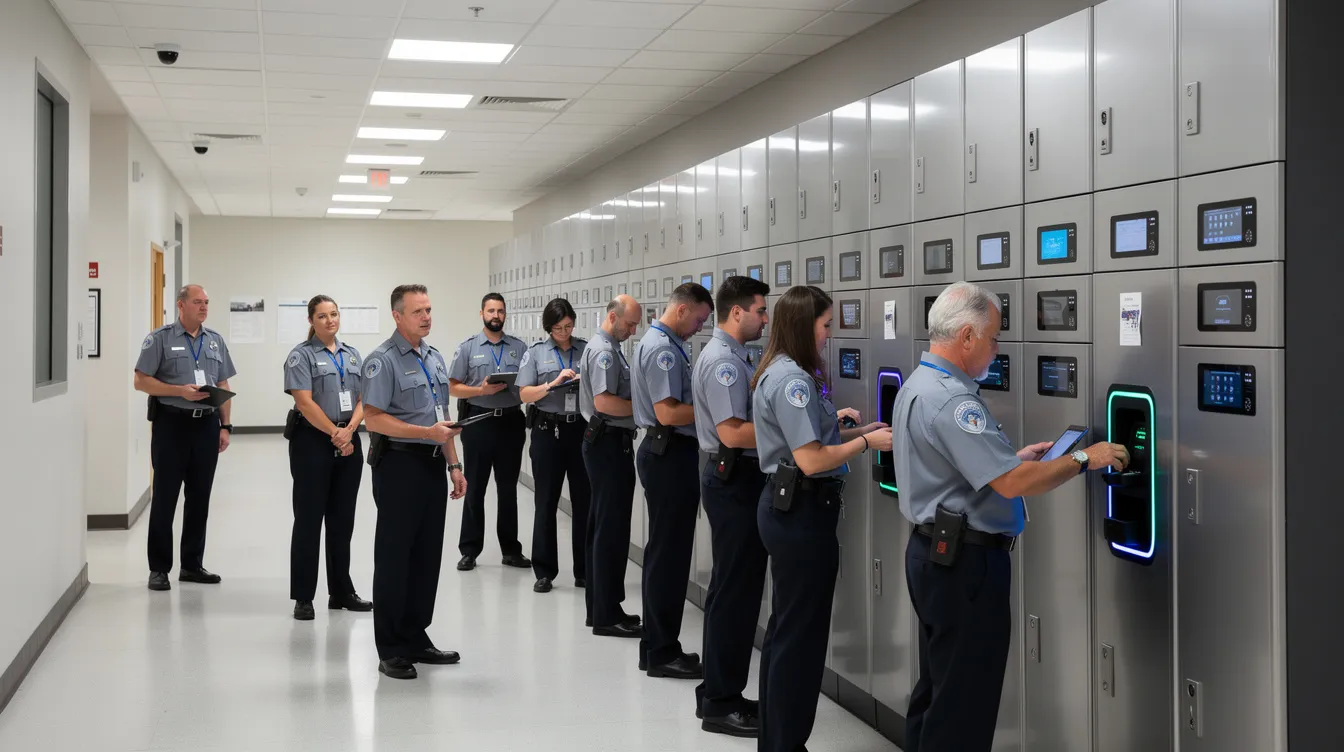
Consider a US police department issuing 40 Motorola handheld radios each shift. Officers badge in at a smart locker bank, grab their assigned radio, and head to the field. At shift end, they return it. Every transaction is automatically recorded, creating a complete audit trail with better accountability and zero paperwork. That same infrastructure the kind HonestWaves provides – can secure and charge phones, tablets, body worn cameras, and radios together in one system. The rest of this article walks through key components, setup decisions, workflows, and best practices for tracking radios with an RFID locker system.
How RFID Locker Systems Track Two-Way Radios (Quick Step-by-Step)
Before diving into the technical detail, here’s the practical flow. First, each two way radio gets an RFID tag with a unique ID – often a rugged label or specialized knob fastened to the housing. Radios are stored in an RFID-enabled smart locker bay, typically with built in charging so devices are always ready. When staff arrive, they authenticate at the locker using an RFID badge, pin codes, or even a fingerprint scanner. The RFID reader inside the compartment captures the tagged radio’s ID without requiring direct line of sight, and the locker controller sends the transaction to management software. The moment a radio is returned and placed on the shelf, the system detects its presence immediately, logs the check-in, and updates the audit trail in real time.
Automated check-in and check-out systems eliminate manual sign-out sheets entirely. This process runs around the clock with minimal human input, dramatically reducing disputes about who had which device and cutting the time workers spend searching for equipment.
Key Components of an RFID Radio Tracking System
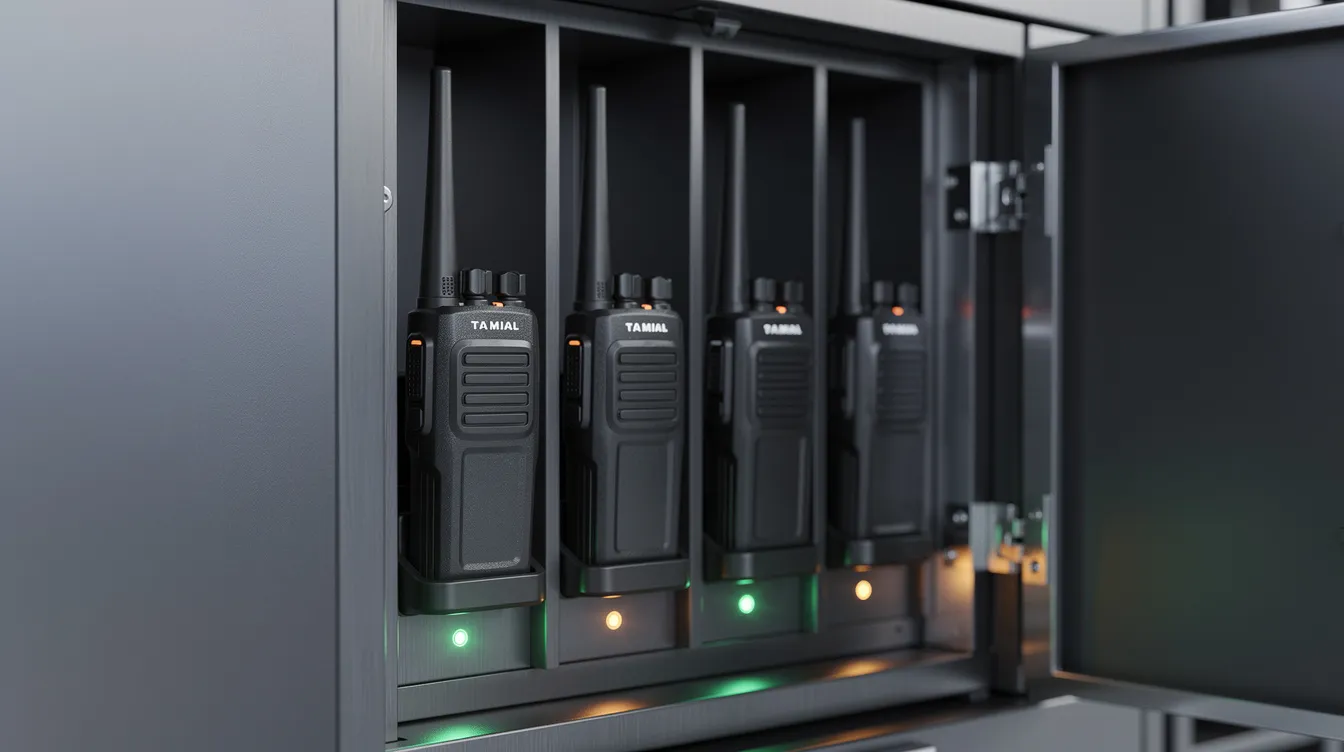
To build an effective tracking system, you need five pieces working together:
- RFID tags attached to each radio, each containing a unique Electronic Product Code that corresponds to a specific device in your asset database. Tags can hold up to 256 bits of data – more than enough for identification.
- RFID readers integrated into the locker system to detect tagged items in each compartment.
- Locker hardware – a smart locker cabinet with power, network connectivity, and individually lockable bays.
- Access credentials such as RFID badges, cards, or fobs that employees already carry.
- Cloud-based management software for central control, reporting, and alerts.
Honestwaves provides the smart locker and software layer, which works with existing ID badges and radios from brands like Motorola, Hytera, and Kenwood. The diagram is straightforward: tags on radios feed data to readers inside locker bays, which communicate through a networked controller to cloud software, which surfaces everything on an admin dashboard.
RFID Tags on Radios: Choosing and Mounting the Right Tags
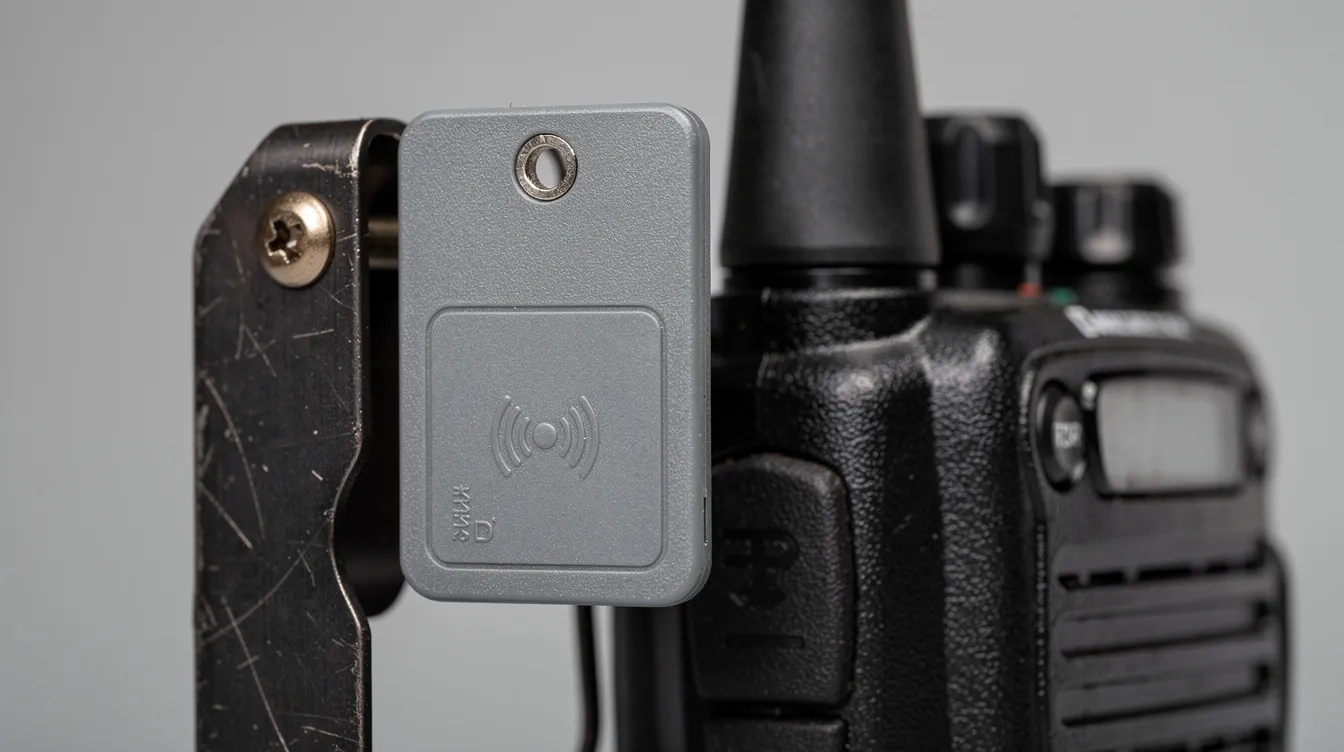
Two way radios are tracked individually via unique rfid tags or specialized RFID knobs fastened to each unit. Understanding rfid technology in smart locker environments helps you pick the right tag for your fleet.
Tag types for handheld radios:
| Tag Type | Read Range | Cost (Bulk) | Best For |
|---|---|---|---|
| Passive UHF | Several meters | Under $1 (basic); $5–$15 (rugged) | Large fleets, bulk detection |
| Passive HF/NFC | Up to ~1 meter | $1–$10 | Close-proximity, one-at-a-time reads |
| Active RFID | 30+ meters | ~$40 per tag | High-value items, continuous location |
Active RFID tags, like the V-Tag used in DHS evidence management programs, cost approximately $40 each with battery life around six years. Passive tags are far more cost effective for most radio fleets.
Mount tags on the radio body, belt clip, or battery cover. Make sure the tag position doesn’t block the antenna, speaker, or battery replacement. For metal radio housings, use on-metal tags with ferrite isolation layers and IP67-rated enclosures designed for daily abuse. Use manufacturer-recommended adhesives or brackets rated for 24/7 operations and harsh work environments.
Each tag’s unique ID is linked to a specific asset profile in the management software – for example, “Radio #24 – Motorola APX – Assigned to Night Shift.” Properly labeled and registered tags are the foundation for a clean audit trail and reliable chain of custody.
RFID Readers, Smart Lockers, and the Locker System Hardware
The locker system serves as the physical home base for all way radios between shifts, combining storage, charging, and RFID tracking in one unit. RFID locker systems use contactless credentials for access, and rfid technology allows for contactless access to lockers without traditional keys.
Rfid readers are mounted on the locker fascia or inside compartment doors. Antennas are tuned for short range reads so only items in a specific bay are detected, preventing cross-reads between adjacent compartments. A separate reader at the user access panel reads employee badges for authentication.
Honestwaves offers steel and aluminum cabinets with multiple bays sized for radios and other devices. Each compartment includes AC outlets or USB power for charging radios alongside phones and tablets – a 20-bay radio and tablet smart charging locker is a popular configuration. Networked controllers communicate with cloud management software for real time status updates.
RFID locker systems reduce long-term maintenance costs compared to traditional locks because each compartment uses an electronic lock tied to the access system, eliminating physical keys to replace or cylinders to rekey. Practical design considerations include ventilation for charging cradles, adequate bay counts for peak shift needs, and choosing wall-mounted versus freestanding form factors depending on whether the locker sits in a dispatch room, loading dock, or security office.
Management Software and Audit Trails for Better Accountability
Hardware alone won’t deliver better accountability. It’s the smart locker software and reporting that turn RFID reads into useful asset data.
Core capabilities of modern locker management software include:
- A real-time dashboard showing which radios are in which compartments, who has which item checked out, and which bays are empty.
- An automated audit trail logging every transaction – user, asset ID, bay, time, and duration – so rfid systems provide a complete audit trail of asset access.
- Configurable alerts for overdue radios, missing assets, doors forced open, and out-of-schedule access. Exception alerts can notify managers about overdue radios or unauthorized removals.
RFID tracking enhances accountability by logging every asset transaction. Each radio movement is time-stamped and tied to a specific authenticated user, maintaining chain of custody for internal investigations, safety reviews, and compliance audits. RFID systems can automatically alert managers about late asset returns, which is critical in law enforcement agencies and healthcare facilities where equipment gaps create real risk.
Honestwaves cloud-connected platforms also provide usage analytics: most-used devices, peak check-out times, and underutilized radios. That data helps organizations right-size inventory, reduce unnecessary spares, and plan future purchases – turning raw locker data into operational intelligence.
Designing Workflows: Check-Out, Check-In, and Shift Changes
This section focuses on day to day workflows so you can visualize how staff interact with the locker system during actual operations.
Check-out workflow: An employee authenticates at the smart locker. User authentication for lockers can include PINs, badges, or biometrics – including multiple authentication methods like fingerprint scanning for higher-security environments. The software assigns a specific compartment or shows available choices. The locker door opens automatically, the reader confirms exactly which tagged radio leaves the bay, and the system records the transaction.
Return workflow: The user authenticates again or simply places the radio into an assigned bay. The RFID reader confirms the correct tagged radio is back in the compartment. Charging begins, and the system logs the return time and bay number. If a credential is lost or stolen, rfid systems can deactivate lost credentials instantly via software – no need to rekey anything.
Shift-based example: For a 24/7 security team in a US hospital, radios can be reserved by shift. Supervisors see in real time which officers still have radios out. If a radio isn’t returned within 30 minutes of shift end, the system triggers a late-return alert. Optional policies the software can enforce include “no radio, no checkout” rules for body worn cameras or keys to maintain full gear sets, and user lockouts for overdue items until equipment is returned.
Benefits of RFID Lockers for Two-Way Radio Tracking
The key benefit goes well beyond knowing where things are – it translates to measurable safety and cost improvements across various industries.
- Better accountability: every radio is tied to a named user, date, and time, discouraging misuse and loss.
- Stronger chain of custody: detailed logs support law enforcement agencies, security teams, and regulated industries during incident investigations.
- Real-time visibility: supervisors can monitor which radios are checked out, charging, or missing without manual counts. Real-time location data is possible using RFID tags and integrated readers.
- Reduced equipment loss: RFID tracking can significantly reduce equipment loss by up to 50%, which adds up fast when a single radio costs $500–$3,000.
RFID technology improves operational efficiency by reducing asset search time. Automated RFID tracking reduces labor costs by saving hours weekly that would otherwise go to manual counts and paperwork. RFID can track multiple radios simultaneously, enhancing inventory audits from a slow, manual process into a near-instant scan. Many law enforcement agencies and healthcare facilities already rely on rfid systems for this reason – rfid technology enhances security in hospitals and schools where accountability is non-negotiable. RFID tracking improves asset management in law enforcement and healthcare by giving authorized users instant access to reliable data.
Honestwaves smart lockers integrate with existing RFID access cards, so organizations avoid creating new credentials for employees.
Configuration Options: Individual Lockers, Shared Bays, and Access Rules
Organizations can configure the locker system to match how they operate.
Assigned use: Each employee always uses the same radio and locker bay. The software enforces that only authorized users can open their assigned compartment. This works best where audio profiles, channels, or accessories are personalized – common in law enforcement.
Shared use: Radios are pooled. Users take the next available fully charged radio. The system tracks who took which asset without permanent assignment. Ideal for large teams, seasonal staff, and event-based operations.
| Criteria | Assigned | Shared |
|---|---|---|
| Flexibility | Lower | Higher |
| Accountability | Very high | High (with RFID) |
| Admin effort | Higher initial setup | Lower setup, ongoing tracking |
| Best for | Personalized configs | Large rotating teams |
Access rules can enforce time-of-day restrictions, role-based access (only supervisors access encrypted radios), and integration with HR systems to automatically revoke access when staff leave. RFID access control reduces unauthorized entry in secure areas, and rfid systems provide real-time tracking of assets and personnel. Granting access based on role ensures only authorized users interact with sensitive equipment like medical equipment, evidence devices, or tactical radios.
Integrating GPS, Geofencing, and RFID Lockers
Some modern two-way radios include a gps module integrated into the device, and they can be managed alongside RFID lockers for location-aware workflows.
GPS and geofencing show where workers are in the field in real time. RFID lockers track the physical asset lifecycle at the base – who checked it out, whether it’s been returned and charged. Together they provide end-to-end visibility from the locker to the job site and back.
For example, dispatch sees on mapping software which GPS-enabled radios are active and in which zone via gps functionality. When a shift ends, workers return radios to the smart locker; the system logs returns and flags any radios not docked by a set time. Organizations should verify interoperability between their radio dispatch software and locker management system – APIs or scheduled reports can bridge systems. A gps module on the radio handles field tracking while the RFID locker handles base tracking; they complement rather than replace each other.
On the data privacy front, limit who can see user-level location data and retain GPS history and locker audit trails in line with company policy and applicable regulations.
Deployment Best Practices and Common Mistakes to Avoid
Rolling out an RFID locker tracking system goes smoothly when you plan for the human side, not just the technology.
Deployment tips:
- Involve radio users, IT, facilities, and security in planning locker locations and bay counts.
- Pilot the locker system with one department – for example, security or maintenance – before scaling organization-wide.
- Clean and normalize your asset list so each radio has a clear ID before tagging.
Common mistakes to avoid:
| Mistake | Solution |
|---|---|
| Poor tag placement causing missed reads | Follow vendor placement guides; test read ranges on your specific radio models |
| Too few bays for peak demand | Plan for peak shift count plus 20–30% buffer for spares and growth |
| Skipping user training | Provide brief hands-on walkthroughs and quick-start signage next to each locker |
Ongoing maintenance matters: periodically verify that RFID tags are still attached and readable, and use software reports to identify radios that haven’t been checked out in months – they may be damaged, lost, or simply unnecessary inventory. Honestwaves offers remote configuration support, hardware rentals for events, and installation assistance for hospitals, schools, and venues.
How Honestwaves Smart Lockers Support Radio Tracking and Device Charging?
Honestwaves focuses on secure charging and smart locker infrastructure that supports two-way radios, cell phone devices, tablets, and laptops in one unified system.
Product capabilities relevant to radio tracking include RFID-enabled access using existing employee badges, cloud-connected management software with usage analytics and alerts, and built in charging via AC and USB power for radios and other electronics – with optional UV-C disinfection for shared devices. The same locker bank can track and charge handheld radios, smartphones, and tablets used by field teams. Data blocking USB technology protects phones and tablets from data theft while charging, complementing secure radio storage.
Honestwaves serves US hospitals, universities, event venues, corporate sites, and government facilities through B2B sales and rentals, backed by a lifetime hardware warranty and support for large orders and multi-site rollouts.
FAQs
Can any two-way radio be tracked with an RFID locker system?
Almost any handheld radio can be tagged with RFID, regardless of brand or age. As long as there’s a safe surface to mount a tag – the body, belt clip, or battery cover – the system can identify and track it. Radio frequency identification doesn’t depend on the radio’s own electronics.
Do I still need GPS in my radios if I use RFID lockers?
Yes, they solve different problems. RFID lockers track equipment at storage points and determine who has what. GPS tracks radio locations in the field. Together they give you end-to-end visibility across day to day operations.
What happens if someone forgets to return a radio?
The management software sends alerts for overdue items and shows exactly who last checked out the missing radio and when. This makes recovery faster and discourages careless handling.
Can we integrate RFID locker tracking with our existing ID badges and access control system?
Most modern locker systems, including Honestwaves solutions, support existing RFID cards at common frequencies (125 kHz or 13.56 MHz). Integration with directory systems via APIs or scheduled sync is also available.
Will the RFID signal interfere with our two-way radios?
Properly designed rfid systems operate on different frequencies than professional radio waves. In typical deployments, RFID tags and readers are engineered to avoid interference with your communications equipment.
How many lockers do we need for our radio fleet?
Count your peak simultaneous users, add capacity for spares and charging rotation, and factor in future growth. A good starting point is peak shift count plus 20–30%. Contact to design the right locker configuration for your environment and industry.