

An officer makes a traffic stop in 2024. Things escalate. The body camera records the whole encounter. Months later, the case goes to court and the defense attorney asks one simple question: “Can you prove nobody tampered with this video between the night it was recorded and today?” The agency can’t produce unbroken custody logs. The judge rules the video evidence unreliable, and the case starts falling apart.
That is exactly what chain of custody for radios and body cameras is meant to prevent: a documented trail showing who had each device, when it changed hands, where it went, and what happened to the audio, video, and other data from checkout to evidence storage and courtroom use. In Georgia, a judge found that evidence in a Macon murder case was lost or damaged due to handling failures, undermining the prosecution. Courts in Virginia have scrutinized body camera footage authentication down to every link in the custody chain. And departments using body cameras actually report fewer use of force incidents, which means the footage matters for everyone involved.
For law enforcement agencies, officers, sergeants, and the institutions responsible for issuing, storing, and securing this equipment, radios and body worn cameras aren’t just communication tools anymore. They generate synchronized digital evidence, including video footage, audio recordings, GPS coordinates, emergency button activations, and even live video streams pushed to command centers. Body cameras can record high quality video during incidents, with modern models supporting 4K resolution and real time streaming. Without a clean chain of custody tying all that data together, none of it holds up.
This guide focuses on why chain of custody matters, how digital evidence from radios and body cameras should be handled, what strong policy and day to day officer procedures look like, where smart lockers and related technology fit, how to manage critical incidents, and which common mistakes create gaps. Public trust in law enforcement relies on strict documentation and handling of technology based evidence. Body cameras enhance transparency in law enforcement interactions, and police body cameras strengthen community relationships through visible accountability. When your chain of custody is tight, it protects evidence integrity, supports prosecutions, and protects both the officer and the agency. When it’s not, everyone loses.
At honestwaves, we build secure charging lockers and smart lockers that help agencies control physical devices and automate custody documentation. We don’t write your evidence policy, but we make the hardware side of chain of custody a lot harder to mess up.
What “Chain of Custody” Really Means for Body Cameras and Radios
In plain language, chain of custody is the documented story of who had a specific radio or body camera, when they had it, where it went, and what happened to its data. Think of it as a receipt trail that follows the device from the moment it leaves a locker to the moment its footage shows up in court proceedings.
For body cameras, this covers everything. The body worn camera leaves the locker at 06:45, an officer wears it through a full shift of traffic stops and welfare checks, it gets docked at the end of shift, the footage uploads, supervisors review and tag it, and eventually the recorded footage is exported for prosecutors. Body cameras provide an objective record of police encounters, but only if you can prove that record wasn’t altered.
Radios now log PTT events, emergency activations, and sometimes record audio, which means they also create digital evidence that must be traceable.
Here’s what becomes part of the chain:
- Device serial number and unique identifier assigned to every police radio and body camera
- Officer assignment (badge number, shift, date)
- Start and stop times for every recording, including when the camera records or when the officer hits press record
- Upload timestamps and file integrity checks
- Hashes or checksums of digital files
- Access logs showing who viewed, edited, exported, or redacted the footage
- Export logs for transferring evidence to prosecutors or defense
Courts in 2023 and 2024 have already scrutinized these details closely. In Baez v. Commonwealth, the Virginia Court of Appeals analyzed whether body cam video was properly authenticated, with the defense arguing that vital links in the chain of custody were missing. The footage was ultimately admitted because the officer could testify to its accuracy, but the case made it clear that courts are demanding better.
How Body Worn Cameras and Radios Generate Evidence?
A typical patrol kit in 2025 includes a wearable body camera, a digital duty radio, and often a vehicle system. All of these feed into one evidence story. Many body cameras feature built in stabilization for steady recording, and they use pre event buffering to capture up to 10 minutes of footage before an officer even hits the record button.
Here’s what becomes evidence in practice:
- Body camera footage from a domestic violence call captures victim and suspect interactions
- Live video pushed from a body camera to command centers lets supervisors monitor incidents in real time, improving situational awareness
- Radio transmissions during a foot chase document calls for backup and suspect warnings
- GPS data ties the officer’s location to the video timeline with precision
- Audio recordings from radio logs fill in gaps where the camera didn’t capture everything
Now here’s a distinction that trips people up. Video footage isn’t automatically video evidence. Footage becomes evidence only once it’s preserved under policy, tagged with an incident number and date, and protected by chain of custody. Video becomes evidence only with a secure chain of custody around it.
Radios can be critical on their own. In serious incidents, proving that an officer called for backup or broadcast a suspect warning might come entirely from radio logs and audio. During traffic stops or crowd management situations, the radio often captures what the camera doesn’t.
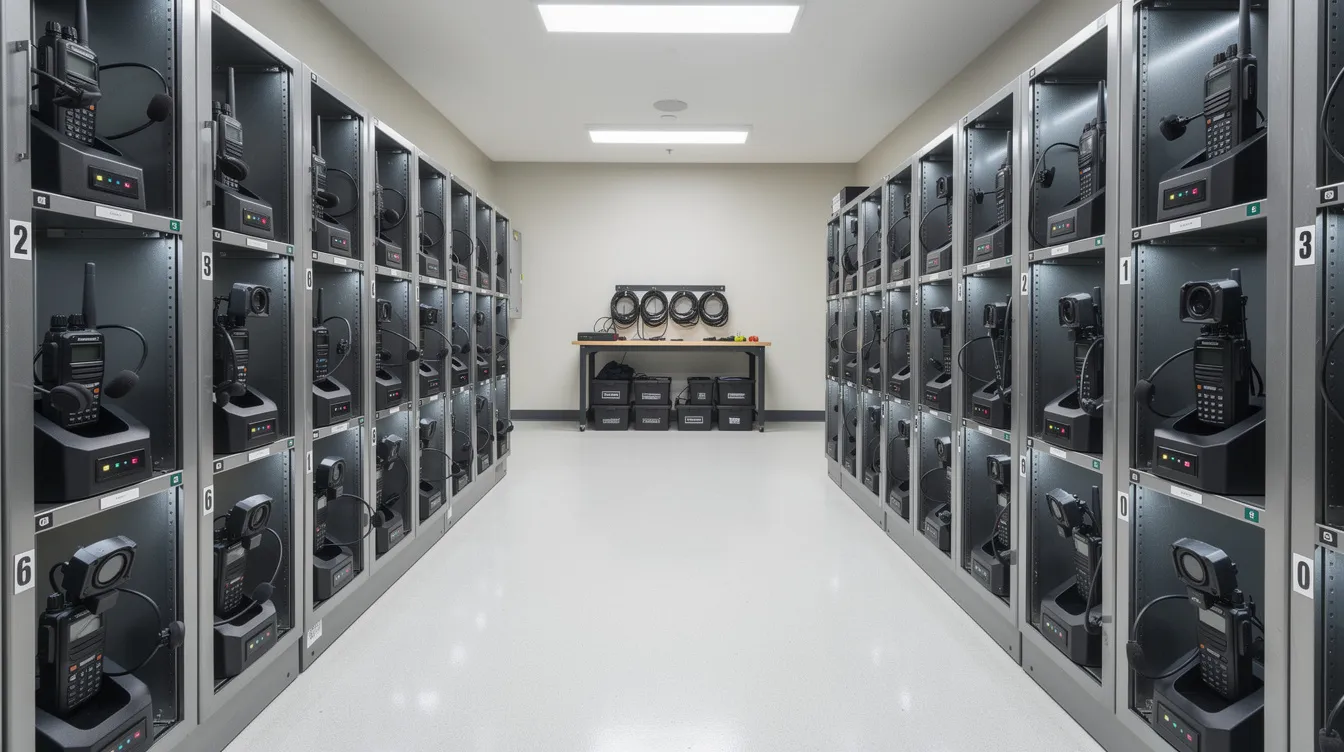
Smart lockers and charging stations from honestwaves can log each time a specific body camera or radio is checked out or returned, adding reliable timestamps to the custody trail automatically.
From Locker to Courtroom: Stages of Chain of Custody
Maintaining a chain of custody for police radios and body worn cameras involves chronological tracking at every stage. Here’s what that looks like on a typical shift:
- Device assignment: Officer scans RFID badge at the smart locker at 14:02. The system logs that Officer X removed body camera ID 4471 and radio ID 882.
- Field capture: Camera is activated at 14:18 responding to a disturbance. The camera records continuously with timestamps. Radio logs PTT events and an emergency button press at 14:33.
- End of shift docking: Officer returns at 22:15, places devices in the docking station. Body camera begins automatic upload. Radio battery is swapped, logs exported.
- Upload and integrity check: Digital Evidence Management System ingests the footage, generates a cryptographic hash, and stores metadata including upload time and file name.
- Supervisor review: Supervisor tags the video with the incident number, marks it as evidentiary, adds descriptions.
- Disclosure: DEMS exports required files to the prosecutor. Every export is logged with who, when, and which file.
- Courtroom use: Months or years later, an officer or forensic expert testifies about the device history, showing every link from assignment to upload to secure storage.
Chain of custody must be documented at each transfer of evidence, including transfers between terminals or systems. If any link is missing, say there’s no record of the camera being returned to the locker, the defense can argue reasonable doubt or spoliation.
Physical control of devices is just as important as digital control of files. A body camera sitting on a desk overnight is a risk. A radio left in an unsecured vehicle is a gap.
Core Elements of a Solid Chain of Custody Policy
Policy is what turns good intentions into consistent practice across all shifts and stations. Without clear policies and standard operating procedures, even the best technology won’t save you.
Key elements every departmental policy should address:
- Device assignment rules: Who gets which radio or body worn camera, how that’s recorded, and what happens if an officer swaps devices mid shift
- Tagging rules: Every piece of body camera footage needs an incident number, date, location, and involved parties
- Retention timelines: Non evidentiary footage typically gets kept 30 to 90 days depending on applicable laws. In Illinois, routine video is retained at least 90 days, with flagged footage kept two years. California requires 60 days for routine footage and at least two years for arrests or use of force cases. Retention of data and hardware must adhere to legal and agency policy requirements.
- Secure evidence storage: Physical evidence such as radios and body cameras should be stored in secured, climate controlled environments. Secure storage prevents tampering with video evidence.
- Manual transfer documentation: If anyone physically moves a device or USB drive, the log needs to capture who, when, and why
- Unbroken timestamps from the moment a device leaves a charging locker until evidence is archived or deleted
- Unified evidence umbrella: Link radios, body worn cameras, and in car video under one digital evidence management system rather than separate silos. Digital and physical evidence should be maintained separately to ensure proper handling and integrity.
Documentation of equipment maintenance and repairs is crucial to uphold evidence integrity. Access to digital evidence should be restricted to authorized personnel, with controlled access that logs who can view the footage.
Body cameras often include strong encryption to protect recorded data, and agencies should ensure encryption is used to secure digital files both in transit and at rest. The U.S. DOJ offers funding for body worn cameras, and BJA provides grants for body camera technologies. Tribal agencies can explore grant writing resources through Kustom Signals. Phased rollouts can make body camera adoption more manageable for agencies working within tight budgets.
Using Technology to Automate Chain of Custody (Including Smart Lockers)
Trying to track hundreds of body cameras and radios with paper sign out sheets in 2025 is asking for trouble. Someone forgets to write down a serial number at 06:30 and suddenly you’ve got a gap that a defense attorney will happily exploit.
Automated Digital Evidence Management Systems create immutable audit trails for evidence handling. When a body camera docks, the system ingests footage automatically, locks files with cryptographic hashes, and generates audit logs for every view, edit, and export. The integrity of digital evidence can be verified using cryptographic hash values, and evidence integrity requires end to end encryption throughout the process.
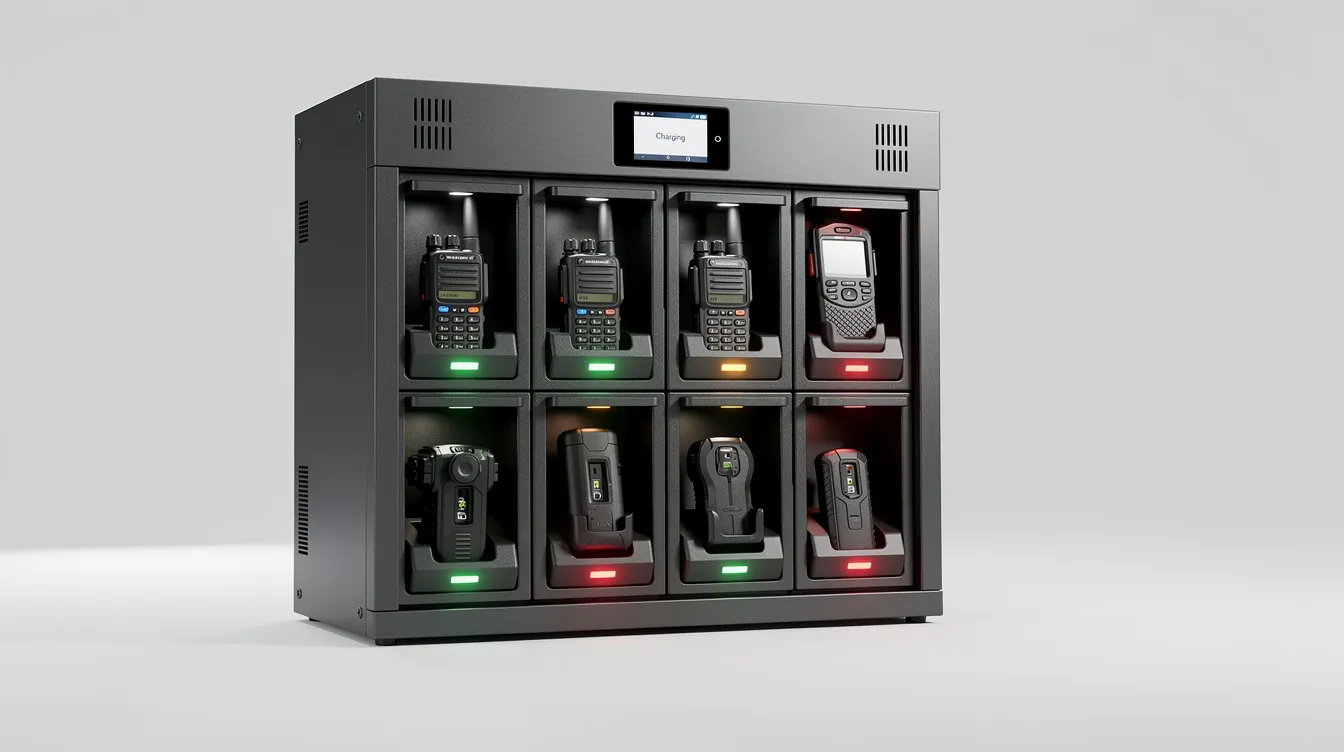
Smart lockers and charging stations can track two way radios with RFID, require an officer ID or PIN for removal, store the exact checkout and return time, and send smart locker alerts when a device is overdue, tampered with, or not returned after a shift.
Real use cases for these alerts:
- A radio not returned after a 23:00 to 07:00 night shift triggers an overdue alert to the sergeant
- A body worn camera locker door forced open in the report writing room sends a tamper notification
- A row of lockers going offline triggers a maintenance alert before a weekend event
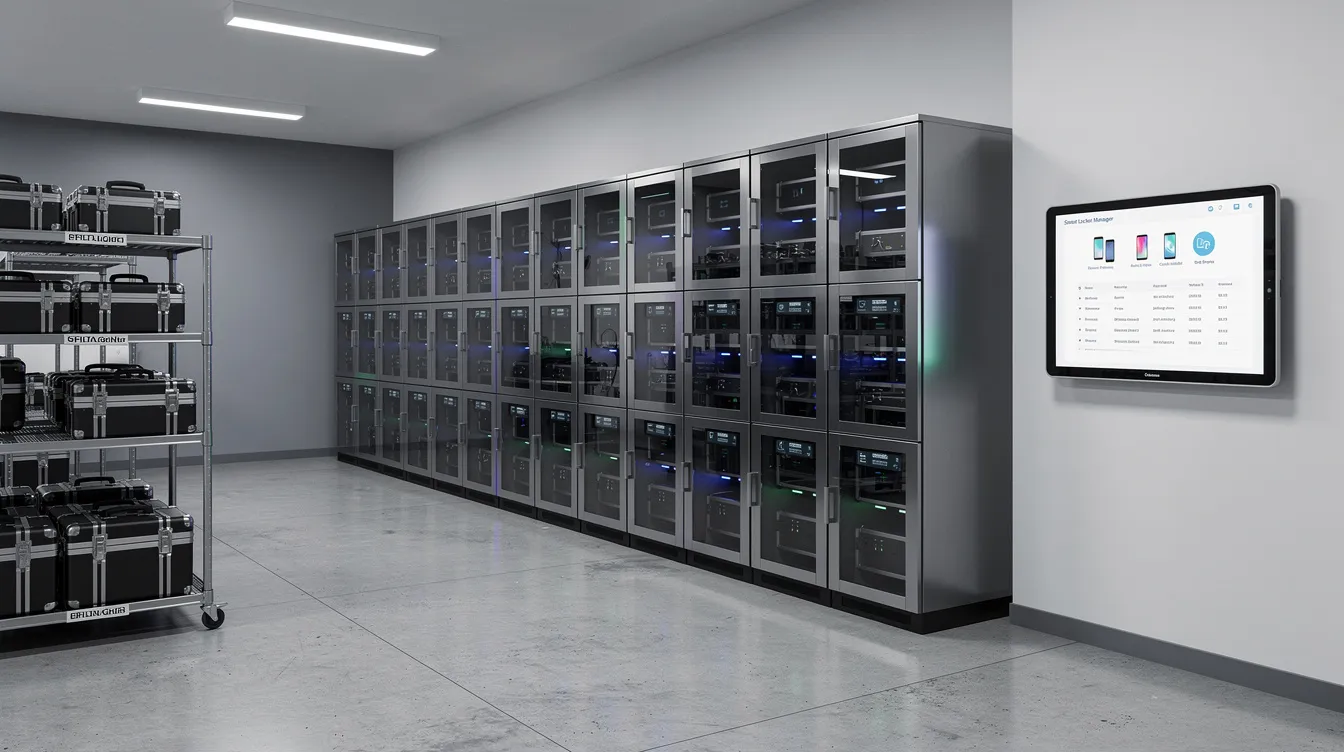
- Cloud dashboards show leadership exactly which devices are out, who has them, and battery status
In one 2024 deployment, a cloud connected locker system helped an agency prove uninterrupted custody for a contested use of force video. The locker logs showed exactly when the camera was checked out, by whom, and when it was returned and docked, filling in the physical custody portion of the chain without relying on anyone’s memory.
You can build a complete audit trail for shared workplace devices that holds up in court proceedings.
Practical Procedures for Officers: Start and End of Shift
If you’re a patrol officer or a sergeant managing a team, this part is for you. Chain of custody starts the moment you touch the device.
Start of shift:
- Log into the smart locker or charging station using your badge tap or PIN. Here’s a breakdown of RFID vs PIN vs biometric locker access if your police department is evaluating options.
- Check out your assigned radio and body camera. Confirm the device ID matches your assignment roster.
- Run a quick function test. Most body cameras have a battery life of 9 to 12 hours, which covers long shifts, but check that yours is charged.
- Do a five second test recording with a timestamp if your departmental policy requires it.
End of shift:
- Verify that all required body camera footage has uploaded and is tagged with the correct incident number
- Return radios and body cameras to the correct locker bay, not just any open slot
- Wait for the locker’s confirmation light or display to show a secure return
- Note any damage, battery issues, or missing accessories in the system
If the locker shows that a camera never came back on 08 May 2025, the agency can investigate immediately instead of discovering it weeks later. That’s the difference between a manageable hiccup and a courtroom problem.
Officer safety matters here too. Properly charged, assigned, and tracked radios and cameras with long battery life mean fewer dead batteries and more reliable communication during critical incidents.
Handling Sensitive Video Evidence, Complaints, and High Risk Incidents
Not all footage is equal. A routine parking enforcement clip doesn’t get the same treatment as a 2024 officer involved shooting.
Categories that require tighter chain of custody and extra protection:
- Use of force incidents
- In custody deaths
- Major traffic collisions with fatalities
- High profile traffic stops involving public figures
- Allegations of misconduct or bias
Critical incidents require extra protection and documentation for camera and radio evidence. For these situations, agencies typically lock the body camera footage in a restricted access folder, require supervisor or internal affairs approval for viewing, and maintain a detailed log of every person who accessed or exported the video. Video evidence must follow strict handling protocols in these cases.
Redaction for public release adds another layer. Every exported, redacted file still needs its own documented chain of custody, including who performed the redaction and when. Tamper evident containers should be used for transporting physical evidence to maintain integrity.
For serious events, radio logs, audio recordings, and CAD timestamps must be preserved alongside BWC footage to build one unified timeline. Smart locker alerts should be configured so cameras used in critical incidents are flagged and reviewed immediately, rather than mixed in with routine recordings. Documenting every exception or malfunction during evidence handling is necessary for accountability.
Training, Culture, and Common Mistakes to Avoid
Most chain of custody failures aren’t malicious. They happen because people are rushed after long shifts, tired, or never properly trained on procedures.
Common mistakes that create gaps:
- Swapping radios or body cameras between officers mid shift without updating the assignment
- Leaving devices in cars, on desks, or in locker rooms instead of secure lockers
- Sharing login credentials for evidence systems
- Manually copying bwc footage to USB drives without logging the transfer
- Failing to document why a camera wasn’t actively recording during an incident
Realistic, scenario based training can prevent most of these issues. Run mock complaints based on real 2023 and 2024 court cases. Walk officers through what happens when a chain of custody is challenged during courtroom proceedings. Demonstrate how simple steps like using the correct locker bay keep evidence admissible and support investigations.
Build a culture where officers see chain of custody as self protection. Strong documentation can clear an officer quickly when false claims are made. Regular audits of custody logs are important for verifying completeness and catching errors before they become problems.
Supervisors should regularly review smart locker reports and device tracking data, overdue device alerts, and Digital Evidence Management logs. Treat them like any other risk management tool, not as a “gotcha” mechanism.
How HonestWaves Smart Lockers and Charging Stations Support Chain of Custody?
Let’s be clear about our role. Honestwaves doesn’t manage your evidence policy or run your investigations. What we do is build the physical and digital infrastructure that keeps radios, phones, tablets, and body cameras powered, secure, and trackable.
Here’s what our smart lockers offer:
- Secure bays sized for radios, body cameras, tablets, and smartphones
- RFID, PIN, or badge access that records exactly who took what and when
- Cloud based dashboards showing device status, last return time, and current assignment
- Smart locker alerts for overdue devices, forced doors, and maintenance issues
- Data blocking technology on USB ports where appropriate, preventing accidental data downloads while devices charge
Real world examples: a courthouse uses our smart lockers as a check in point for law enforcement personnel’s phones and body worn cameras before entering secure areas. A hospital security team uses our charging stations to keep body cameras and radios ready for long shifts without losing track of which device belongs to whom.
Trust in evidence collected by body cameras enhances community confidence. Our lockers help you protect that trust by making sure the physical side of your chain never breaks.
FAQs
How long should we keep body camera footage?
It depends on your state and departmental policy. Non evidentiary footage is typically retained 30 to 90 days, while open case footage should be kept until closure plus any statutory period. How long footage stays also depends on whether it involves force, arrests, or complaints.
Do radios really count as evidence too?
Yes. Radio logs, audio, and GPS data from BWC evidence often support timelines and officer safety decisions. They belong in the same chain of custody framework as body worn camera solutions.
What happens if a body camera goes missing for a few hours?
Document the gap immediately, investigate, and record your findings. If that missing window covers a key incident, prosecutors and courts will examine it closely in court cases.
Can smart lockers replace manual sign out sheets?
In most agencies, yes. They usually do a better job because they don’t forget to log the 06:30 checkout the way a human on a clipboard might.
Do we need different chain of custody steps for live video streaming?
The same principles apply. Log who had the camera, when live streaming started and stopped, and how the stream was stored or recorded in the manage evidence system.